
The Mueller Hut New Zealand hike was one of the highlights of our time exploring the South Island, and easily one of the most spectacular alpine trails we've ever experienced.
Located in Aoraki / Mount Cook National Park, the route climbs high above the Hooker Valley, passing the famous Sealy Tarns before continuing across rugged scree slopes and exposed ridgelines, with incredible views of Mount Cook, surrounding glaciers and the Southern Alps.
What makes this hike so memorable is how quickly the incredible views open up, with incredible scenery almost from the moment you begin climbing. As you gain elevation, the views only get better, eventually revealing basically 360-degree panoramas of towering snow-covered peaks, enormous glaciers and the surrounding valleys. At around 10 kilometres return, it's a challenging hike with significant elevation gain, but the scenery makes every step worthwhile.
In this guide, I'll share our experience day-hiking one of New Zealand’s most rewarding alpine trails, including route details, hiking times, difficulty, an overview map and everything you need to know before setting off.
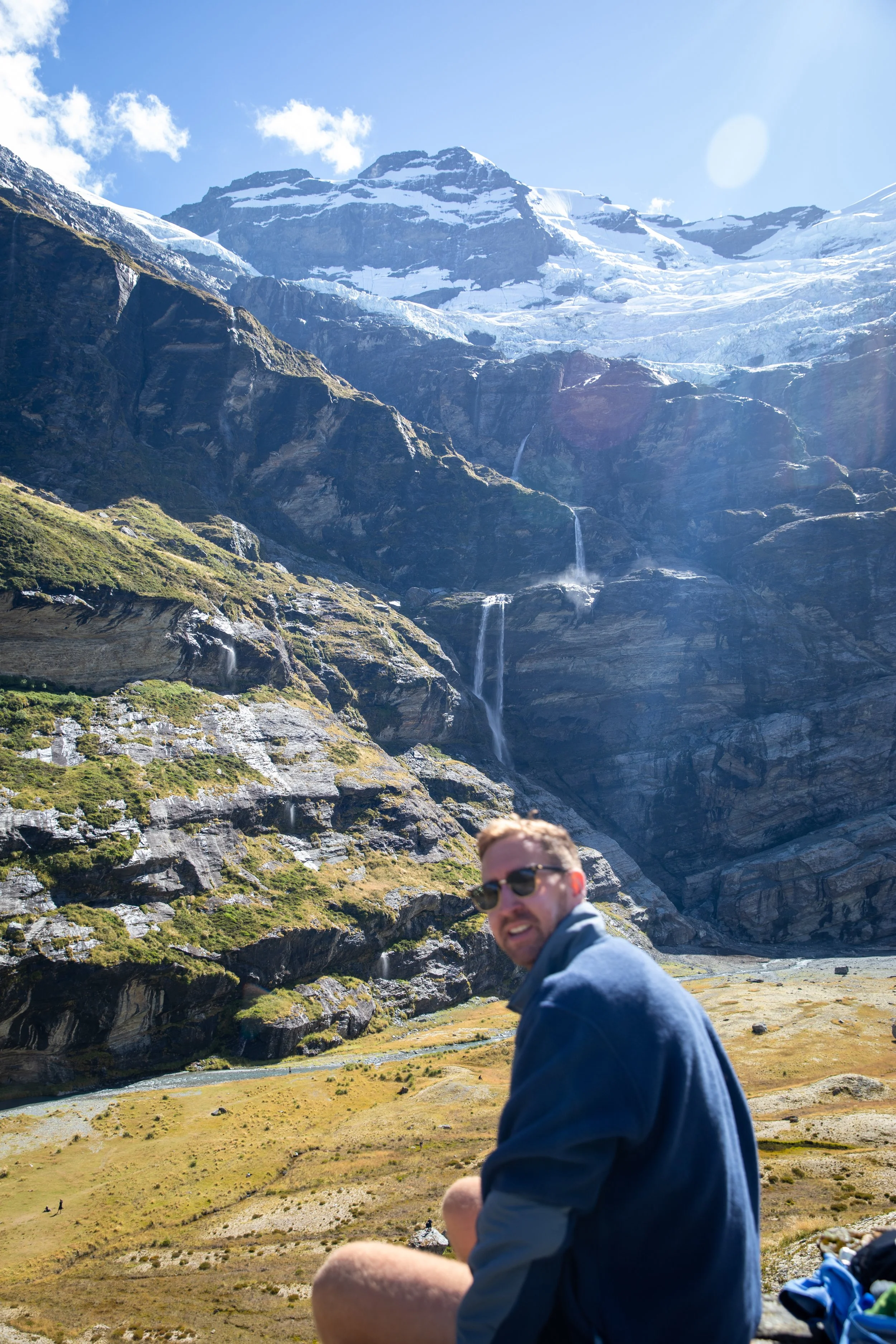
Earnslaw Burn Track Hike Overview
Trailhead: Follow signs from the carpark to “Mueller Hut Route” or “Sealy Tarns” | Google Maps
Paid Parking: Parking is $25 NZD per day | Google Maps
Free Parking: Parking is free outside a zone | Google Maps
Total Hiking Distance: 10.4 km | out and back
Total Hiking Duration: 7 hour hike | return
Difficulty: Hard
Altitude: 1,800 meters above sea level
Price: The trail is free
Highlights: Views over the Hooker Valley, Aoraki / Mount Cook, Mueller Glacier, and the surrounding snow-capped peaks of the Southern Alps.
Where is the Earnslaw Burn Track Hike?
The Mueller Hut New Zealand hike is located in Aoraki / Mount Cook National Park, in the heart of the Southern Alps on New Zealand’s South Island. The trail climbs high above the Hooker Valley, passing the famous Sealy Tarns before continuing across rugged alpine terrain to Mueller Hut, perched at approximately 1,800 metres above sea level.
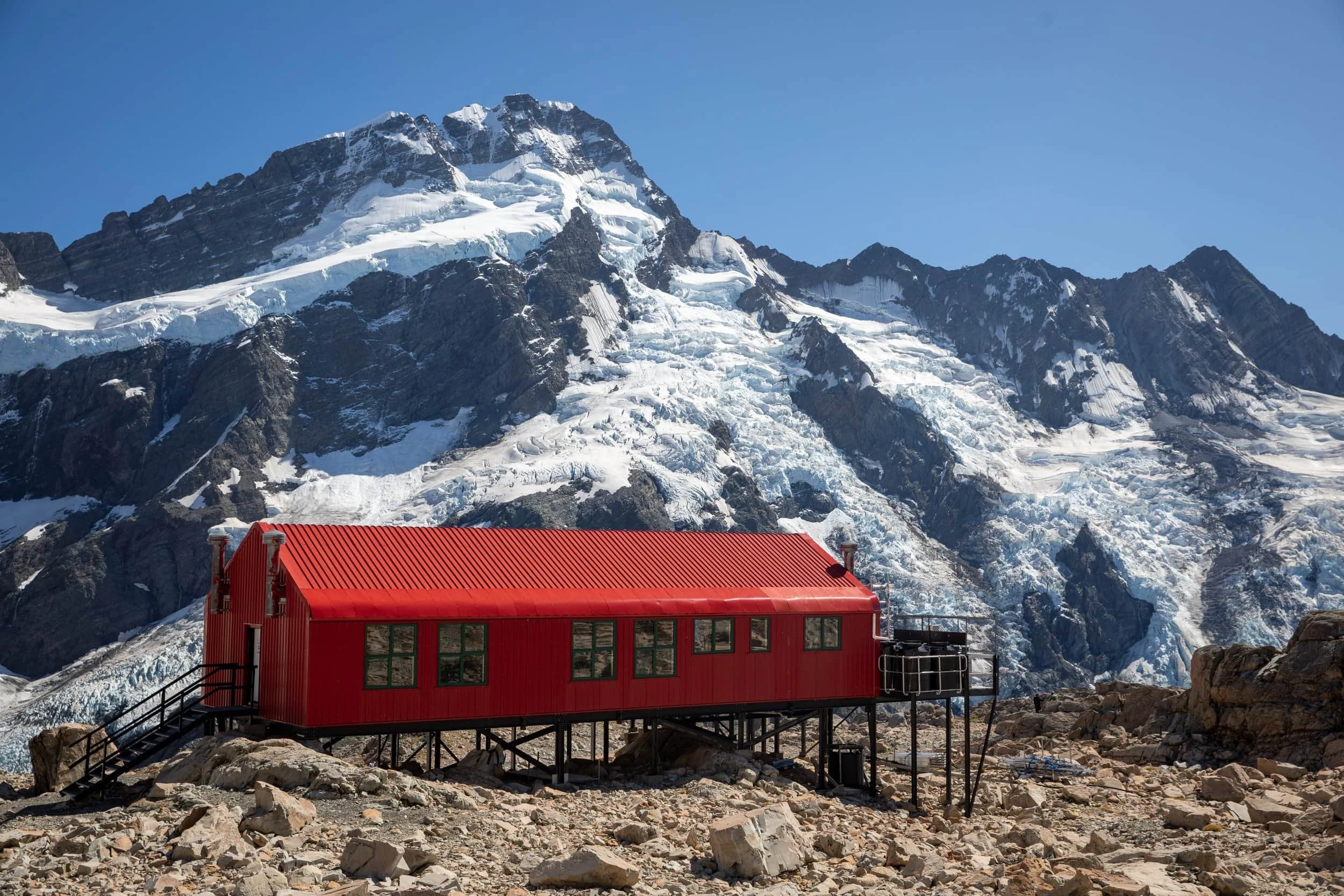
Mueller Hut is a 28-bunk alpine hut used by hikers for overnight stays, although many visitors complete the route as a day hike. The hut takes its name from the nearby Mueller Glacier, which was named in 1862 after Ferdinand von Mueller, a German-born botanist and explorer. The original hut was built in 1914, while the current structure was opened by Sir Edmund Hillary in 2003.
The hike offers absolutely incredible views of Mount Cook, New Zealand’s highest mountain, along with surrounding glaciers, dramatic mountain peaks and glacial valleys. The nearest settlement is Mount Cook Village, approximately 105 kilometres from Twizel by road, making it a popular base for exploring the national park.
Earnslaw Burn Track Hike Trailhead
The Mueller Hut hike begins at the White Horse Hill car park, approximately 2.5 kilometres from Mount Cook Village. The car park is easily accessible by road and is also the starting point for the popular Hooker Valley Track and Kea Point Track.
From the car park, follow the signs towards Sealy Tarns.
Mueller Hut Trailhead: Follow signs from the carpark | Google Maps
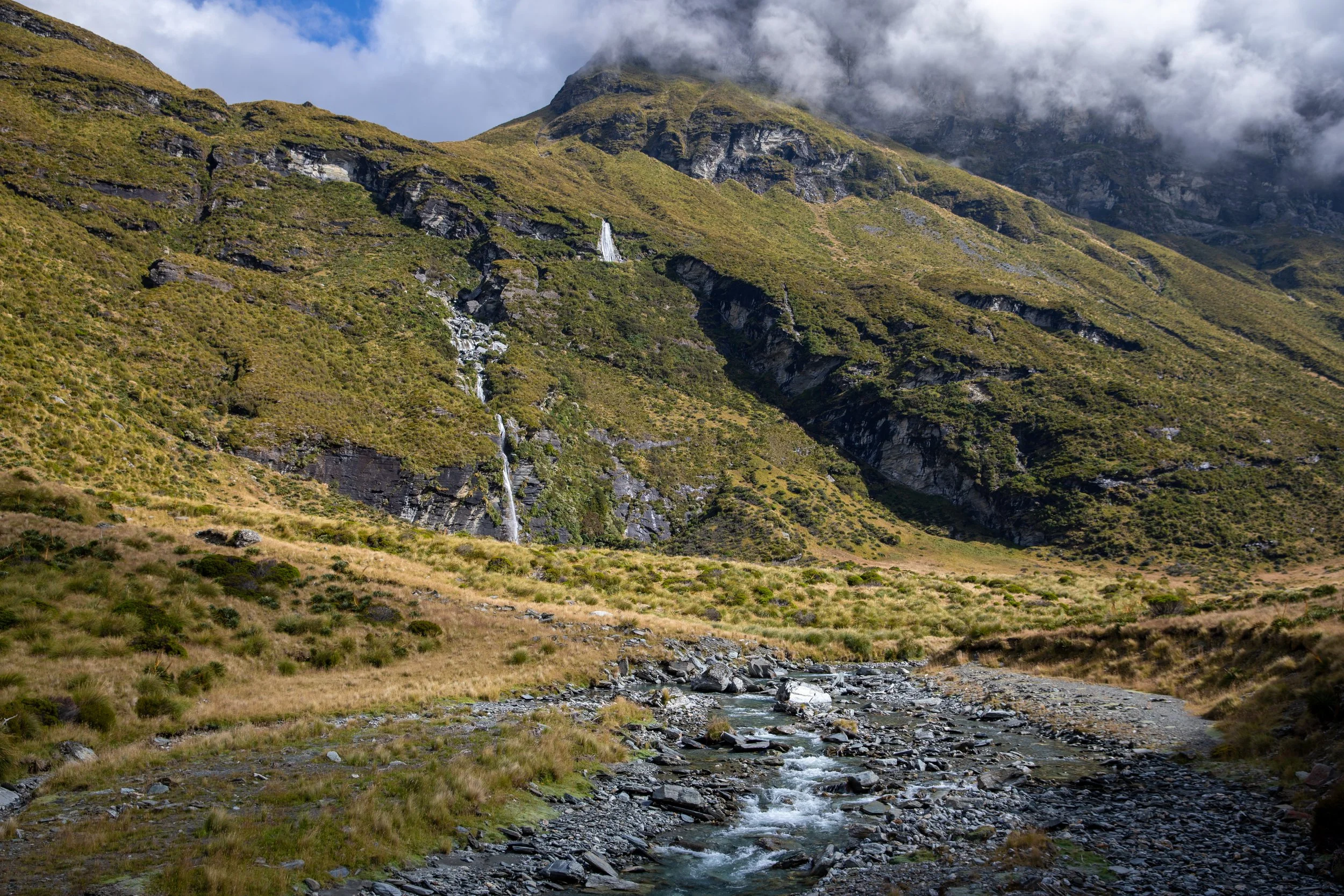
New Zealand Highlights:
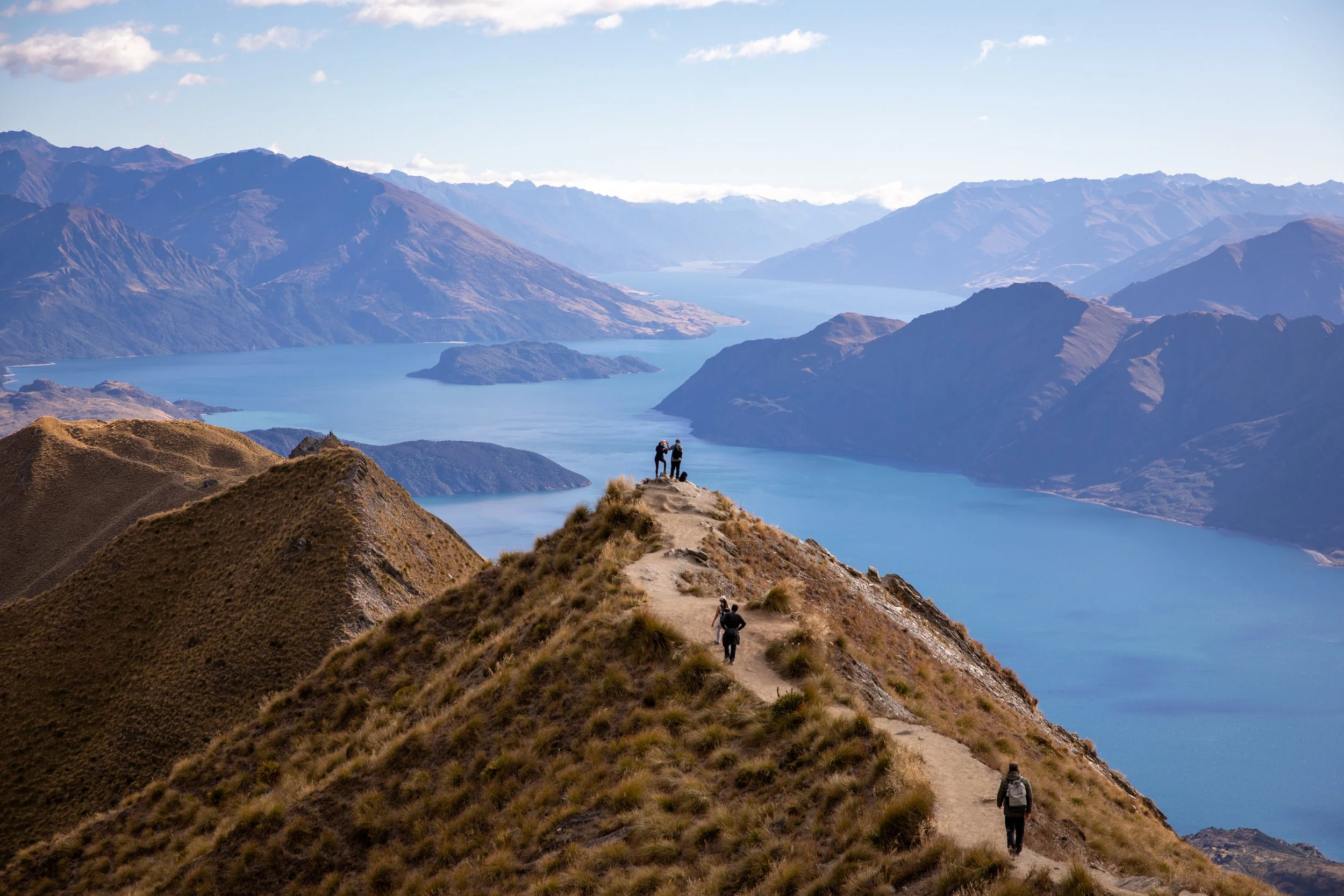

How to Get to Glenorchy
The first step to hiking Mueller Hut is getting to Aoraki / Mount Cook National Park, located in the heart of New Zealand's South Island. The national park is approximately 330 kilometres from Christchurch and 260 kilometres from Queenstown, taking around 4–4.5 hours and 3–3.5 hours to drive, respectively.
The easiest way to reach the national park is by hire car, although shuttle services are also available from selected towns. Once you arrive in Mount Cook Village, it's just a short drive to the Mueller Hut trailhead at White Horse Hill car park.
Alternatively it is possible to reach Mount Cook National Park without hiring a car, although public transport options are limited. There are no regular local buses into the national park, but tourist coach services connect Mount Cook Village with destinations such as Christchurch and Queenstown.
Hire Car: Self-Drive from Queenstown
Driving is by far the easiest way to reach Mount Cook National Park, giving you the flexibility to explore the surrounding region at your own pace. You can hire a car from Christchurch Airport or the city centre, with plenty of rental companies available. The journey takes approximately 4–4.5 hours along fully sealed roads, making it suitable for a standard 2WD hire car.
The drive itself is incredibly scenic, passing through the Canterbury countryside and alongside Lake Tekapo and Lake Pukaki, with spectacular views of the Southern Alps along the way. I'd recommend allowing extra time for stops, particularly around Lake Pukaki, where you'll get some of the best views of Mount Cook on a clear day.
The journey details are:
Distance: Approximately 330 km from Christchurch
Drive time: Around 4–4.5 hours
Roads: Fully sealed highways, suitable for 2WD vehicles
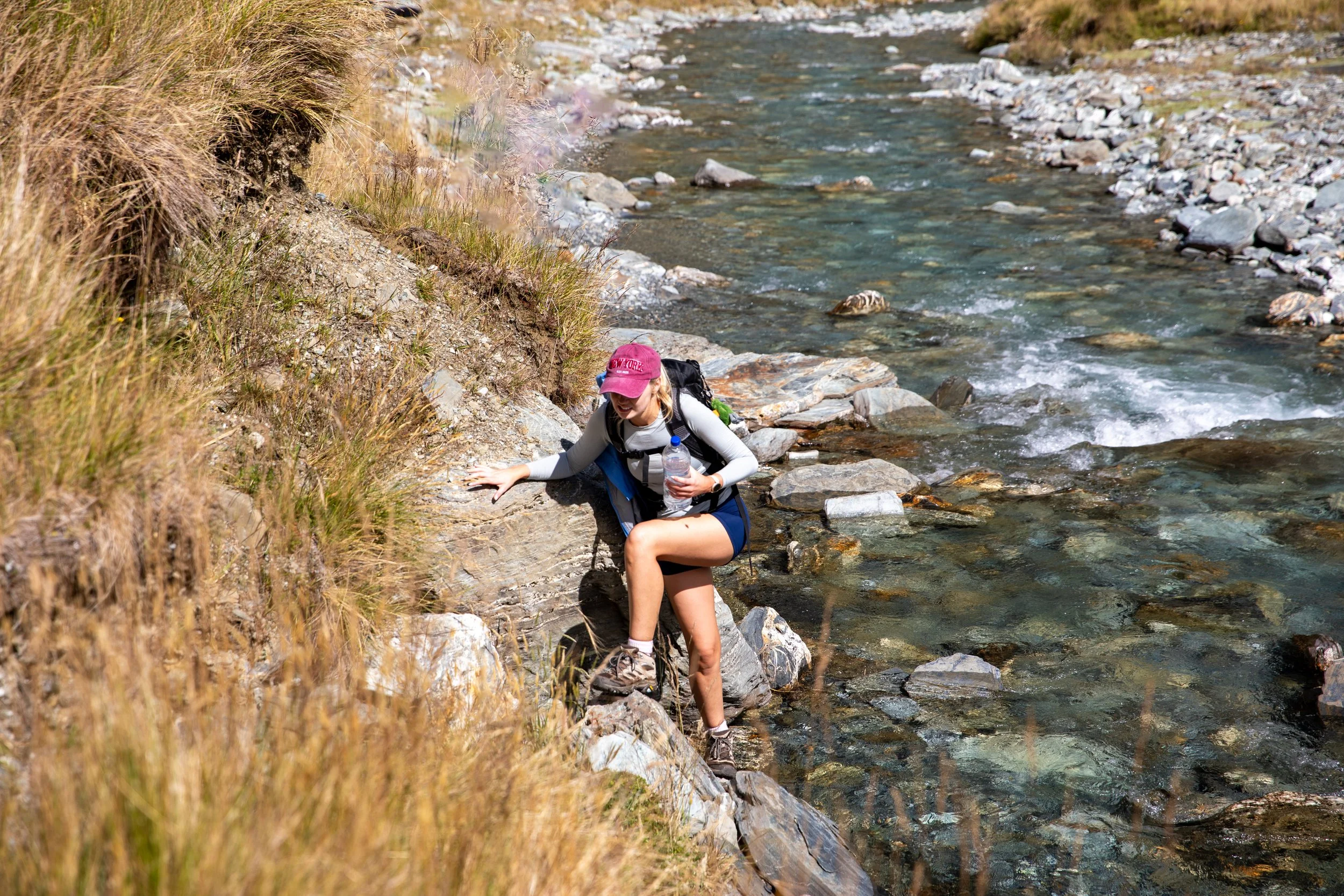
How to Get to the Earnslaw Burn Track Trailhead
Once you've reached Mount Cook Village, the next step is getting to the White Horse Hill car park, where the Mueller Hut New Zealand hike begins. The trailhead is approximately 2.5 kilometres from the village, and you can reach it by car or on foot. Here's how each option works.
Self-Drive from Glenorchy
Driving from Mount Cook Village to the Mueller Hut trailhead takes approximately five minutes. Follow Hooker Valley Road to the White Horse Hill car park, which also serves the popular Hooker Valley Track and Kea Point Track. The road is sealed and suitable for a standard 2WD vehicle.
If you already have your own hire car and arrived to Mount Cook Village by driving then it makes logical sense to just drive yourself to the trailhead.
Where to Park
The White Horse Hill car park is located at the end of Hooker Valley Road. There are public toilets nearby, and the car park can get busy during peak hiking season, so I'd recommend arriving early.
Parking inside the designated area is paid with options of either NZ$2.50 per half-hour or NZ$25 per day, with the first 20 minutes free for drop-offs and pick-ups. Payment is by debit or credit card only.
The other option is to park just outside of the zone alone the main Hooker Valley Road where you can park for free. If you choose the free parking option, check the signs carefully to ensure you're outside the paid zone and allow extra walking time to reach the trailhead.
Paid Parking: NZ$25 per day | Google Maps
Free Parking: Outside the paid parking zone | Google Maps
If you're staying overnight at Mueller Hut, the Department of Conservation charges NZ$50 for parking across two days.
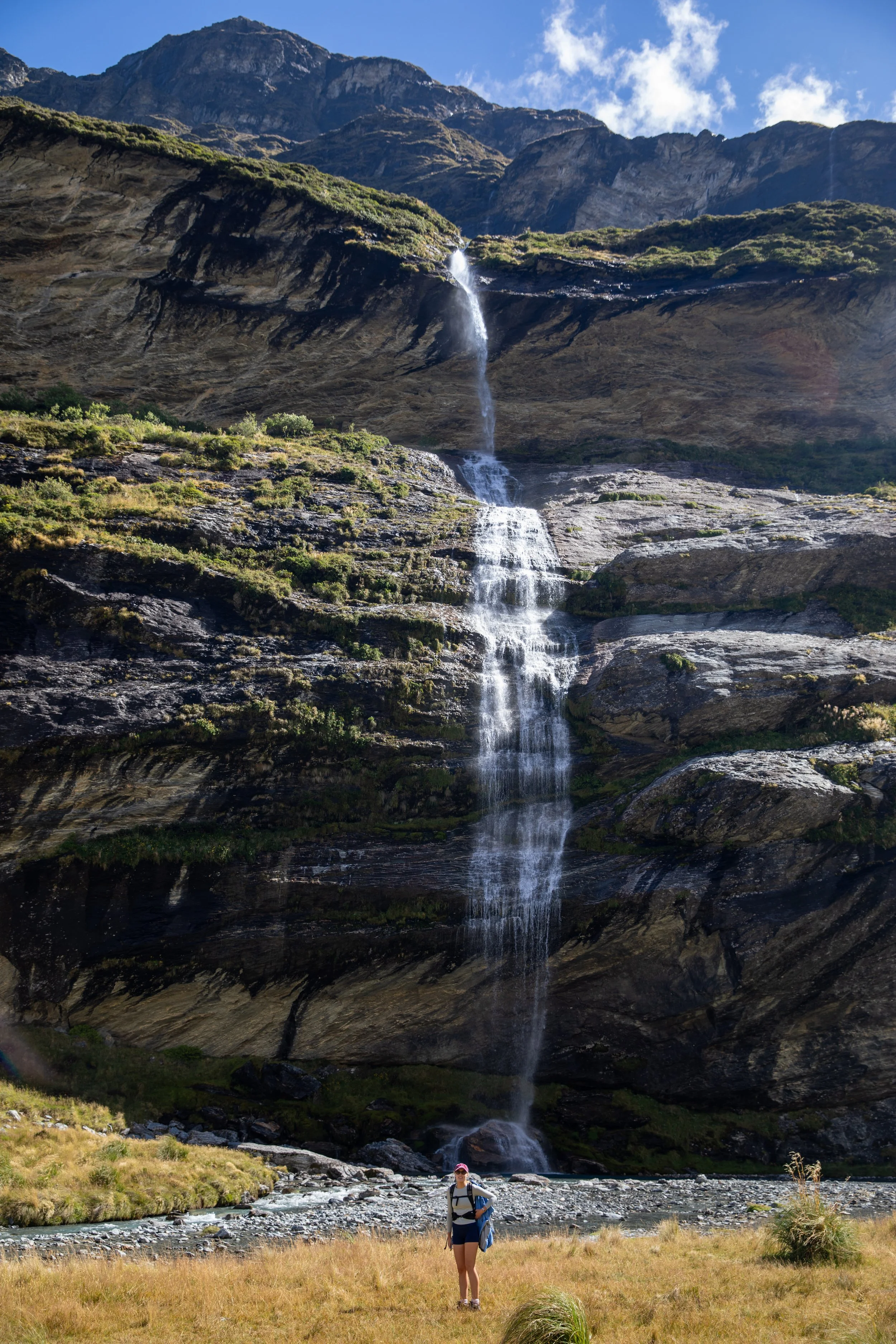
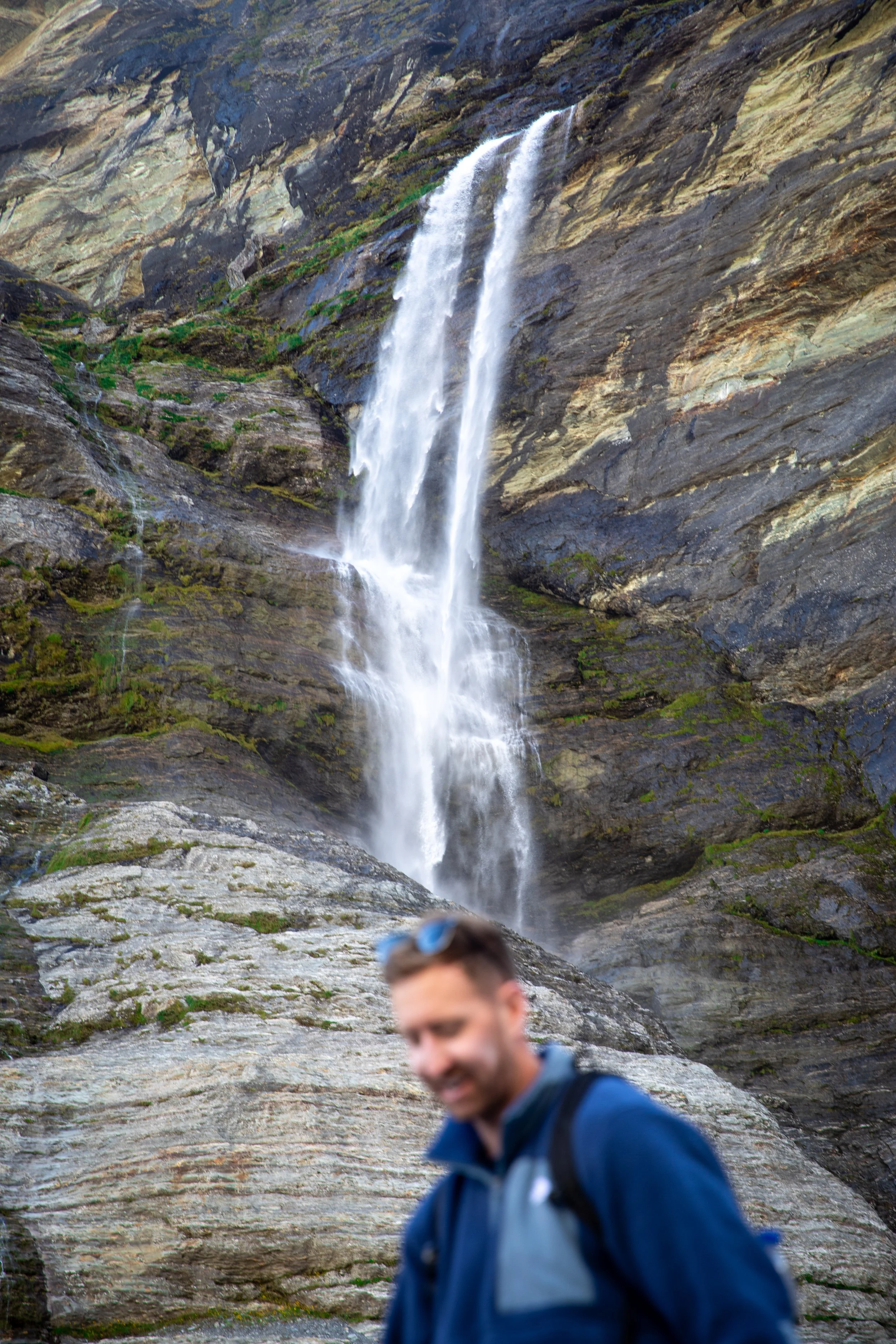
Earnslaw Burn Track Hike Map
The map shows the Mueller Hut New Zealand hiking route, starting from White Horse Hill car park climbing steeply to Sealy Tarns before continuing across rugged alpine terrain to Mueller Hut.
Where to Stay for the Earnslaw Burn Track
Mount Cook Village is by far the best place to stay if you're planning to take on the Mueller Hut New Zealand Hike. Located just a few minutes from the trailhead, staying here allows you to get an early start without a long drive. You'll also be surrounded by incredible views of Mount Cook and the Southern Alps, making it one of the most scenic places to stay on the South Island.
Accommodation in Mount Cook Village is fairly limited and very expensive, with a handful of hotels, lodges and budget options, so I'd recommend booking well in advance, particularly during the summer months. Staying here also gives you easy access to other popular hikes, including the Hooker Valley Track and Kea Point Track.
Twizel is a good alternative if you're looking for more affordable accommodation or a wider choice of restaurants, supermarkets and holiday homes. It's approximately 45–50 minutes from Mount Cook Village, making it a convenient base for exploring the national park, although you'll need to allow extra time to reach the trailhead.
It's also worth considering that you can stay overnight at Mueller Hut itself, rather than completing the hike in a single day. However, overnight stays require advance bookings through the Department of Conservation (DOC), and you'll need to be properly prepared for alpine conditions. This guide focuses on completing the Mueller Hut Route as a day hike, which is how we experienced it.
Best Places to stay in Queenstown
Mount Cook Village has a small selection of hotels, alpine lodges and self-contained accommodation, catering to different budgets and travel styles. Whether you're looking for a comfortable hotel or somewhere with cooking facilities, there are a few great options to consider.
The best places to stay in Mount Cook Village are:
Hermitage Hotel Mount Cook - An iconic hotel in Mount Cook Village, offering comfortable rooms with spectacular views of Aoraki / Mount Cook and the surrounding Southern Alps. It has on-site restaurants and a café, making it a convenient choice for hikers wanting comfortable accommodation and easy access to the national park's trails. Note that this is a more expensive option.
Aoraki Mount Cook Alpine Lodge - A cosy alpine lodge in Mount Cook Village, offering comfortable ensuite rooms, a shared kitchen and a spacious lounge with a fireplace and spectacular mountain views. It's a great option for hikers wanting a relaxed atmosphere and the convenience of preparing their own meals.
Aoraki Court Motel - A modern motel in Mount Cook Village offering spacious studios and apartments with kitchenettes, private patios and beautiful views of Mount Sefton. With free parking and comfortable self-contained accommodation, it's an excellent choice for couples or families wanting extra space and flexibility during their stay. This is where we stayed during our time there and absolutely loved it. The view from the windows was incredible.
Best Places to stay in Glenorchy
Twizel offers a much wider range of accommodation than Mount Cook Village, with plenty of entire holiday homes, self-contained apartments and motels to choose from. It's particularly good for families and groups looking to rent a whole house, often at more affordable prices. You'll also find supermarkets, restaurants and cafés nearby, making it a convenient base for exploring the region.
The best places to stay in Twizel are:
Alps Motel and Apartments - – A modern motel in central Twizel, offering spacious studios and apartments with well-equipped kitchenettes, laundry facilities and free parking. It's within walking distance of local shops and restaurants, making it a convenient choice for hikers wanting comfortable, self-contained accommodation.
Lake Suites Twizel - A comfortable motel in Twizel offering self-contained studios and apartments with kitchenettes, private patios and free parking. Located in a quiet area near the town centre, it's a practical option for couples and families looking for a relaxed base while exploring Mount Cook National Park.
The Dales Twizel - A peaceful, adults-only guesthouse in Twizel offering modern, cosy accommodation with private kitchen facilities, a garden and an outdoor hot tub. It's a lovely option for couples wanting a quieter stay, with the added bonus of relaxing in the hot tub after a long day hiking in Mount Cook National Park.
When to Hike the Earnslaw Burn Track
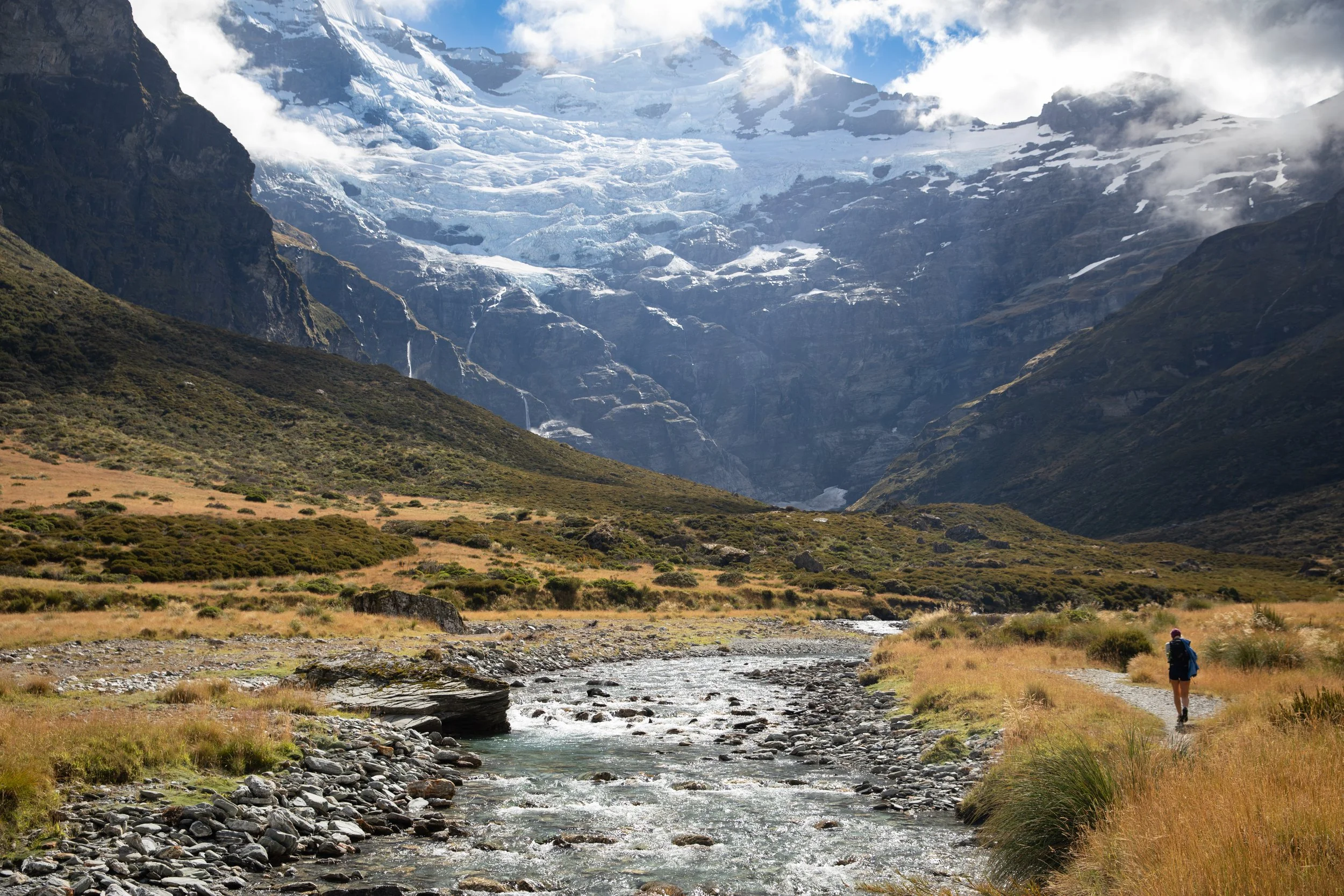
The best time to complete the Mueller Hut New Zealand hike is from December to March, during New Zealand's summer, when the trail is generally more accessible and snow and ice are less likely to affect the route. These months offer longer daylight hours, milder temperatures and the best chance of suitable conditions for completing the hike as a day trip.
January and February are the busiest months, so if you're looking for fewer people, consider hiking in December or March; which is when we went there. However, snow can remain on the upper sections even during summer, and conditions can change quickly. Outside the summer season, the route can require alpine equipment and mountaineering experience, making it unsuitable for inexperienced hikers.
I'd also recommend starting as early as possible, particularly if you're completing the hike in a single day. This gives you plenty of daylight, allows you to enjoy the views before the trail gets busier and provides extra time for the steep descent back to the carpark.
Weather is probably the most important consideration when planning this hike. The views from Mueller Hut are absolutely incredible on a clear day, so I'd strongly recommend keeping your plans flexible and choosing the day with the best forecast. Check the latest Department of Conservation (DOC) trail conditions and mountain weather forecast before setting off, and be prepared to change your plans if conditions are poor.
What is the Earnslaw Burn Track Like?
After leaving the carpark the Mueller Hut New Zealand route follows a relatively gentle path before reaching the steep staircase leading towards Sealy Tarns. From here, the trail climbs relentlessly up approximately 2,200 steps, gaining elevation quickly as incredible views begin opening up across the Hooker Valley and surrounding mountains. This part was an absolute slog so make sure to take your time and have plenty of rest breaks.
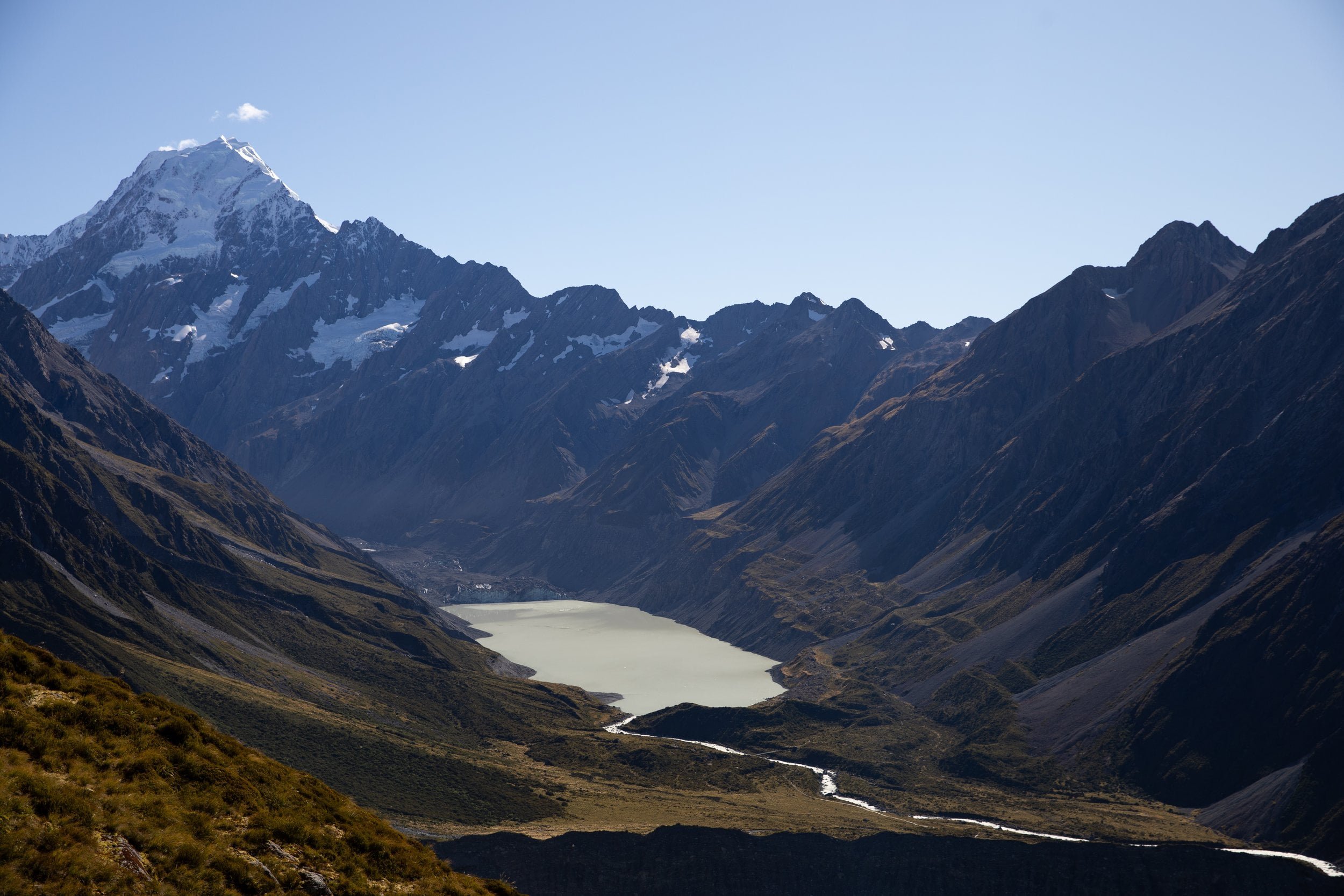
After around 1.5–2 hours of climbing, you eventually reach Sealy Tarns, a series of small alpine ponds with spectacular views back over the valley towards Mount Cook and the surrounding glaciers. It's a great place to stop, catch your breath and eat something before tackling the even more challenging upper section of the hike.
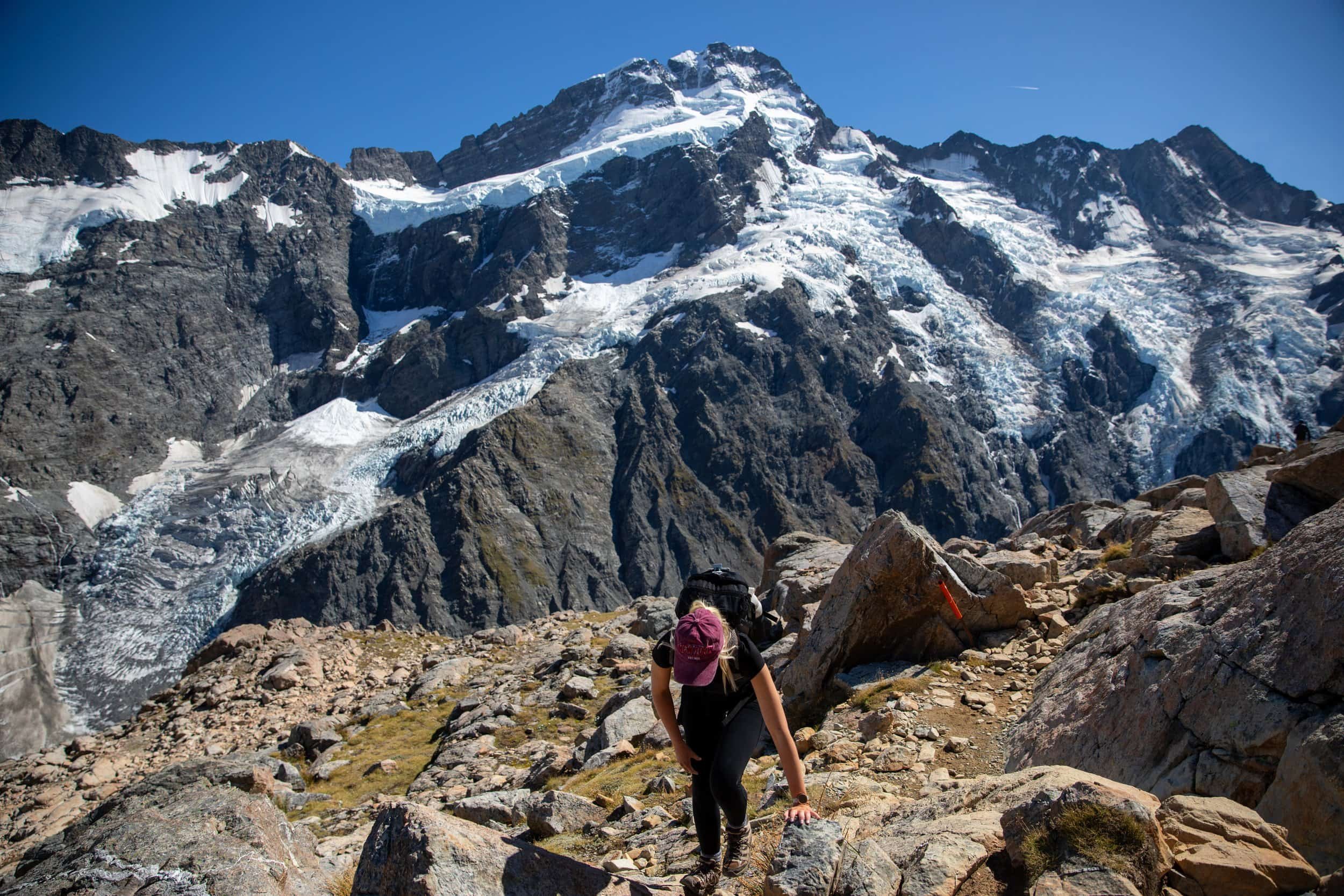
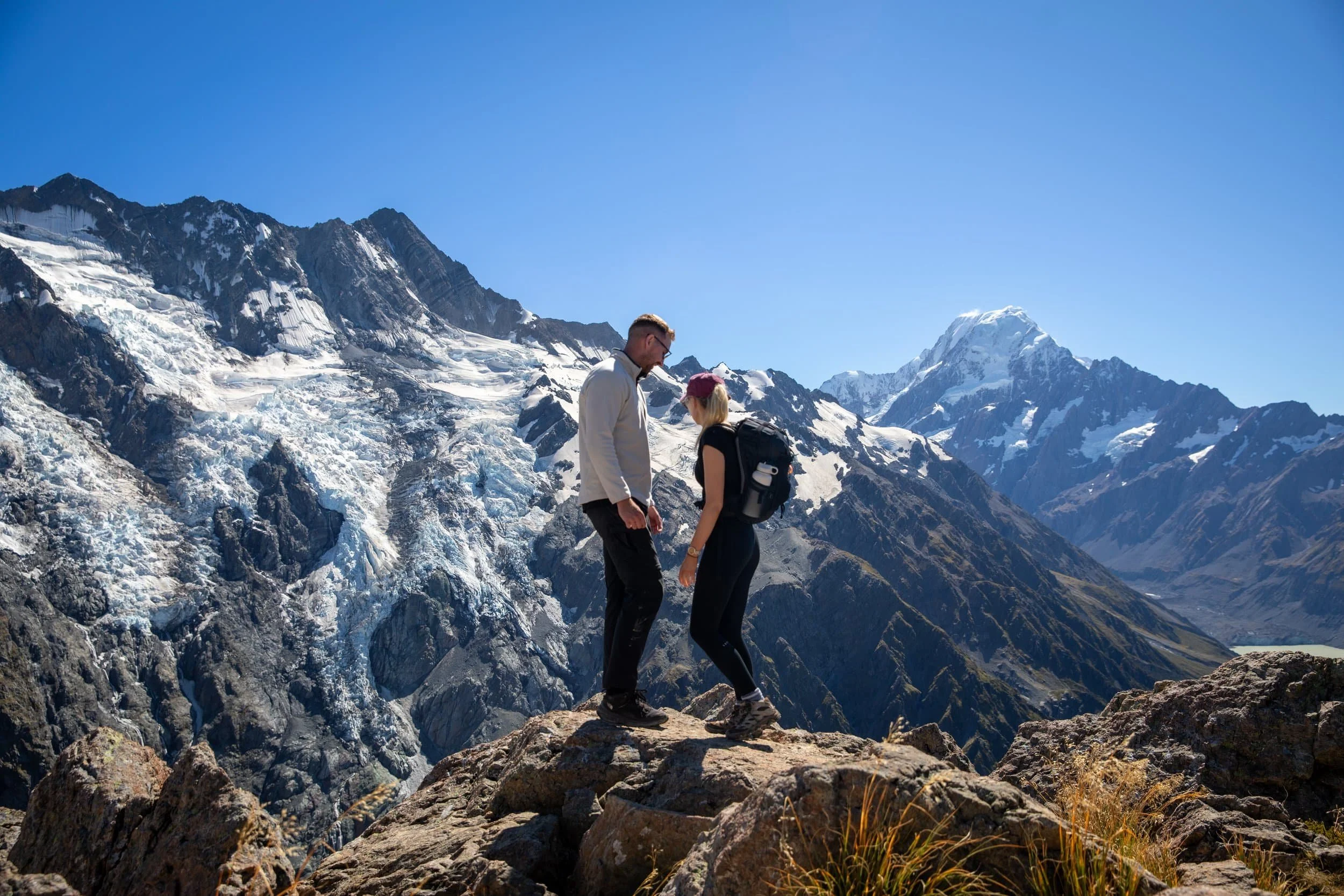
Beyond Sealy Tarns, the route becomes considerably more rugged, with the maintained staircase giving way to steep scree slopes, loose rocks and large boulders. The trail continues climbing until it reveals an almost 360-degree views of the Southern Alps, Mueller Glacier and surrounding valleys.
From the ridgeline, the final section towards Mueller Hut is relatively easier, following rocky alpine terrain with spectacular mountain scenery in almost every direction. The hut sits at approximately 1,800 metres above sea level, making it the perfect place to stop for lunch and take in the views before returning along the same route back down.
How Difficult is the Hike?
Hard is the simplest way to put it!
The hike covers approximately 10 kilometres return with around 1,000 metres of elevation gain. The initial climb to Sealy Tarns involves roughly 2,200 steep steps, which can be exhausting, particularly if you're not used to sustained uphill hiking.
Beyond Sealy Tarns, the trail becomes even more difficult, with loose rocky sections requiring careful footing. The descent is arguably more demanding, especially on the knees, as you navigate the same steep terrain on the way back down.
We were quite grateful to see the car when we got back down to the bottom.
In suitable summer conditions, you don't generally need technical climbing skills, but a good level of fitness, confidence on uneven terrain and some hiking experience are strongly recommended. Snow, ice or poor visibility can make the upper route significantly more dangerous and may require specialised alpine equipment and experience.
How Long Does it Take?
The Mueller Hut New Zealand Route typically takes around 6–8 hours return, depending on your fitness, weather conditions and how long you spend enjoying the views. The climb is considerably slower than the descent for many hikers, although the steep steps and loose rocks can make the return journey tiring.
I'd recommend allowing a full day for the hike, particularly if you want to spend time at Sealy Tarns and Mueller Hut taking photos and enjoying the scenery. You also want to make sure you give yourself plenty of time to take it all in considering the amount of effort you will have made getting up there.
What to Wear and Bring
Sturdy hiking shoes or boots with good grip are highly recommended for the Mueller Hut Route. The upper sections involve loose scree, uneven rocks and steep descents, so footwear with reliable traction is particularly important. Hiking poles can also be useful, especially for reducing the strain on your knees during the descent, this was probably a mistake we made leaving them behind.
I would strongly suggest that you bring warm layers and a waterproof jacket, even if the forecast looks clear and the temperature at the base is quite warm. Conditions at Mueller Hut can be significantly colder and windier than at Mount Cook Village, and the weather can change rapidly at altitude. We found that after sweating hiking up we were freezing at the top.
Also make sure that you bring enough food and water for the duration of the hike as there is no where to get more along the way.
Is Day-Hiking the Earnslaw Burn Track Route Worth it?
Absolutely. The Mueller Hut Route was one of our favourite hikes in New Zealand, and I'd highly recommend it to anyone visiting Mount Cook National Park.
What makes this hike so special is how quickly you're rewarded with incredible mountain scenery. You don't have to wait until the summit for the views to get good. Even during the steep climb to Sealy Tarns, you're treated to spectacular views across the Hooker Valley, with Mount Cook and enormous glaciers towering above the landscape.
For me, the real highlight was reaching the upper ridgeline, where the scenery opens up to reveal almost 360-degree views of the Southern Alps. It's hard to describe just how impressive the landscape is from up there, with snow-covered peaks and glaciers stretching in almost every direction.
You also don't need to stay overnight at Mueller Hut to make the hike worthwhile. Completing the route as a day hike gives you plenty of time to experience the incredible scenery, and although the climb is demanding, the views make every bit of effort worth it.
Our Experience of the Earnslaw Burn Track
We started early from the car park, making our way towards the steep staircase leading to Sealy Tarns. The climb was relentless, with what felt like an endless number of steps, but the views opened up surprisingly quickly. Before long, we were stopping regularly to look back across the Hooker Valley and surrounding mountains.
Reaching Sealy Tarns was a welcome break after the steep climb. The small alpine ponds sit above the valley, with incredible views of Mount Cook and the surrounding glaciers. We spent some time here taking photos, enjoying some of our packed lunch and taking in the scenery before continuing towards Mueller Hut.
Beyond Sealy Tarns, the hike became much more rugged. The staircase disappeared, replaced by steep scree slopes, loose rocks and large boulders. This was also where we left most of the crowds behind, as many hikers only complete the shorter Sealy Tarns Track. It was noticeably quieter from here, and although the terrain became more challenging, the scenery just kept getting better.
The highlight was reaching the ridgeline near Mueller Hut. Suddenly, the views opened up in almost every direction, with towering snow-covered peaks, enormous glaciers and dramatic valleys surrounding us. It was incredibly peaceful, with very few other hikers and plenty of spectacular viewpoints where we could stop and enjoy the scenery. It was easily one of the most impressive alpine views I've experienced, even comparative to some of the best hikes in Switzerland.
We eventually reached Mueller Hut, where we stopped to enjoy the scenery before beginning the long descent back to the car. I’m not going to the lie the return journey was tiring, particularly the seemingly endless steps below Sealy Tarns. It seemed like the carpark was so close yet so far, but it was absolutely worth it.
If you're visiting Mount Cook National Park, I'd put the Mueller Hut Route right at the top of your hiking list. The combination of challenging terrain and incredible mountain scenery made it one of the standout experiences of our entire time in New Zealand.


Related Posts:
Looking for one of New Zealand's most spectacular hikes away from the crowds? The Earnslaw Burn Track near Glenorchy follows a remote river valley through dense native forest before opening into a dramatic alpine landscape surrounded by towering mountains, cascading waterfalls and the impressive Earnslaw Glacier. This guide covers everything you need to plan your hike, including trail details, difficulty, hiking times, a route map and essential tips for exploring this incredible part of New Zealand's Southern Alps.