
Spitzkoppe in Namibia: Camping Beneath the Granite Peaks
Camping beneath the towering granite peaks of Spitzkoppe in Namibia became one of our favourite experiences of the entire road trip.
I must admit, it wasn’t the first place we thought of visiting, but spending the night among these enormous formations completely changed that.
Spitzkoppe’s granite peaks rise dramatically from the Namib Desert, and we spent the evening camped right beneath them. Sitting by the campfire, we watched the rocks turn warm shades of red and orange as the sun went down. The next morning, we woke up surrounded by the same towering formations. It was a spectacular place to camp and one of the moments from Namibia I remember most clearly.
If you’re planning a road trip around Namibia, I’d make time for Spitzkoppe. In this guide, I’ll share what made our visit so memorable, what to see and do, where to camp and what to know before you go.
Where is Spitzkoppe
Spitzkoppe is located in the Erongo Region of central-western Namibia, in the Namib Desert between Usakos and Swakopmund. The area is about 120 km northeast of Swakopmund and 50 km from Usakos, the nearest town.
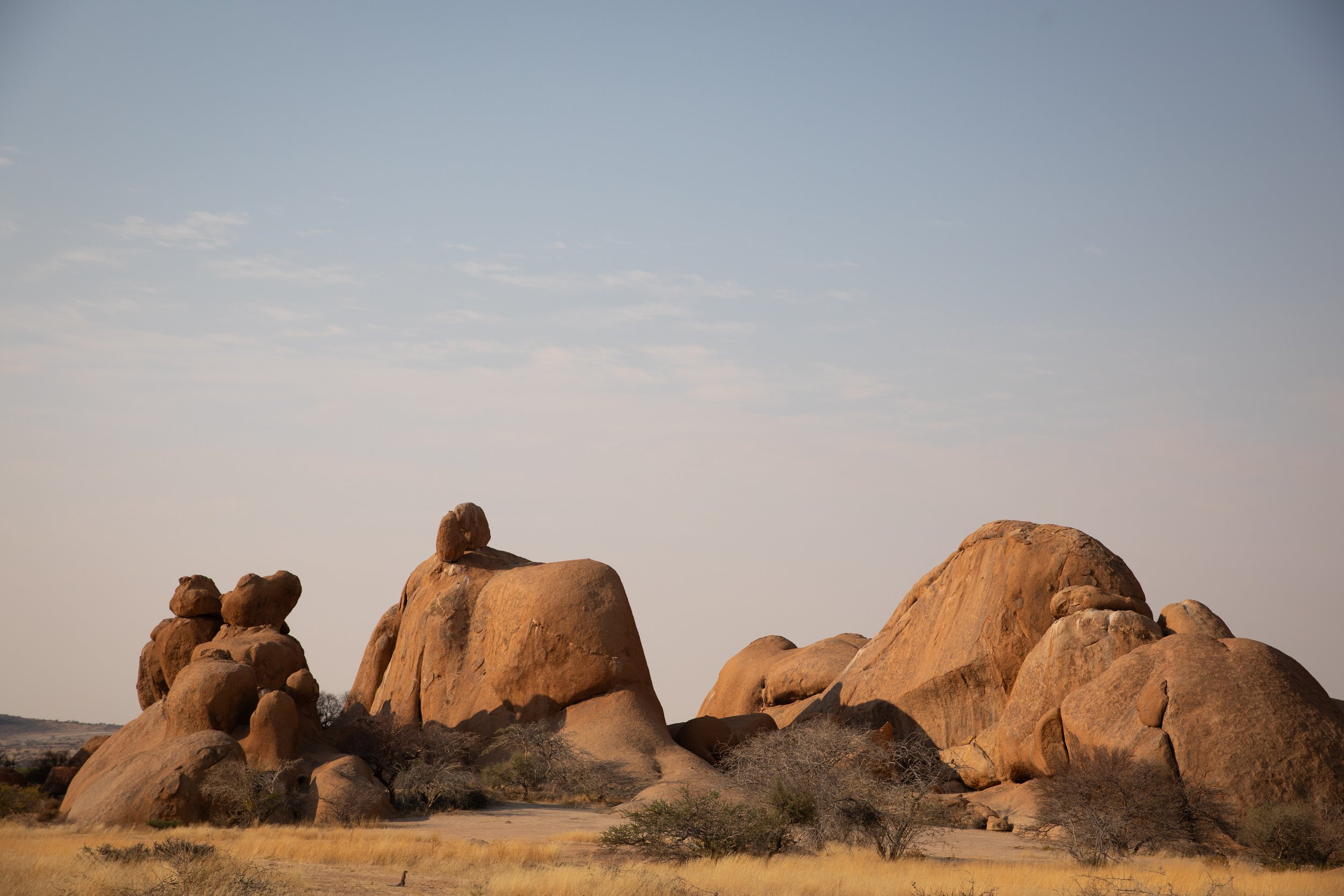
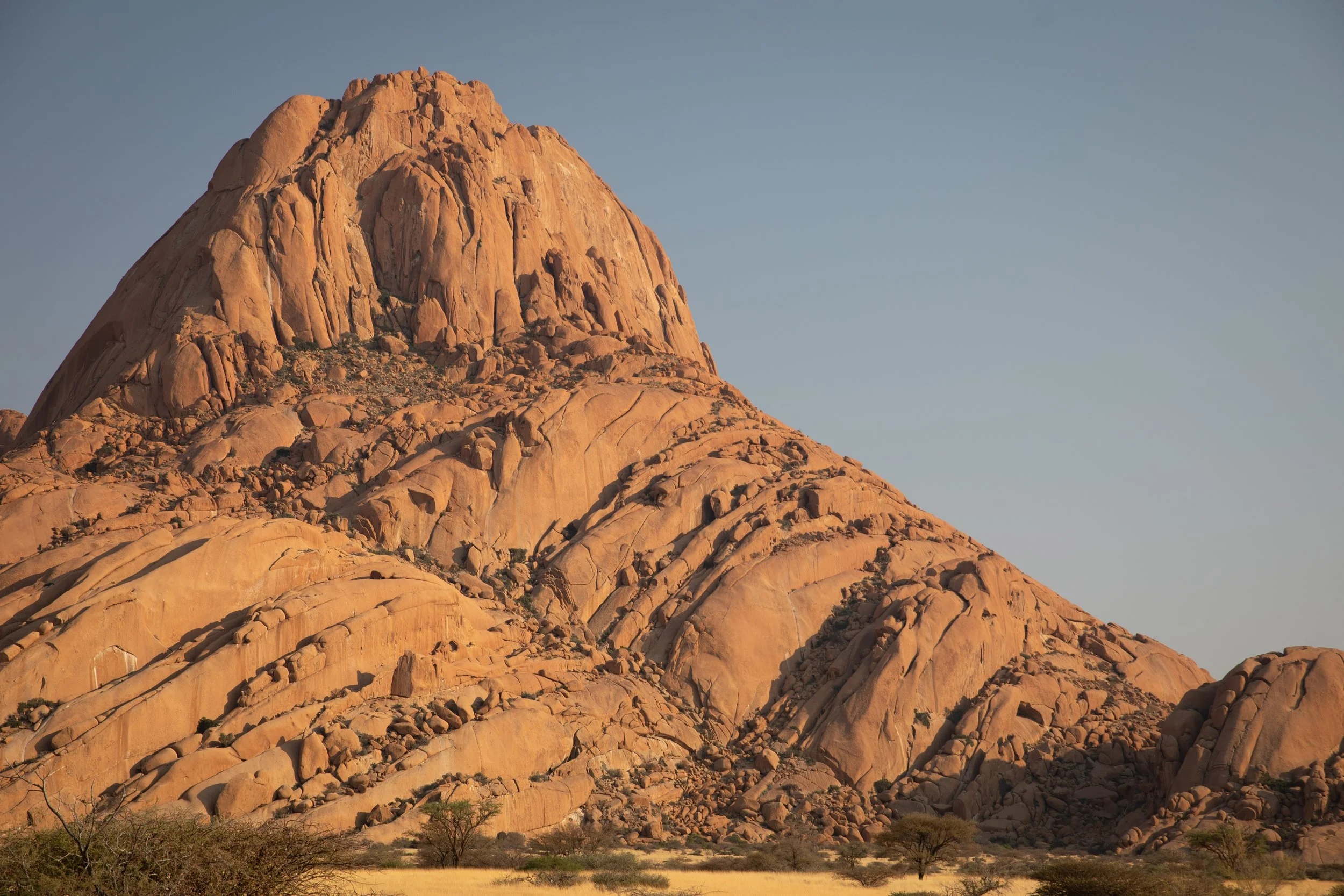
Spitzkoppe is a group of striking granite peaks that rise sharply from the surrounding desert plains. Its highest peak, Groot Spitzkoppe, reaches around 1,728 metres above sea level and is often called the “Matterhorn of Namibia” because of its distinctive shape. Nearby, you’ll also find Little Spitzkoppe and the rounded peaks of the Pontok Mountains.
For travellers, Spitzkoppe offers a striking change of scenery on a Namibia road trip. The granite formations stand out against the open desert, and the landscape changes colour as the sun moves across the rocks. We camped beneath the peaks, and seeing them glow at sunset made this one of the most memorable places we stayed.
Location: Erongo Region, central-western Namibia
Closest City: Swakopmund
Geography: Granite peaks and boulders rising from open desert plains
Climate: Semi-arid, with hot summers, cooler dry winters and seasonal rainfall
Character: Remote desert landscape known for camping, rock formations and stargazing
Map of Spitzkoppe
The map below highlights the main attractions at Spitzkoppe in Namibia, including the famous Rock Arch, the granite peaks and other points of interest around the campsite. It gives you an idea of where the key sights are in relation to one another and can help you plan what to explore during your visit.
How to Get to Spitzkoppe
Spitzkoppe is easiest to reach by car as part of a Namibia road trip. From Swakopmund, drive northeast towards Usakos, then follow the gravel roads to Spitzkoppe. From Windhoek, take the B1 and B2 through Okahandja, Karibib and Usakos, then turn onto the gravel road to the reserve. Allow roughly 3–4 hours from Windhoek or about 2 hours from Swakopmund, depending on your route and road conditions.
When you arrive, you’ll pass through the main entrance gate to enter the Spitzkoppe area. This is where visitors check in and pay the entry fee before continuing to the campsite and attractions. Check the current opening arrangements and fees before your visit.
With a Self-drive Vehicle
We drove from Swakopmund to Spitzkoppe in our rental 4×4 as part of our wider Namibia road trip. Most of the route was gravel, but it was in fairly good condition when we travelled it, making the drive straightforward.
Having our own vehicle made it easy to include Spitzkoppe in our itinerary and stay overnight among the granite peaks. If you’re already hiring a 4×4 to explore Namibia, I’d recommend driving yourself rather than arranging a separate tour, you’ll have more flexibility to arrive when you like and explore at your own pace. Check your rental agreement and allow extra time for the gravel roads.
I would ensure you take a 4×4 rather then a smaller vehicle mainly just due to the ground clearance. To access some of the campsites you need to be able to drive over some larger rocks.
From Windhoek
The drive from Windhoek to Spitzkoppe takes you west across central Namibia, through Okahandja, Karibib and Usakos. From Usakos, continue on gravel roads to the Spitzkoppe entrance gate.
Distance: Approximately 280–320 kilometres, depending on your route
Driving time: Around four hours, before stops
Route: B1 and B2 via Okahandja, Karibib and Usakos, then gravel roads to Spitzkoppe
Road quality: Mostly sealed until Usakos, followed by gravel roads
Allow extra time for the gravel section and check in at the main entrance gate when you arrive.
From Swakopmund
From Swakopmund, Spitzkoppe is about 150 kilometres away and takes around two hours to reach. Head northeast towards Usakos, then follow the signs to the Spitzkoppe entrance gate. On arrival, you’ll check in and pay the entry fee before continuing to the campsite and attractions.
Distance: Approximately 150 kilometres
Driving time: Around two hours
Route: Continue northeast from Swakopmund towards Usakos, then follow the signs to the Spitzkoppe entrance gate
On arrival: Enter through the main gate, where you’ll check in and pay the entry fee before continuing to the campsite and attractions
Having our own 4×4 made it easy to stay overnight among the granite peaks and explore Spitzkoppe at our own pace. If you’re hiring a vehicle, check that your rental agreement covers the route.
Organised Tour
If you’re staying in Swakopmund or Walvis Bay without a rental car, you can visit Spitzkoppe on a full-day organised tour. GetYourGuide lists several options, usually around 8–9 hours, with stops that may include the Rock Arch, San rock art and other sights around Spitzkoppe.
This is a convenient way to visit without driving the gravel roads yourself. Tour itineraries and inclusions vary, so check the details when booking. Prices and availability can also change, so see GetYourGuide for the latest options for your travel dates.
Park Entry Fees
All visitors enter through the main gate, where day visitors pay the entry fee before exploring. For the 2025/26 season, it’s N$180 per adult or N$120 per child aged 4–11. Camping at the Spitzkoppe Community Rest Camp costs N$300 per adult or N$200 per child aged 4–11, with park entry included.
Since camping costs only N$120 more per adult than a day visit, staying overnight can be well worth it. You’ll have more time to explore and can enjoy sunset and the night sky among the granite peaks. Check the current rates with the camp before you go, as prices may change.
Related Posts:
Best Things to Do in Spitzkoppe
Spitzkoppe in Namibia is worth more than a quick photo stop. You can visit for the day to see the famous Rock Arch and explore the granite formations, or stay overnight for sunset, stargazing and time to hike. These are the experiences I’d make time for.
Spitzkoppe Rock Arch
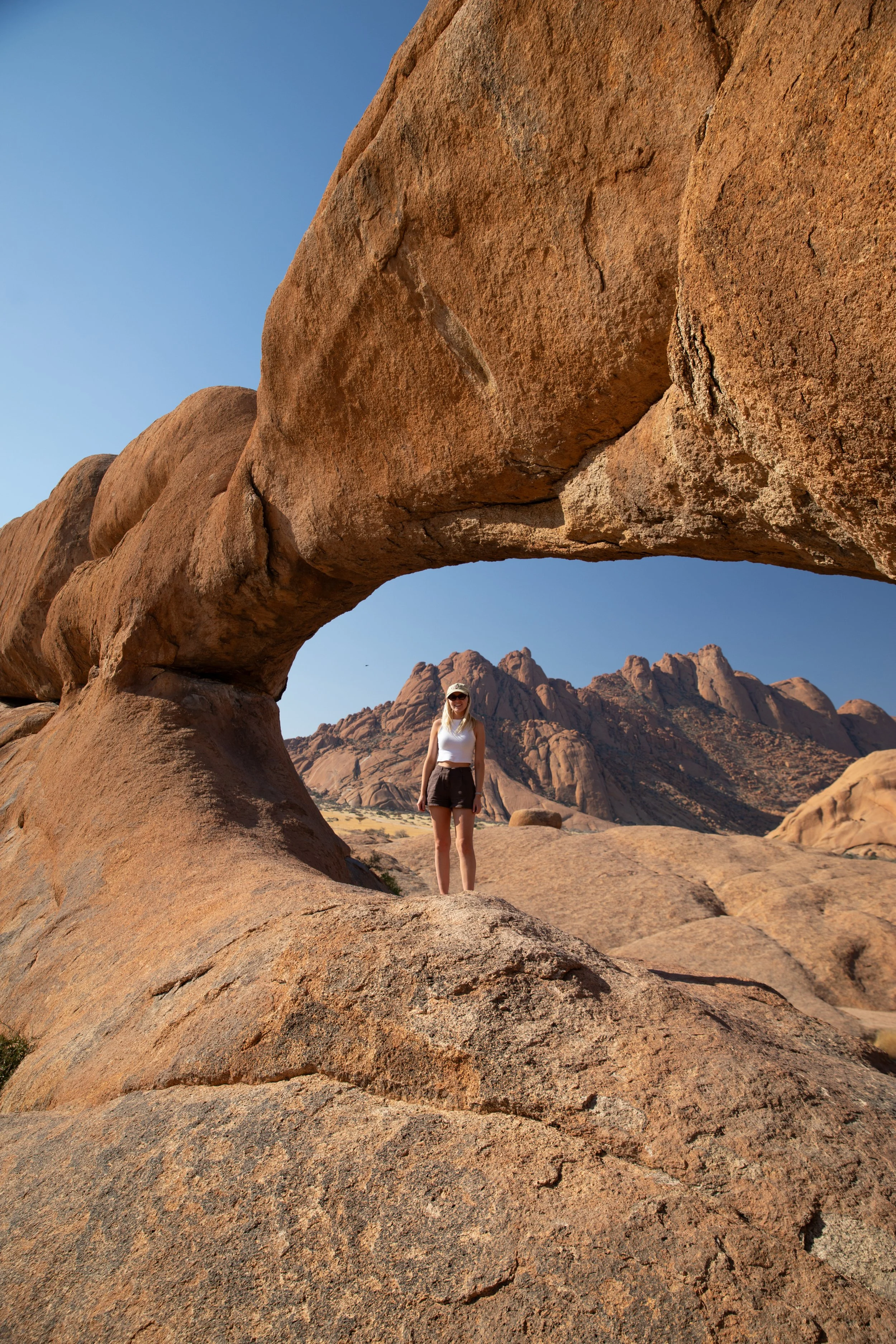
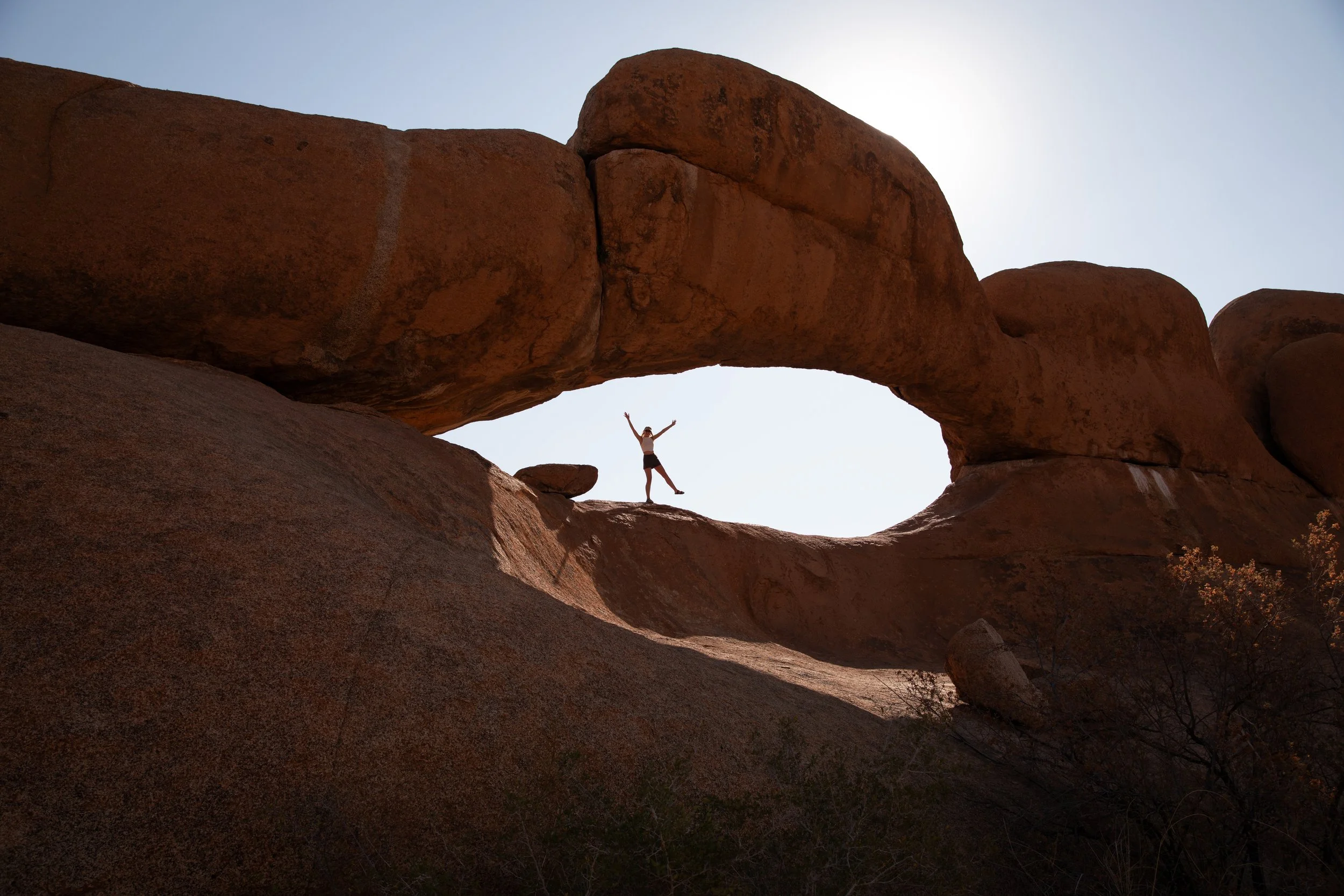
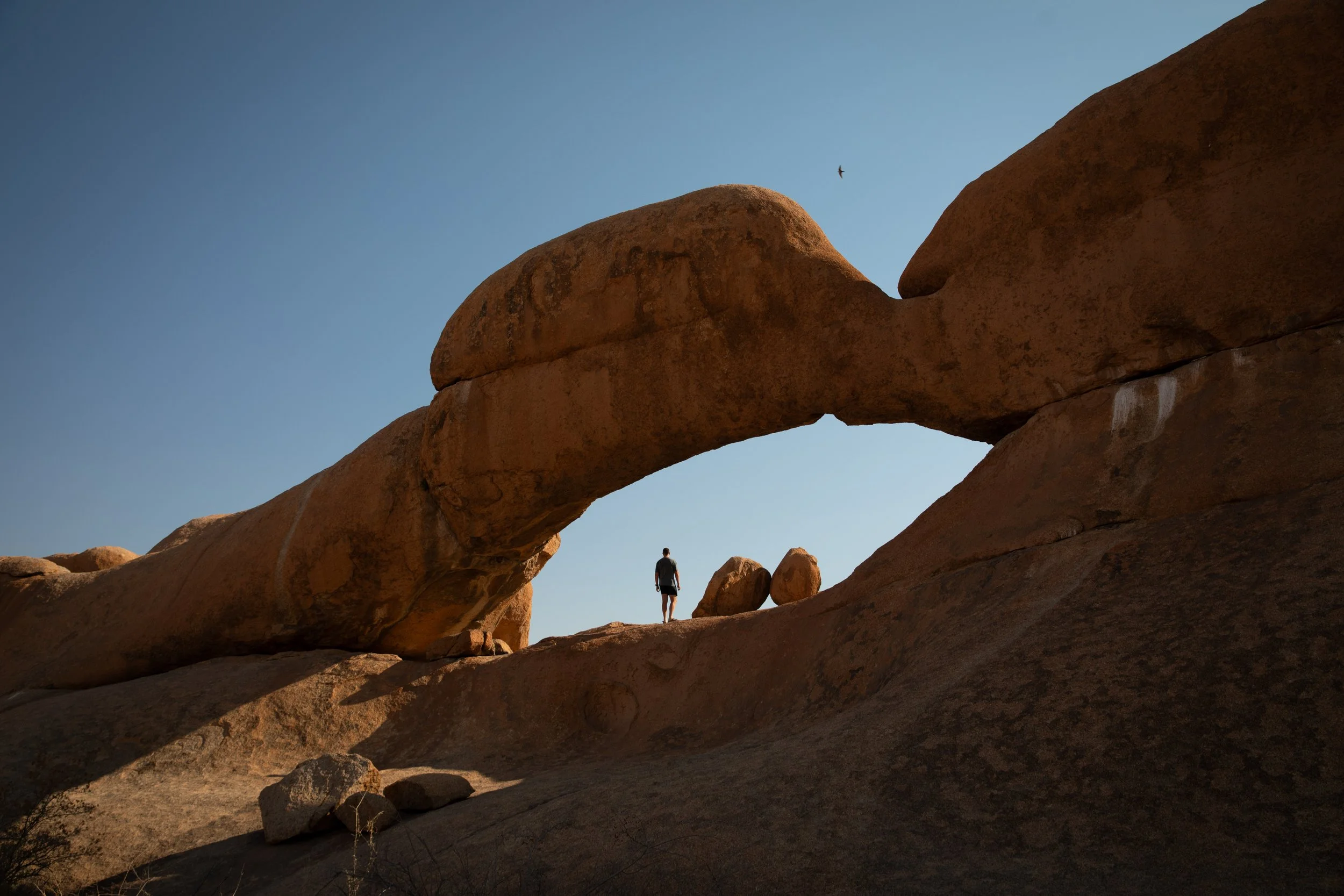
The Spitzkoppe Rock Arch is one of the area’s best-known landmarks. It’s a popular place to stop for photos, with the granite arch framing the desert landscape beyond. You can combine it with time to explore the surrounding rock formation.
We really enjoyed getting a few photos around it and virtually had the entire place to ourselves.
Be careful because it is quite steep and slippery actually getting up toward the rock arch itself, so take your time.
Watch the Sunset over Spitzkoppe
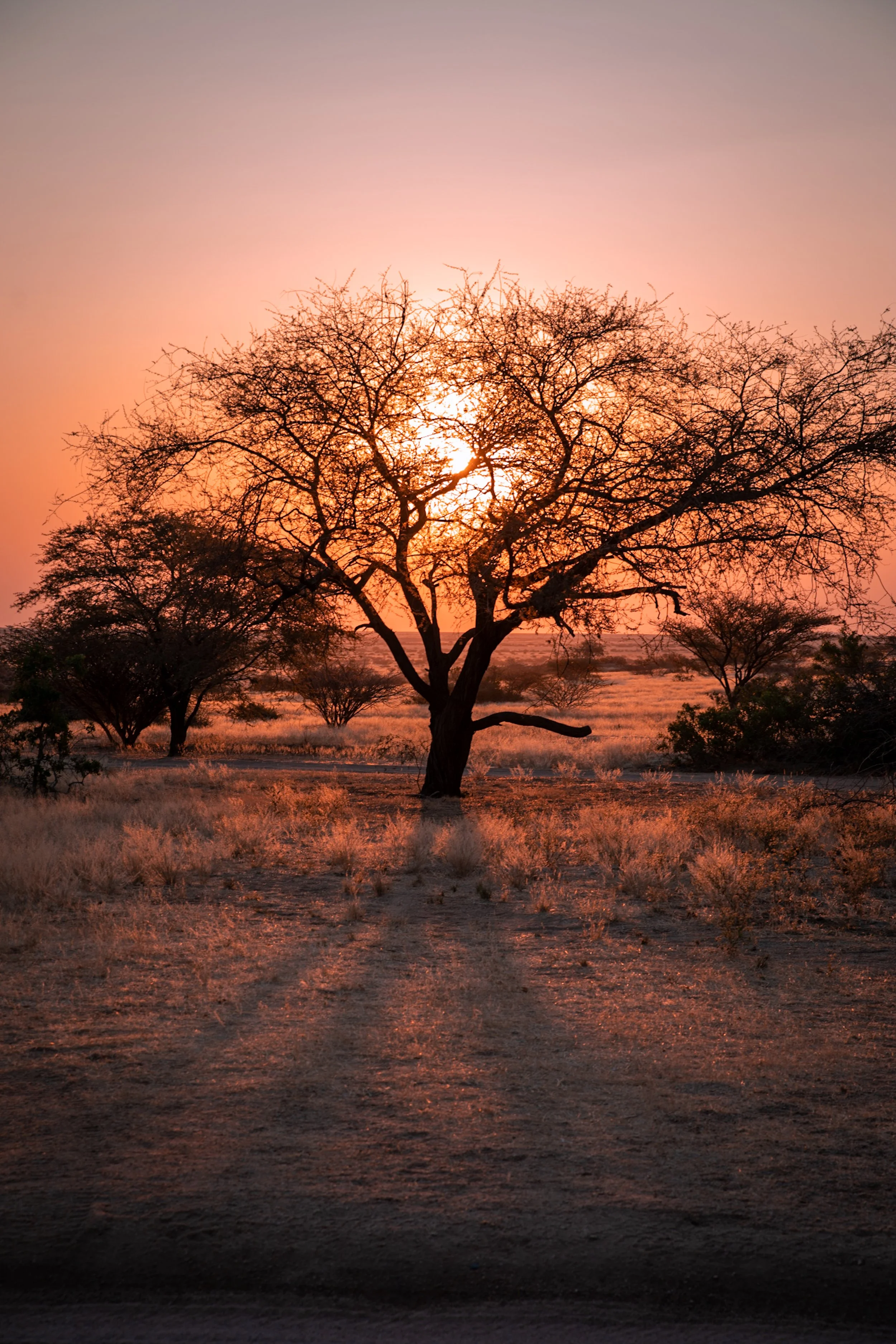
Sunset was one of the highlights of our visit. We camped near Spitzkoppe Rock Sunset View, which gave us an incredible view of Grosse Spitzkoppe as the setting sun warmed the granite peaks with colour. It’s one of the best spots to watch sunset, so bring your camera and allow time to find a good viewpoint.
Stargazing and Astrophotography
Once the sun sets, stay outside and look up. Spitzkoppe’s open desert setting gives you a wide view of the night sky, and we loved watching the stars appear above the granite peaks from our campsite.
If you have the camera setup it’s an incredible spot for astrophotography, with the rocks making a dramatic foreground for night-sky shots. Stargazing is one of the best reasons to stay overnight rather than visit only during the day.
Hiking
Hiking lets you explore beyond the main viewpoints and get closer to Spitzkoppe’s enormous granite formations. If you want to take on one of the area’s hikes or climbs, arrange it with a local guide through the camp or visitor centre. Ask about the available routes, duration, difficulty and current price when booking, as these can vary.
One of the biggest challenges is climbing Grosse Spitzkoppe, often called the “Matterhorn of Namibia.” The guided route is around 4.6 km return, with approximately 439 m of elevation gain, and takes about five hours. It involves steep, exposed scrambling over large boulders, with chains on some sections, so it’s a demanding climb rather than a casual walk. Bring your own water and snacks, and check with your guide that the route is suitable for your experience and fitness.
If you’re considering the climb, allow time in your itinerary to arrange a guide and make an early start. Staying overnight makes this easier, and gives you time to enjoy the campsite and surrounding landscape after the hike.
Camping at Spitzkoppe
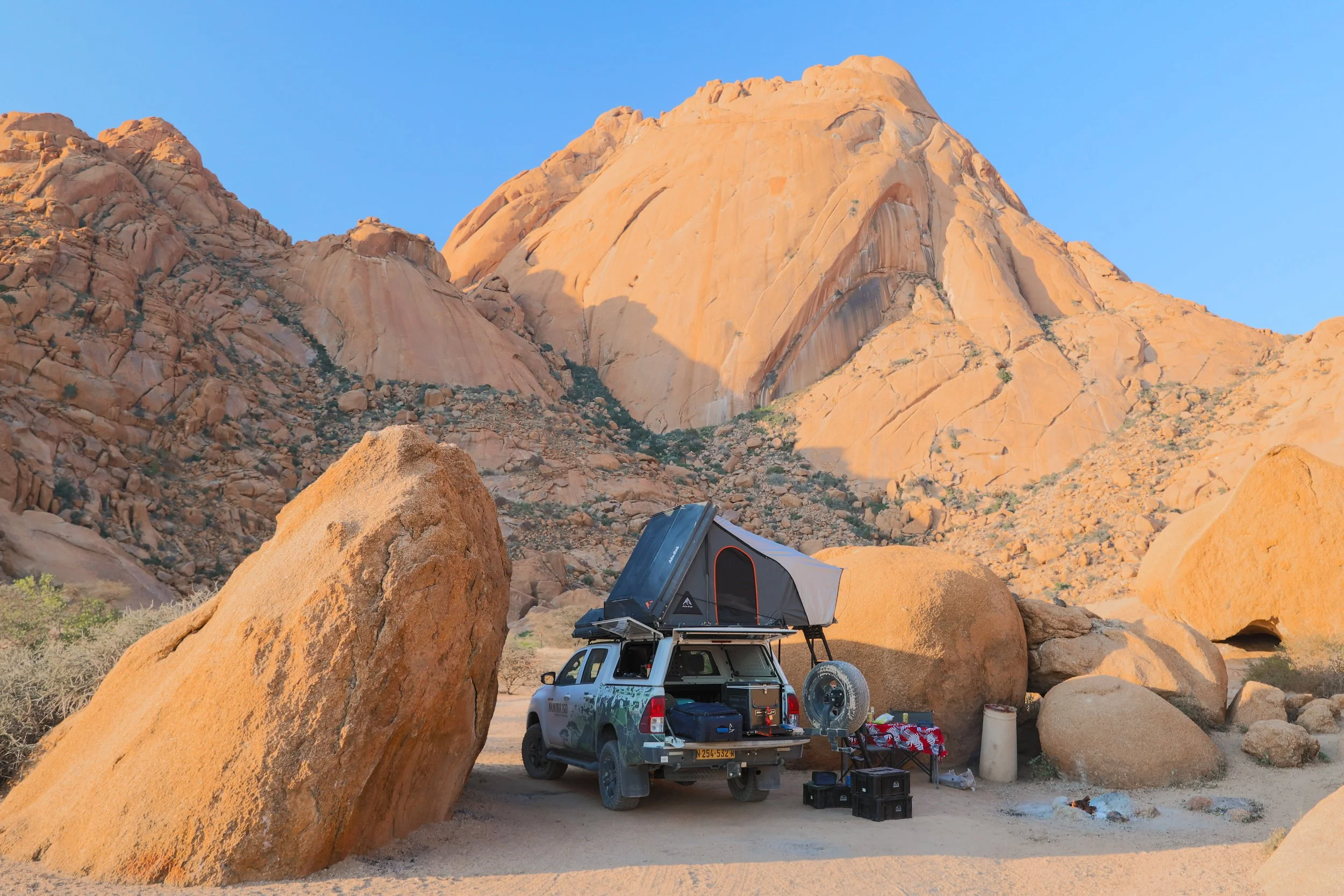
Camping at Spitzkoppe was one of the best experiences of our Namibia road trip. Staying among the granite peaks made it feel completely different from a quick visit, and we loved having our own little campsite in the middle of the landscape.
If camping isn’t for you, there are also other accommodation options, including Spitzkoppen Lodge and Spitzkoppe Cabin Camp.
Choosing and Booking a Campsite
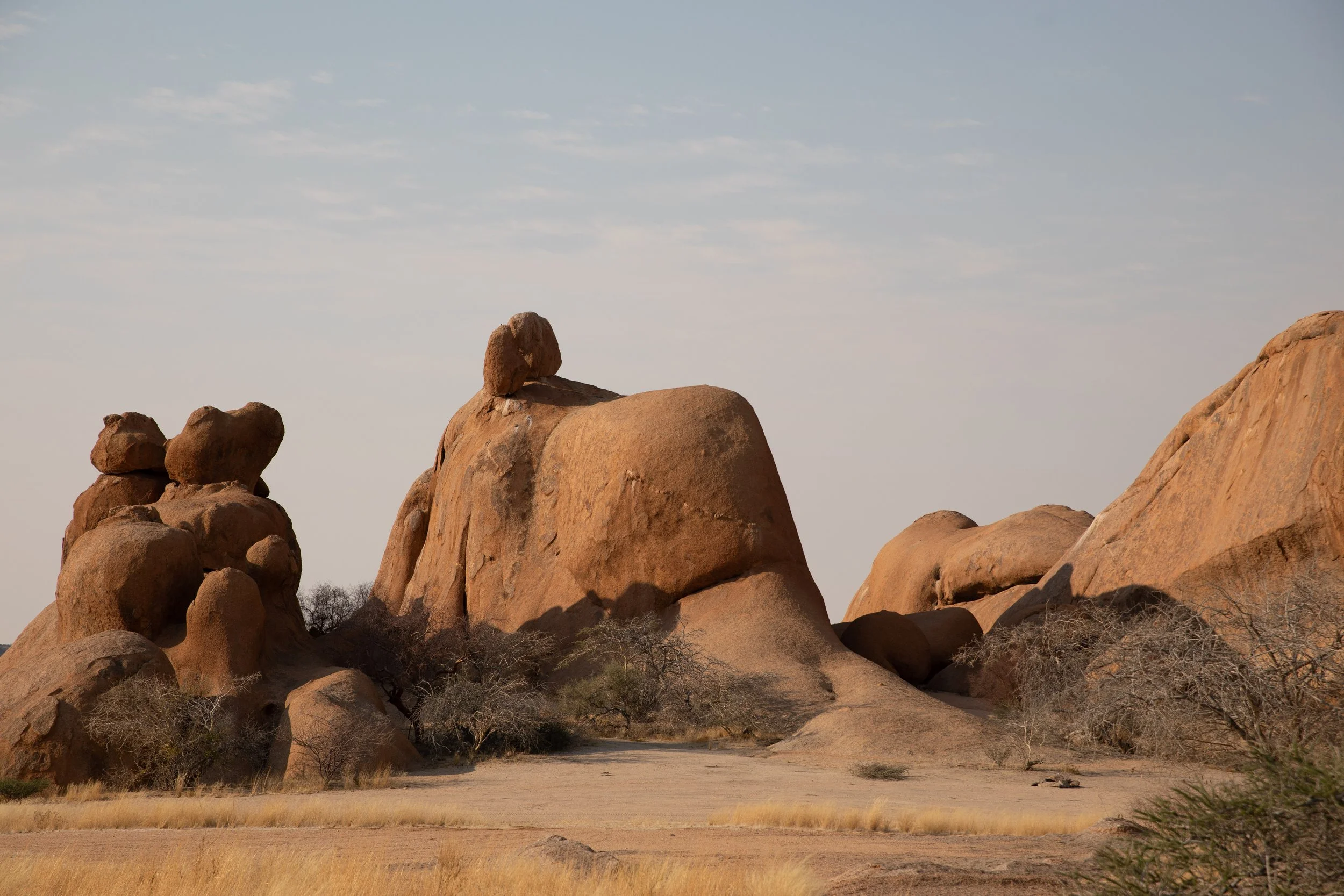
The Spitzkoppe Community Rest Camp has more than 50 campsites, each with its own setting. Some are tucked between enormous boulders, while others sit beside trees or look out over the open desert plains. A few have sheltered, cave-like spots where you can sleep beneath the stars.
You can book ahead to make sure there’s space, but you can’t reserve a specific campsite. Campsite locations are first come, first served, so arrive early if you have a particular kind of spot in mind. You can also ask at reception about the more secluded sites. The camping rate in 2026 was N$300 per adult and includes the park entry fee.
Campsite Facilities and What to Bring
The campsites are very basic, with no water or electricity at individual campsites. Showers and toilets are near reception, along with a dishwashing area and a bar selling cold drinks. Meals are available, but serving hours are limited and the kitchen closes at around 6 pm, so plan ahead if you’re hoping to eat there.
Reception and its facilities can be a 10–15-minute drive from your campsite, so it’s worth planning your trips there, especially if you have a rooftop tent. Try to shower and take care of anything else you need at reception before setting up for the evening, so you don’t have to pack down or move your vehicle later.
Each campsite has a rubbish bin and a designated fire area. Bring the other essentials you’ll need, including water, food and charging equipment.
Our Experience Camping at Spitzkoppe
Although the facilities are extremely basic, I’d still recommend camping at Spitzkoppe to anyone planning a Namibia road trip. For us, sleeping beneath the enormous granite formations was well worth roughing it.
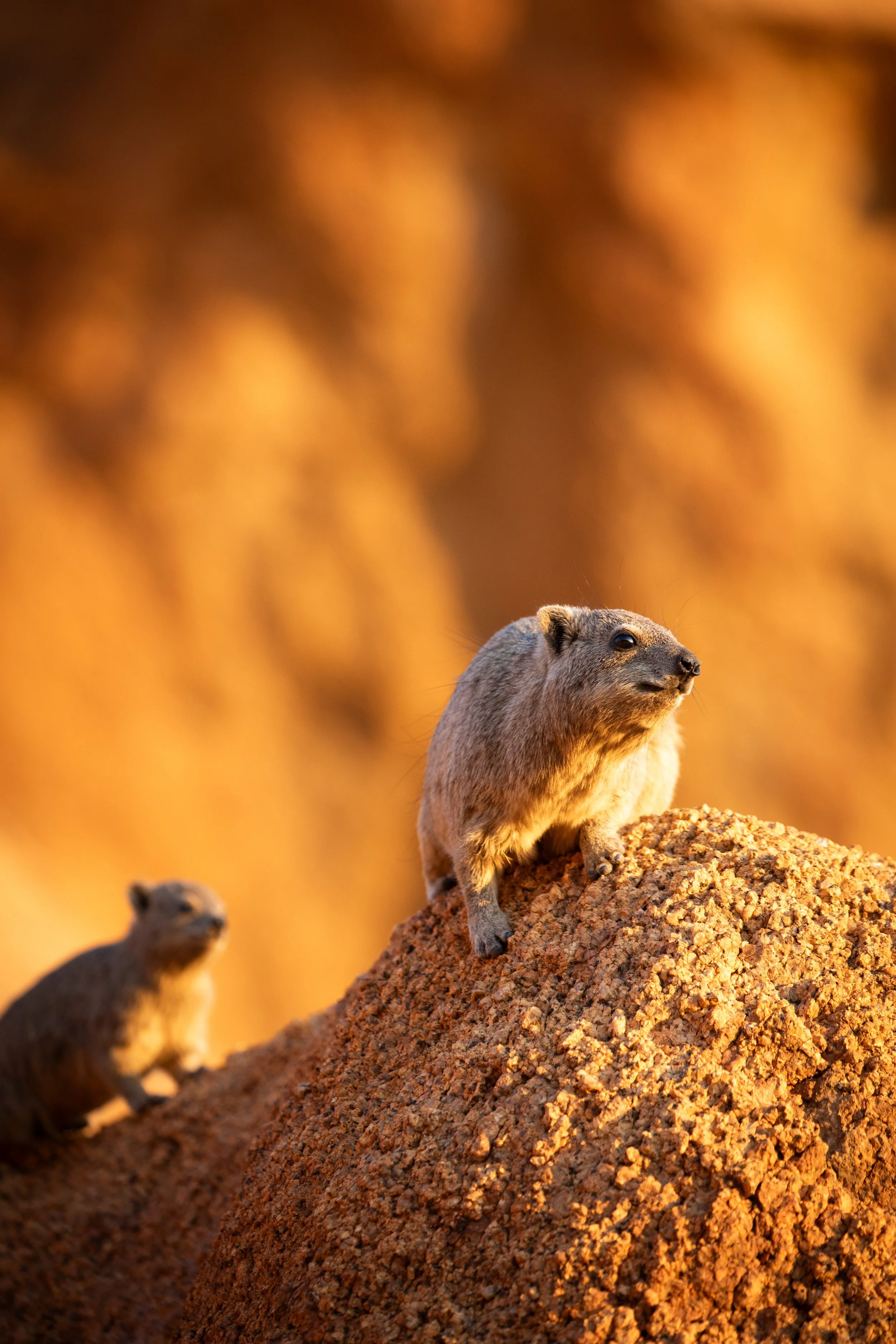
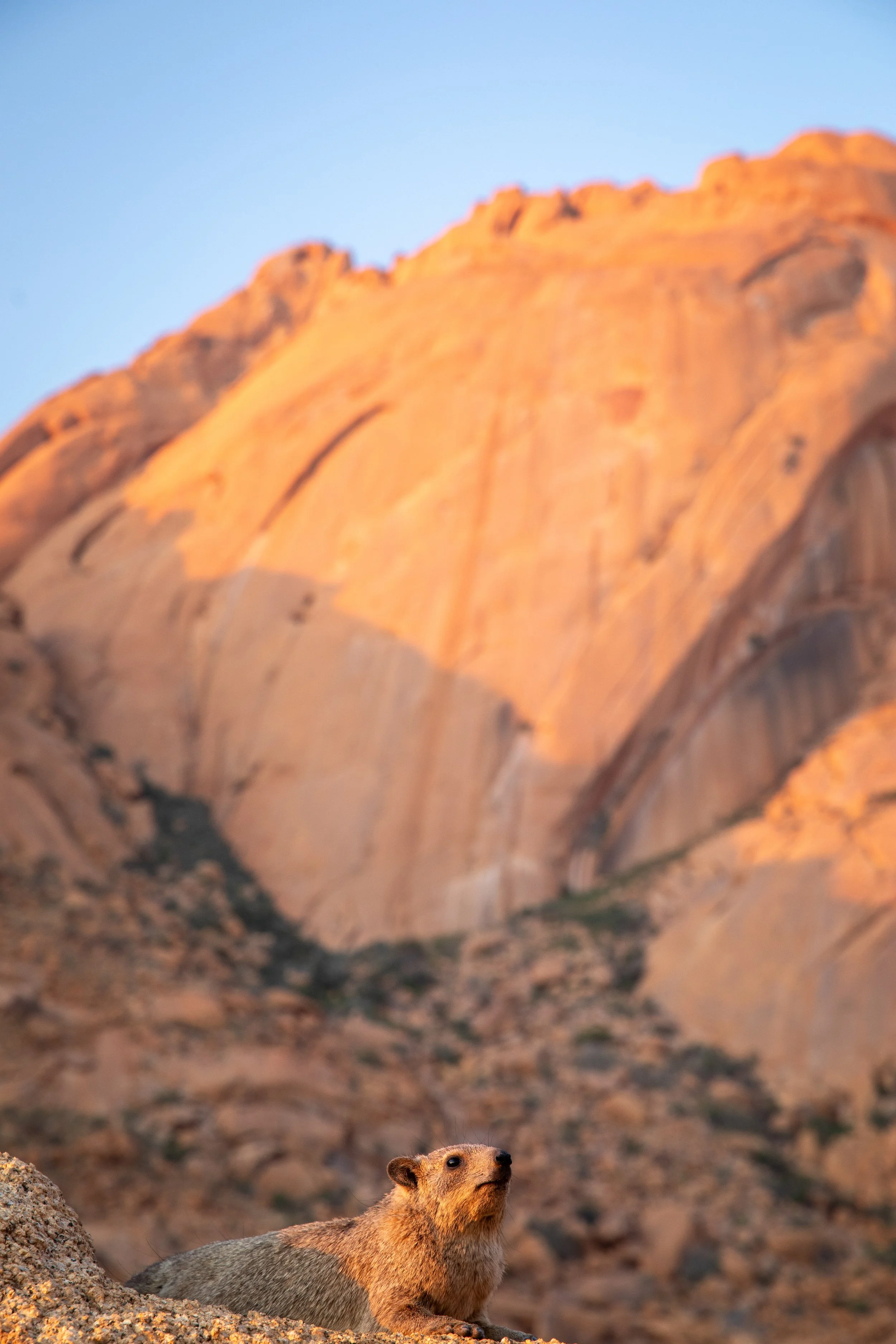
We were excited to arrive and drive around the camp area looking for our ideal site. We found one near the Spitzkoppe Rock Sunset View, at the western end of the area, with incredible views of Grosse Spitzkoppe. A family of dassies small, furry rock-dwelling mammals also known as rock hyraxes, was running around our campsite.
We cooked dinner as the sun set over the granite peaks, then settled in to watch the stars appear across the night sky. It was one of those camping experiences that became a highlight of the trip, rather than just a place to sleep between stops.
How Long to Spend at Spitzkoppe
For most visitors, I’d recommend staying one night and allowing two full days at Spitzkoppe. The main sights are fairly close together, so you’ll have time to visit the Rock Arch and other formations, enjoy the views and still have a relaxed afternoon at your campsite. Staying overnight also means you can watch the sunset among the granite peaks and experience the clear night sky, two of the best parts of visiting Spitzkoppe.
If you’re planning to join one of the organised hikes or climbs, I’d allow at least two nights. These usually start early in the morning and can take up much of the day, so the extra night gives you time to do a hike without having to squeeze in the other sights or rush off afterwards.
Best Time to Visit Spitzkoppe
The most comfortable time to visit Spitzkoppe is during Namibia’s dry season, from May to October. Cooler daytime temperatures make it easier to explore the granite formations and take on a hike, while the clear, dry weather is ideal for watching the sunset and stargazing.
Winter nights can get cold, especially when you’re camping, so pack warm layers for after sunset and early morning. From November to April, temperatures are generally hotter and rain is more likely. You can still visit during these months, but the heat may make walking and climbing less comfortable.
We visited in August and found the weather perfect. It was warm during the day, but cool enough at night to sleep comfortably in our rooftop tent.
Is Spitzkoppe Worth Visiting?
Spitzkoppe was undoubtedly one of our favourite stops on our Namibia road trip. Many travellers plan their itinerary around Sossusvlei’s towering dunes or Etosha’s wildlife, but Spitzkoppe offers a completely different landscape: huge granite peaks rising from the desert plains.
As already explained it’s also an exceptional place to camp. Staying among the rocks gave us a real sense of adventure and made us feel immersed in the landscape. The campsites are well spaced, so even with other visitors around, it often felt like we had the place to ourselves.
Spitzkoppe also fits naturally into a longer Namibia road trip. Many travellers drive between Swakopmund and Etosha, and stopping here breaks up that journey while giving you time to experience a very different side of the country. It may not have the same recognition as Sossusvlei or Etosha, but I wouldn’t overlook it.
Related Posts:
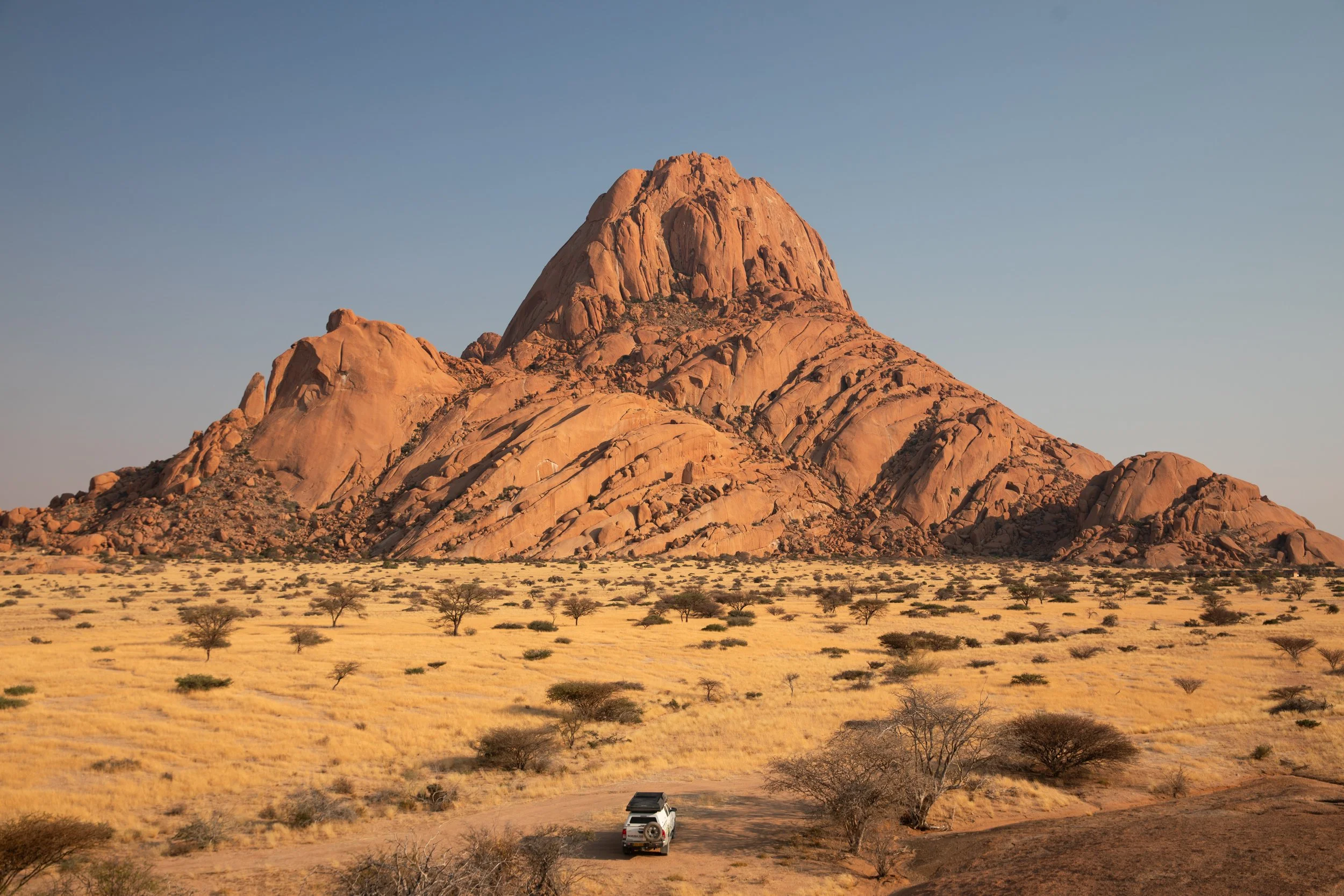
We spent a night camping beneath the towering granite peaks of Spitzkoppe in Namibia, surrounded by enormous boulders and wide-open desert. In this guide, I’ll share what we loved about visiting, what to see and do, and what to know before you go, from choosing a campsite to enjoying the sunset and star-filled night sky