
Namibia Safari: Complete Etosha National Park Travel Guide
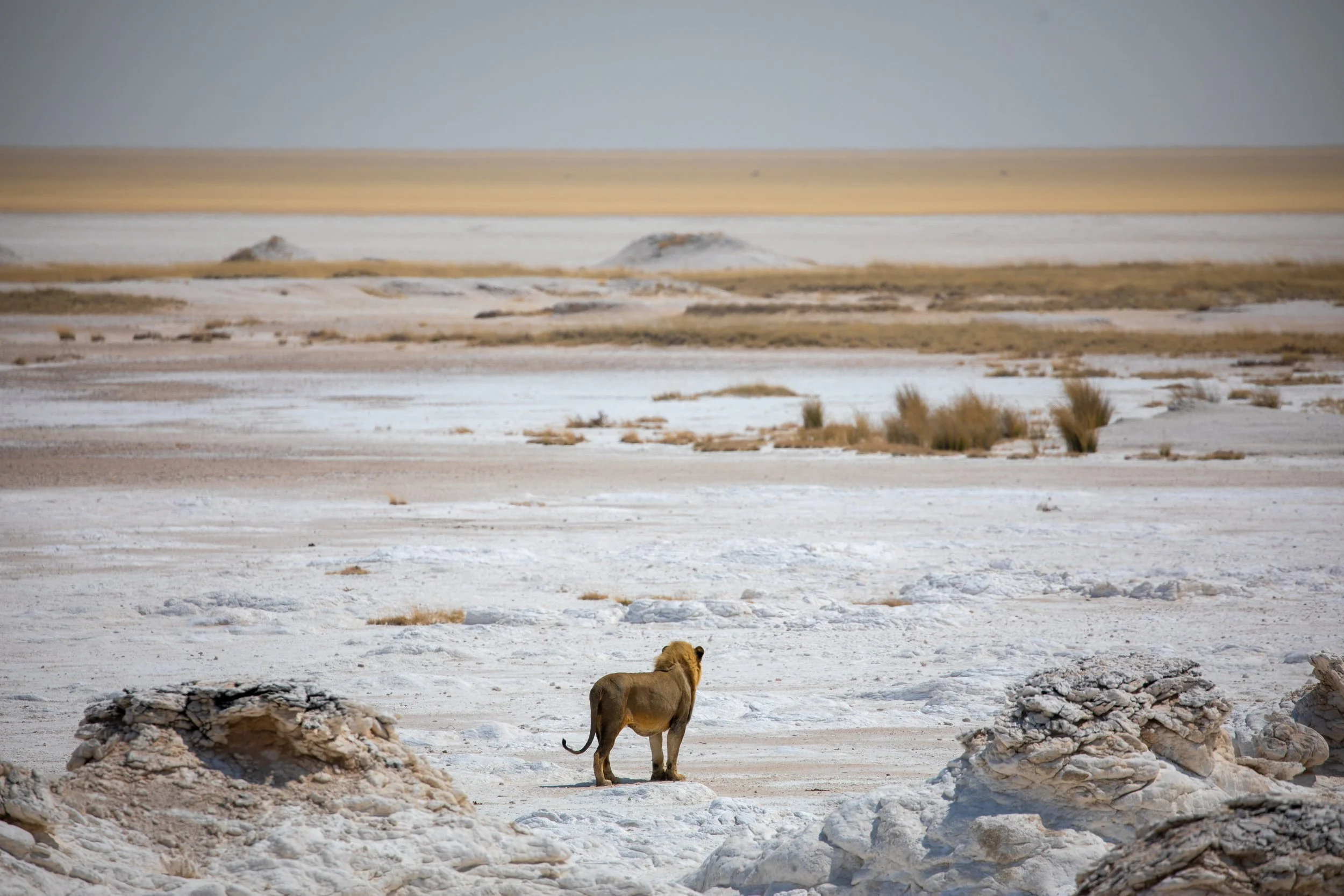
Etosha National Park is one of the highlights of travelling through Namibia, combining vast salt pans and dramatic semi-arid landscapes with some of Africa’s most accessible wildlife viewing. It is a must-visit destination for anyone planning a Namibia safari.
Unlike many African national parks, Etosha is particularly accessible to independent travellers, with well-maintained routes and a network of waterholes that make self-drive safaris possible. From watching elephants, lions, giraffes and rhinos gather around the waterholes to exploring the park’s changing landscapes, Etosha offers an unforgettable wildlife experience.
I really loved the freedom to drive ourselves around the park, choosing where to go, when to stop and how long to stay at each sighting. Having that independence added a real sense of adventure to our Namibia safari and made the experience feel genuinely unique.
This travel guide covers everything you need to plan your visit, including where Etosha is located, how to get there, the best time to visit, entry fees, gates, camps and accommodation, wildlife, the best waterholes, self-drive safaris versus guided game drives, suggested itineraries, costs and essential tips for exploring the park.
Namibia Safari Travel Guide Overview
Where is Etosha
Etosha National Park Map
Why Visit Etosha National Park
How to Get to Etosha
Best Time to Visit Etosha
Entry Fees, Gates and Rules
Etosha Camps and Accommodation
Wildlife in Etosha
Safari in Etosha National Park
Best Waterholes in Etosha
How Long Should you Spend
Etosha Travel Itinerary
How to Budget for Etosha Safari
Practical Information For Visiting Etosha
What to Pack for Etosha
Where is Etosha National Park
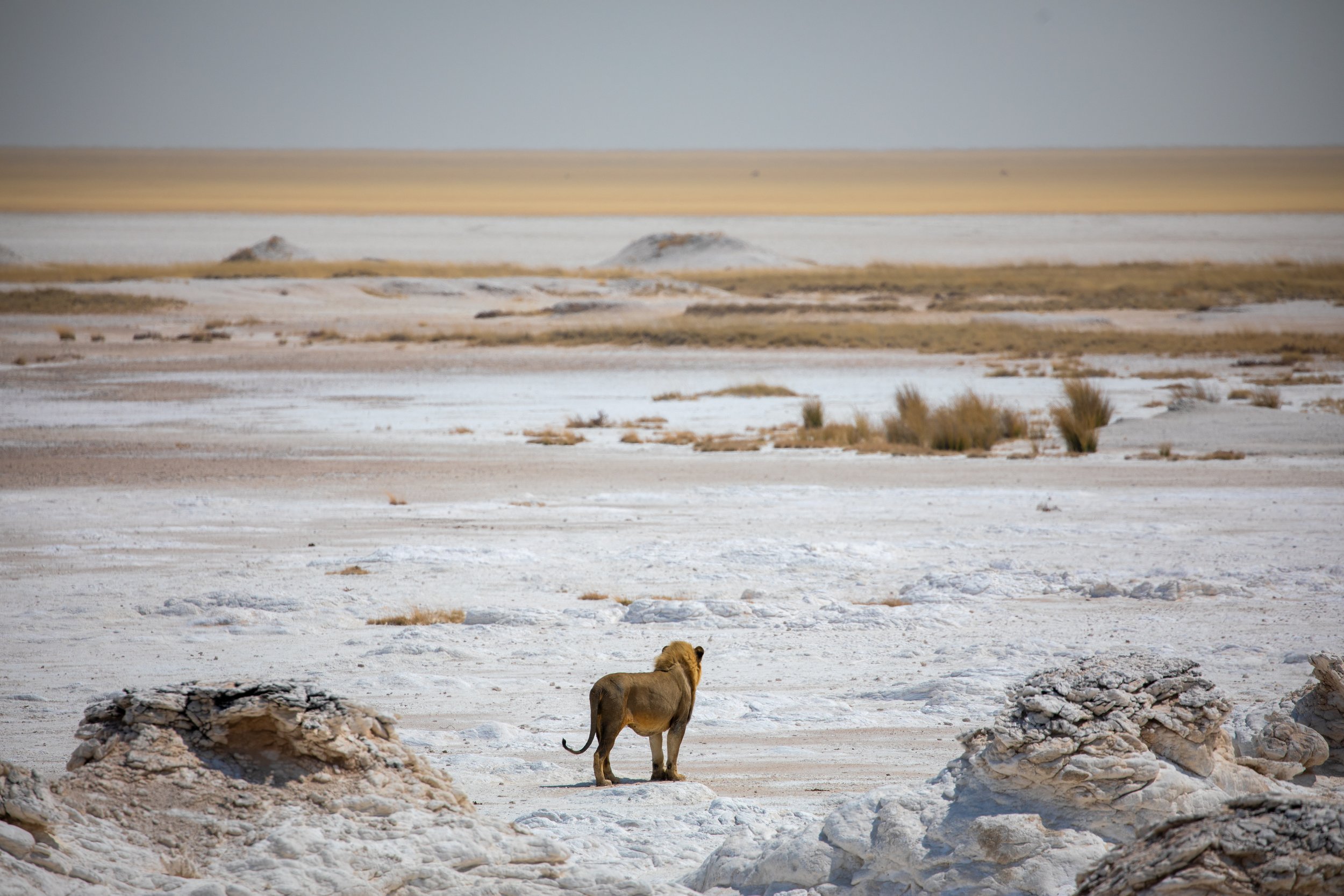
Etosha National Park is located in northwestern Namibia and covers approximately 22,900 square kilometres, so its enormous scale is something you notice almost immediately. At the centre of the park lies the vast Etosha Pan, a huge salt-covered depression and one of the largest salt pans in Africa. It creates the open, otherworldly landscape that makes Etosha feel so different from many of Africa’s more traditional savannah parks. For many travellers, exploring this remarkable landscape is one of the defining highlights of a Namibia safari.
For visitors, the pan is more than just a scenic backdrop. Its open edges and surrounding waterholes create some of the best places to search for wildlife, particularly during the dry season when animals gather around the remaining sources of water. The contrast between the bright white pan, dusty roads and large groups of animals is one of the defining features of an Etosha safari.
As you travel through the park, the scenery gradually changes from open grasslands and dry savannah to mopane woodland, dolomite hills and seasonal wetlands. The eastern, central and western sections each have their own character, meaning moving between areas is not simply a matter of changing accommodation, it gives you the chance to experience different landscapes and wildlife environments.
Location: Northwestern Namibia
Closest City: Outjo, Tsumeb, Otavi and Opuwo
Geography: Vast salt pan, dry savannah, mopane woodland, grasslands and seasonal waterholes
Climate: Semi-arid, with hot summers, cooler dry winters and seasonal rainfall
Character: Remote national park renowned for self-drive safaris, abundant wildlife and waterhole viewing
Etosha National Park Map
This Etosha National Park Map highlights the park’s main areas, camps, roads, waterholes and wildlife-viewing locations, helping you understand how Etosha is laid out before planning your Namibia safari. Because the park is so large, understanding the distances between Okaukuejo, Halali and Namutoni is particularly useful when deciding where to stay and how to structure your time.
Why Visit Etosha National Park
Etosha National Park is worth visiting because it combines abundant wildlife, dramatic landscapes and the freedom to experience a genuine African safari independently. Unlike many major safari destinations, you do not need to join an expensive organised tour to explore the park. You can drive yourself between waterholes, spend as long as you like watching wildlife and shape each day around your own interests.
The park’s enormous scale, changing landscapes and concentration of animals make every day feel different. Whether you are visiting for the wildlife, photography, scenery or the unique experience of navigating an African national park yourself, Etosha offers plenty of reasons to include it in your Namibia safari.
Diverse Wildlife in Large Numbers
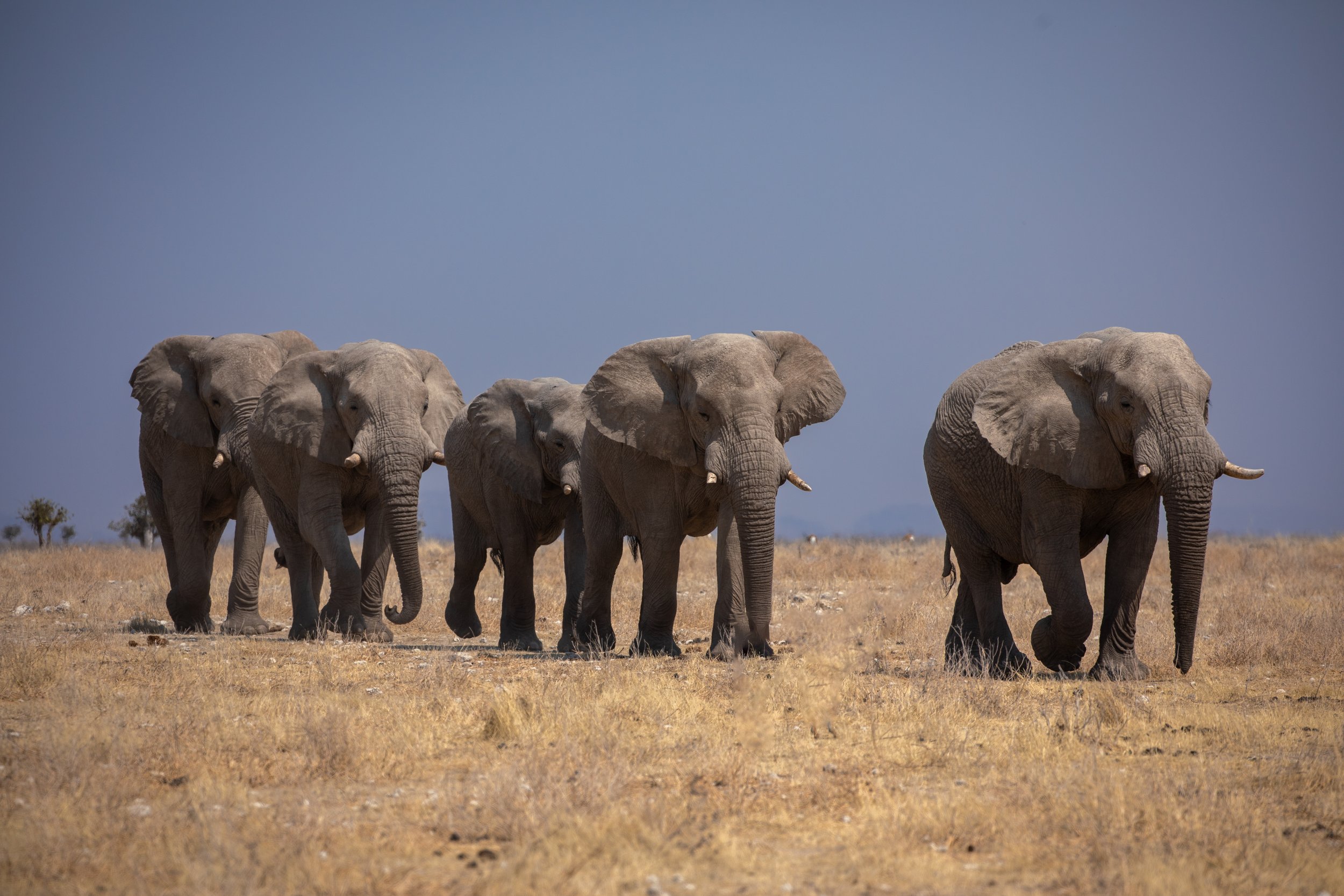
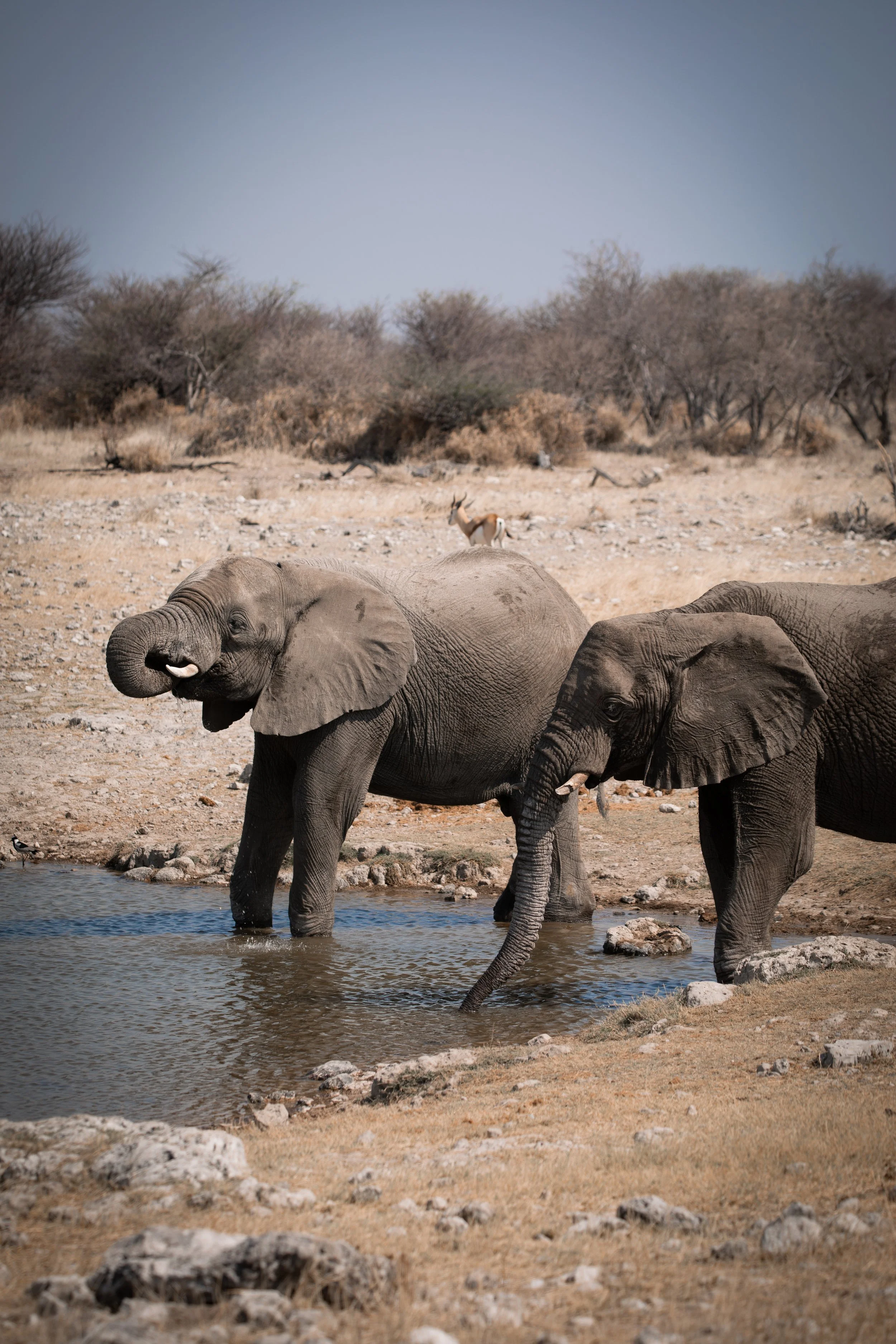
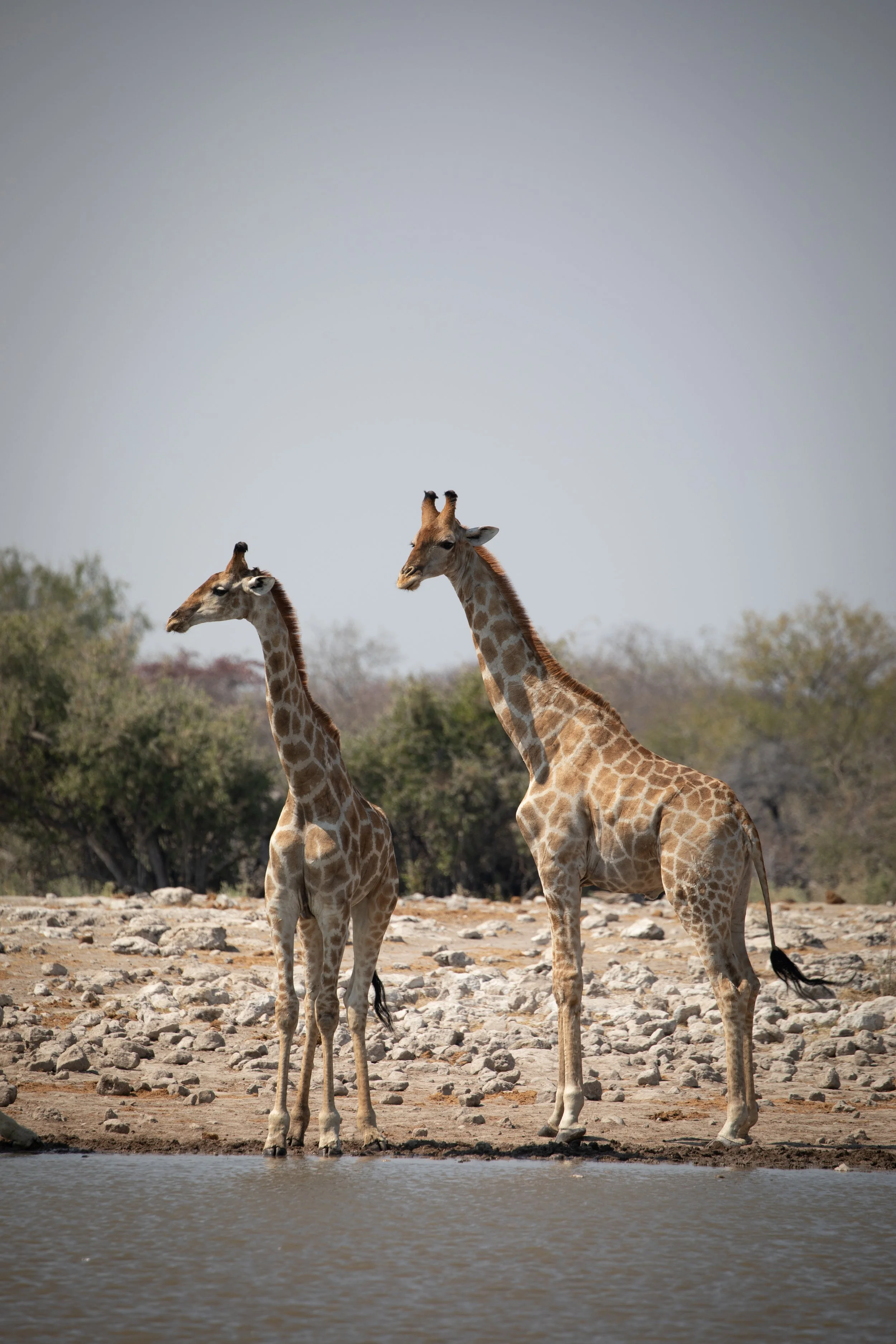
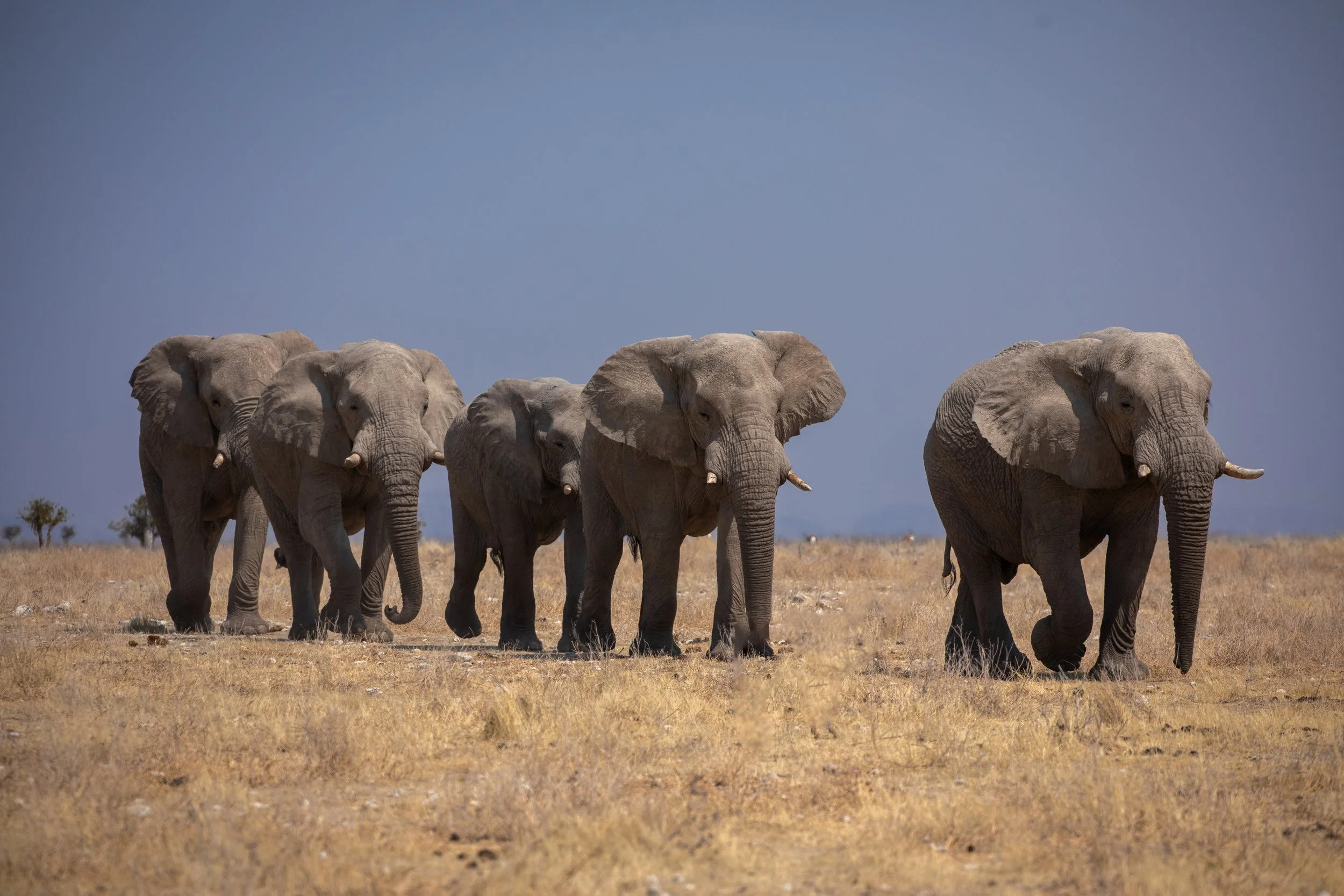
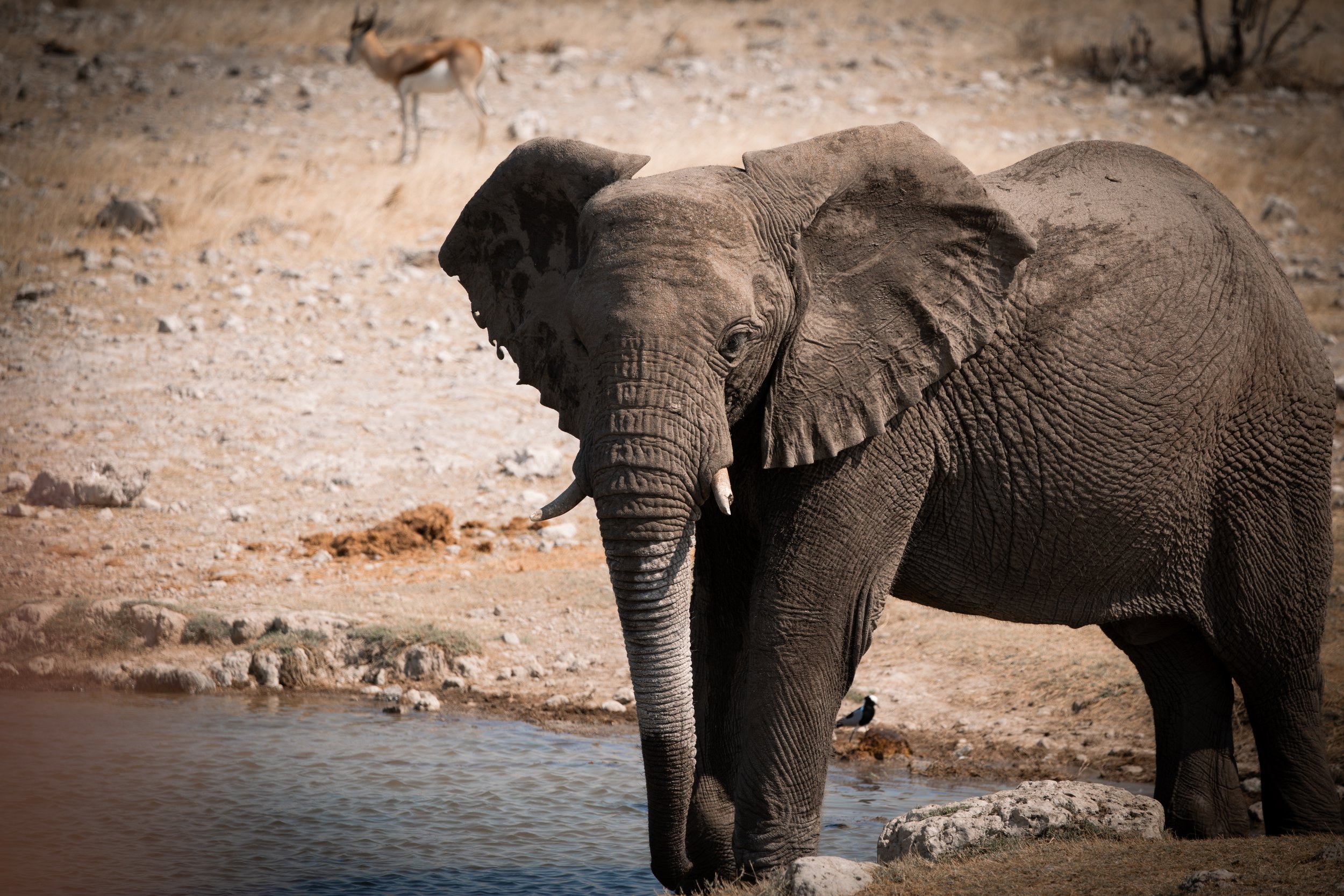
Etosha is home to an impressive variety of African wildlife, including elephants, lions, rhinos, giraffes, zebras, wildebeest, springbok and many other species. What makes the park particularly special is the sheer number of animals that can gather in the same area, especially during the dry season when wildlife is drawn towards the remaining water sources.
Freedom to Explore on Your Own
One of Etosha’s biggest advantages is the ability to explore independently. You can drive yourself between the different areas of the park, choose which roads to follow and decide how long you want to spend at each sighting. This was our favourite part of the experience, as it felt like everything was in our own hands. We could shape each day around what interested us, making the safari feel more personal rather than relying entirely on a guide or following someone else’s schedule.
This also allowed us to move away from some of the busier areas, avoid simply following the typical tourist route and discover quieter waterholes and lesser-known corners of the park away from the crowds.
Waterholes That Bring Wildlife to You
Etosha’s waterholes make wildlife viewing unusually accessible. Rather than constantly searching through dense vegetation, you can spend time at known water sources and wait for animals to arrive. During the dry season, several species may gather around the same waterhole, creating excellent opportunities to observe animal behaviour, take photographs and enjoy sightings at your own pace.
Dramatic and Otherworldy Landscapes
The wildlife is only part of what makes Etosha memorable. The enormous white expanse of the Etosha Pan, combined with open grasslands, dry savannah, mopane woodland and distant hills, gives the park a striking and otherworldly appearance. One of the most special moments for us was reaching a viewpoint overlooking the pan, where the vastness of the landscape really became apparent. The scenery changes as you move between different areas, and the contrast between the pale pan, dusty roads and large herds of animals creates some of Namibia’s most distinctive landscapes.
How to Get to Etosha
Getting to Etosha National Park is relatively straightforward, with most visitors arriving by road as part of a wider Namibia safari or self-drive itinerary. Unlike destinations that require internal flights or complicated transfers, Etosha is well connected to many of Namibia’s main travel routes.
Most visitors arrive from Windhoek, although Etosha can also be reached from the Namib Desert, Swakopmund or Damaraland. The distances are long, so it is important to allow enough time for gravel roads, fuel stops and unexpected wildlife or scenery along the way.
Etosha is a large park, and the distance you need to travel will depend on which area you plan to visit. The journey to the western or central areas is generally shorter from Windhoek, while reaching the eastern section around Namutoni takes longer. Planning your route around where you intend to stay will help avoid unnecessary driving.
For most travellers, the easiest option is to hire a vehicle and drive to Etosha independently. This allows you to include the park naturally within a wider Namibia road trip and gives you the flexibility to stop at other destinations along the way.
Self-Driving to Etosha National Park
Hiring your own vehicle and driving to Etosha National Park is one of the easiest and most flexible ways to get there. Many rental providers operate in Namibia’s larger cities and offer everything from standard cars to fully equipped 4x4s with rooftop tents, camping equipment and other essentials.
This allows you to include Etosha as part of a wider Namibia road trip, travelling from Windhoek, Swakopmund or Damaraland at your own pace. Your vehicle choice will depend on your route and accommodation plans, but self-driving gives you the freedom to stop along the way and explore the park independently once you arrive.
From Windhoek
The drive from Windhoek to Etosha is one of the most straightforward ways to reach the park. The exact journey depends on which section you are visiting:
Distance to southern Etosha: Approximately 415 kilometres
Driving time: Around five hours
Route: Generally via Okahandja, Otjiwarongo and Outjo
Road quality: Mostly sealed roads, although some connecting routes and roads closer to the park may be gravel
To Namutoni: Approximately 530 kilometres and six to seven hours, depending on stops and road conditions
The route is relatively easy to navigate, but it is still worth allowing extra time for fuel stops, slower traffic and unexpected wildlife or livestock near the road.
From Swakopmund
The drive from Swakopmund to Etosha is considerably longer and can vary depending on whether you travel directly or include stops through Damaraland:
Distance: Approximately 520–600 kilometres
Driving time: Around seven to eight hours
Direct route: Mostly sealed roads
Scenic route via Spitzkoppe or Damaraland: Longer, with sections of gravel road
Suggested approach: Break the journey with an overnight stop if you want to explore the destinations along the way
Because of the distance, many travellers choose to stop around Spitzkoppe, Damaraland or Twyfelfontein, turning the journey to Etosha into part of the wider Namibia road trip.
Going on an Organised Tour to Etosha National Park
If you would prefer not to organise vehicle hire, accommodation, long drives and park logistics yourself, joining an organised tour can be a convenient way to include Etosha National Park in your Namibia safari. There are two main options: joining a larger overland tour that travels through Namibia, or booking a smaller safari organised specifically around Etosh
Overland Africa Tour
Companies such as G Adventures and Intrepid Travel also offer larger overland Africa tours that travel through Namibia as part of a multi-country itinerary. These trips may include Namibia alongside destinations such as South Africa, Botswana, Zimbabwe, Zambia, Tanzania or Kenya, with Etosha included alongside other major African highlights.
The tours usually include transport, accommodation, a tour leader or guide and many of the main activities, making them a straightforward option if you want to experience several countries without organising the logistics yourself. They can also provide a particularly social way to travel, especially for solo travellers.
The main trade-off is that you will be travelling according to a fixed itinerary. This can mean less flexibility around how long you spend at waterholes, which camps you stay in and how much time you devote to Etosha compared with the rest of Namibia. However, overland tours can be an incredible way to experience Africa, particularly if you enjoy meeting other travellers and sharing the journey.
I previously travelled overland from Kenya to South Africa and found it to be an incredible experience, particularly because of the friendships and shared adventures that developed along the way. That experience was the main reason I wanted to return to Africa and explore more of the continent.
Private Etosha Safaris from Windhoek
If your main goal is to visit Etosha, you can also book a private or small-group Namibia safari from Windhoek, rather than joining a longer overland tour. These trips commonly run for around two to four days and typically include transport from Windhoek, a private guide and vehicle, accommodation, park access and game drives. Some operators also allow you to tailor the itinerary around your preferred accommodation, budget and amount of time in the park. Private Etosha safari packages from Windhoek are available through local operators and tour platforms.
This option provides more direct access to Etosha while removing the need to arrange the long drive, vehicle hire and accommodation yourself. It can also be a useful middle ground if you want the knowledge and convenience of a guide without committing to a full Namibia-wide group tour. The main disadvantage is the price, particularly if travelling privately, and you will still have less control over your schedule than you would when self-driving.
Best Time to Visit Etosha
The best time to visit Etosha National Park is generally from May to October, during the dry season and cooler winter months. For us, the main reason for visiting Etosha was to see as many animals as possible, so we virtually planned the timing of our entire Namibia safari around being there during this period.
As the dry season progresses, natural water sources become scarce and wildlife becomes increasingly reliant on the park’s waterholes for drinking. This concentration makes animals much easier to locate and creates the opportunity to see large numbers of elephants, lions, giraffes, zebras and antelope gathering in the same areas.
We visited in August and found the conditions ideal. Wildlife was relatively easy to find in large numbers, the skies were clear and the cooler daytime temperatures made long self-drive days comfortable. Even exploring the surrounding landscapes and viewpoints did not feel unbearably hot. Importantly the national park also wasn’t too crowded.
The mornings and evenings can be surprisingly cold during the dry season, so warm layers are essential, especially if you are joining an early-morning or night game drive. From approximately November to April, the rainy season brings greener scenery and increased birdlife, but animals are more dispersed because water is available across a much wider area.
After reading several reviews and speaking with travellers who had visited during the wet season, I also came away with the impression that locating animals can beconsiderably more difficult during those months. Wildlife is spread across a much larger area, meaning you may need to spend significantly more time driving and searching rather than relying on the waterholes to concentrate sightings.
If your main priority is wildlife, I would strongly recommend planning your visit during the dry season and allowing several days to explore Etosha properly. While the rainy season has its own appeal, the dry months provide the best opportunity to maximise both the number and variety of animals you see.
Entry Fees, Gates and Rules in Etosha
There are a few important practical details to understand before visiting Etosha National Park on your Namibia Safari, including how entry fees are calculated, where the park can be accessed and the rules that help keep both visitors and wildlife safe. The park is easy to explore once you understand how these basics work, so it is worth familiarising yourself with them before your arrival.
Etosha National Park Entry Fees
Before entering Etosha National Park, you will need to pay a daily conservation and entrance fee for each visitor and vehicle, so it is an important cost to factor into your Namibia safari budget.
Entry fees are charged per person, per vehicle and per day, rather than per night. At the time of our visit, international visitors paid approximately NAD 280 per adult per day, with a further vehicle fee of around NAD 60 per day for a standard vehicle.
In our experience, payment was not made directly at the physical entrance barrier. Instead, we completed the payment at the relevant tourist or park office in the nearby village area, such as Namutoni, close to the entrance. Keep your receipt accessible, as it may be checked when leaving the park or at your accommodation.
Fees can change, so check the latest rates before travelling. Additional costs, including accommodation, guided game drives, food and fuel, are charged separately.
Etosha National Park Gates
Etosha can only be entered through four official gates:
Andersson Gate: the southern entrance near Okaukuejo
Von Lindequist Gate: the eastern entrance near Namutoni
Galton Gate: the western entrance near Dolomite and Olifantsrus
King Nehale Lya Mpingana Gate: the northern entrance near Onkoshi
The gate you use will depend on your route and where you plan to stay within the park.
Opening and Closing Times
Etosha’s opening and closing times are based on sunrise and sunset, so they change throughout the year. Independent visitors must enter after the external gates open in the morning and return to their accommodation before the gates close in the evening.
A useful tip is to arrive at the main entrance gate around 30 minutes to an hour before opening time. This gives you a better chance of getting near the front of the queue, allowing you to enter promptly once the gate opens and avoid additional delays when completing the payment process.
There are also internal gates around the accommodation camps, including Okaukuejo, Halali and Namutoni, which follow the same opening and closing rules. This means that even if you are staying inside the park, you cannot leave the camp to begin a self-drive before the internal gates open, and you must return before they close at sunset.
NWR Guided game drives are the exception. Visitors staying inside the park can join organised night drives through their accommodation, allowing them to experience Etosha after the general public has left. Early-morning guided drives may also depart before the gates open to independent visitors, providing access during the cooler and often more active early hours.
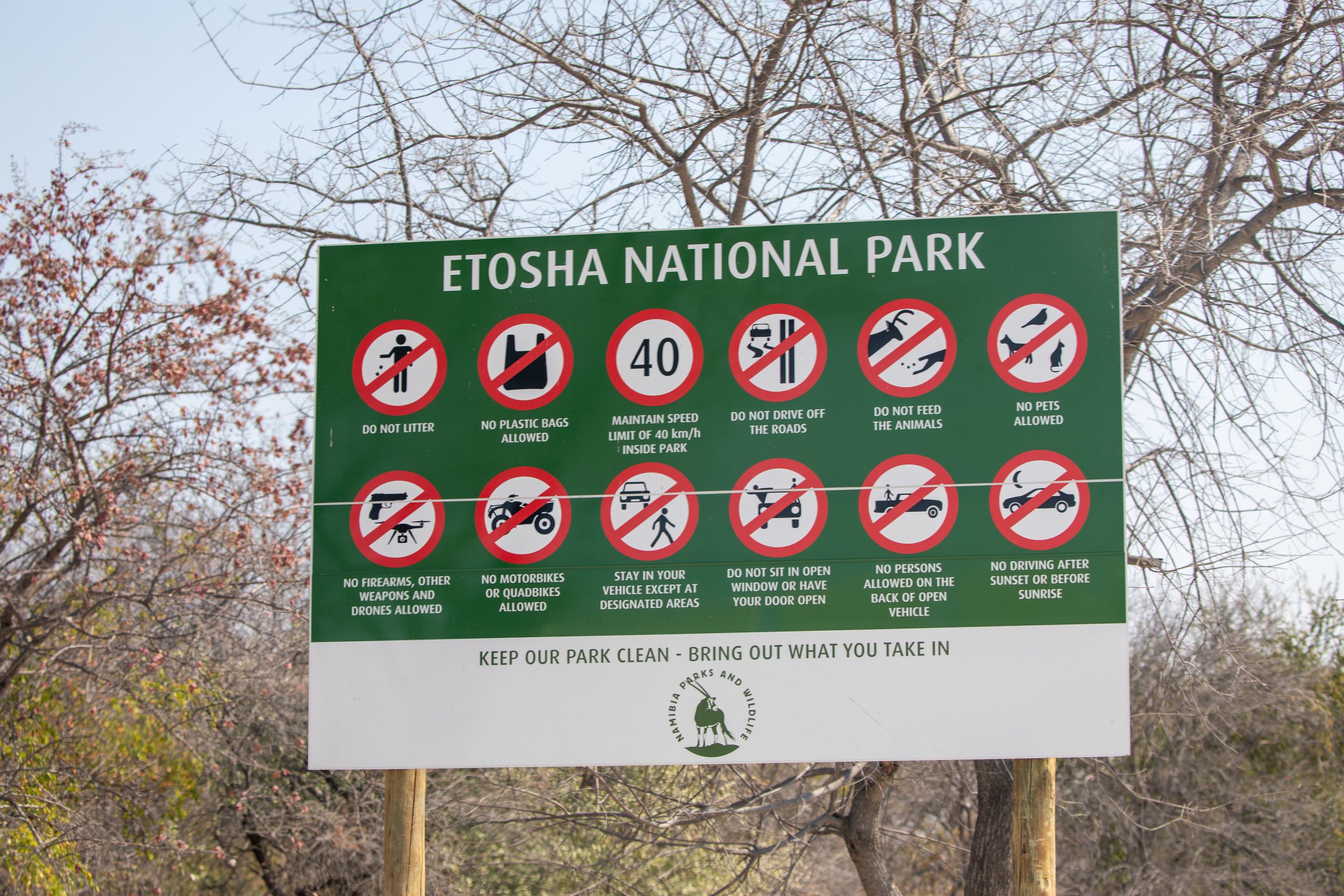
Etosha National Park Rules
The main rules to remember are designed to protect both visitors and wildlife and must be followed inside the park:
Stay on the designated roads and never drive off-road to approach an animal.
Remain inside your vehicle except in marked picnic areas, camps and other designated safe locations.
Do not feed, touch or deliberately attract wildlife.
Keep a safe distance from animals and never block their access to a waterhole.
Do not leave food or rubbish exposed, as this may attract wildlife to your vehicle or campsite.
Do not remove raw meat from Etosha National Park, as this helps prevent the spread of foot-and-mouth disease between wildlife, livestock and other regions.
Keep noise to a minimum around waterholes and switch off your engine when appropriate.
Obey the speed limits and drive cautiously on gravel roads.
Do not drive independently after the gates close.
Keep your receipt and identification available if requested by park staff.
Take all rubbish with you and leave the park as you found it.
The most important rule is simple: never underestimate the animals because they appear calm or familiar with vehicles. Elephants, lions and other wildlife can move quickly, so remaining inside your vehicle and following the park’s instructions is essential.
Etosha Camps and Accommodation
There are two main accommodation options when visiting Etosha National Park; either staying inside the park at one of the NWR camps, or choosing a lodge, campsite or guesthouse outside the park boundaries. The best option depends on your budget, the type of safari experience you want and how important early access and night drives are to your itinerary when planning a Namibia safari.
Staying Inside Etosha National Park
The main accommodation options inside Etosha National Park are operated by Namibia Wildlife Resorts (NWR). Staying inside the park makes it easier to maximise your wildlife-viewing time, as you are already close to the roads and waterholes when the internal gates open each morning.
NWR accommodation can be booked through the Official Namibia Wildlife Resorts Website, although availability can sometimes be limited and the online booking system may not always operate smoothly. During the busier dry-season months, popular camps can book out six to eight months in advance, so it is worth reserving early if you specifically want to stay at Okaukuejo, Halali or Namutoni.
NWR offers a range of accommodation, including campsites, basic rooms, chalets and more comfortable resort-style options. The main camps are Okaukuejo, Halali and Namutoni, while Dolomite, Olifantsrus and Onkoshi provide more remote or specialised experiences in the western and northern sections of the park.
One of the biggest advantages of staying inside is access to NWR-guided morning, afternoon and night game drives. Morning drives can leave before the general public is allowed into the park, while night drives are only available to visitors staying inside. You are also better positioned to spend the full day exploring, rather than losing time travelling from accommodation outside the park.
The main drawback is that NWR accommodation can feel quite expensive for the standard of facilities provided, particularly when compared with the price of lodges outside the park. Much of what you are paying for is the location, earlier access, proximity to the waterholes and access to exclusive game drives rather than luxury or modern facilities. However, if wildlife is the main priority of your Namibia safari, these advantages can make staying inside the park worthwhile.
Key Points:
Main camps include Okaukuejo, Halali and Namutoni
Options range from campsites to chalets and resort-style accommodation
Easier access to the park’s waterholes
Access to NWR morning, afternoon and night game drives
Morning drives may depart before the public gates open
Night drives are only available to visitors staying inside the park
Staying at different camps allows you to explore separate areas of Etosha
Booking well in advance is recommended, especially during the dry season
Accommodation, park entry fees, meals and activities are generally charged separately
Staying Outside Etosha National Park
A wide range of lodges, campsites and guesthouses can also be found just outside Etosha National Park, particularly near the southern and eastern sides of the park. These options can provide more choice and, in some cases, a higher level of comfort than the NWR camps, making them a practical alternative when planning a Namibia safari.
Popular accommodation outside Etosha includes Etosha Village, Etosha Safari Lodge, Etosha Safari Camp, Ongava, Onguma and Mushara. Some properties are located near the park boundaries, while others sit within private reserves and offer their own guided game drives, night drives and wildlife experiences.
The main disadvantage of staying outside the park is that you must wait for the public gates to open before entering and leave before they close. This can mean missing the earliest part of the morning and losing some flexibility during the day. However, outside lodges can be a good alternative if the NWR camps are fully booked, if you prefer more comfortable facilities or if you want to stay on a private reserve.
Key Points:
Wide choice of lodges, campsites and guesthouses
Often offers more comfortable facilities than the NWR camps
Some properties are located within private reserves
Private game drives and night drives may be available
Popular areas include the southern and eastern approaches to Etosha
Must follow the public park opening and closing times
No access to NWR night drives inside Etosha
Useful alternative when accommodation inside the park is unavailable
Prices vary significantly depending on the level of comfort and inclusions
Which is Better: Staying Inside or Outside Etosha?
Staying inside the park is generally the better option if you can afford the higher prices and book far enough in advance. We tried both options and found that the early access provided by staying inside was one of the biggest advantages, particularly when wildlife viewing is your main priority on a Namibia safari.
The distance between the camps and the main entrances is also important. Camps such as Halali are located well inside the park, meaning it would be difficult to visit waterholes in that area, such as Goas, as part of a day trip from outside. By staying inside, you are already in a much better position to explore these areas from the beginning of the day.
Staying inside also gives you access to NWR morning and night game drives, as well as the chance to visit the waterhole at your accommodation after returning from your self-drive. Being able to sit quietly at a camp waterhole and continue watching wildlife without needing to drive anywhere was a massive perk.
Outside accommodation can still be a good choice if you want more comfortable facilities, greater availability or a private reserve experience. However, for a first visit, I would prioritise staying inside at Okaukuejo, Halali or Namutoni if your budget and booking timeframe allow it. Using more than one camp also helps you experience different sections of Etosha without spending the entire day driving back and forth.
Wildlife in Etosha National Park
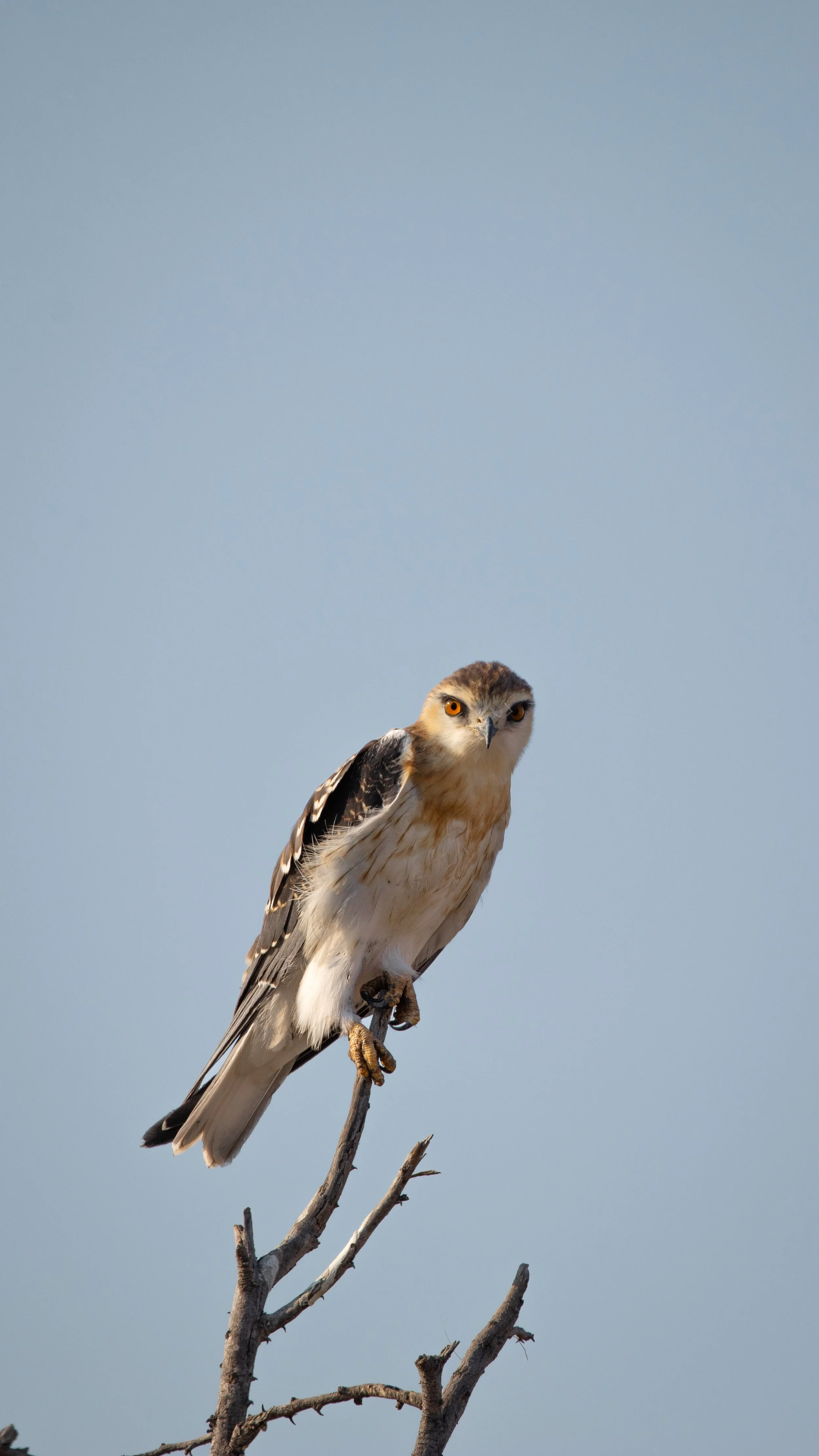
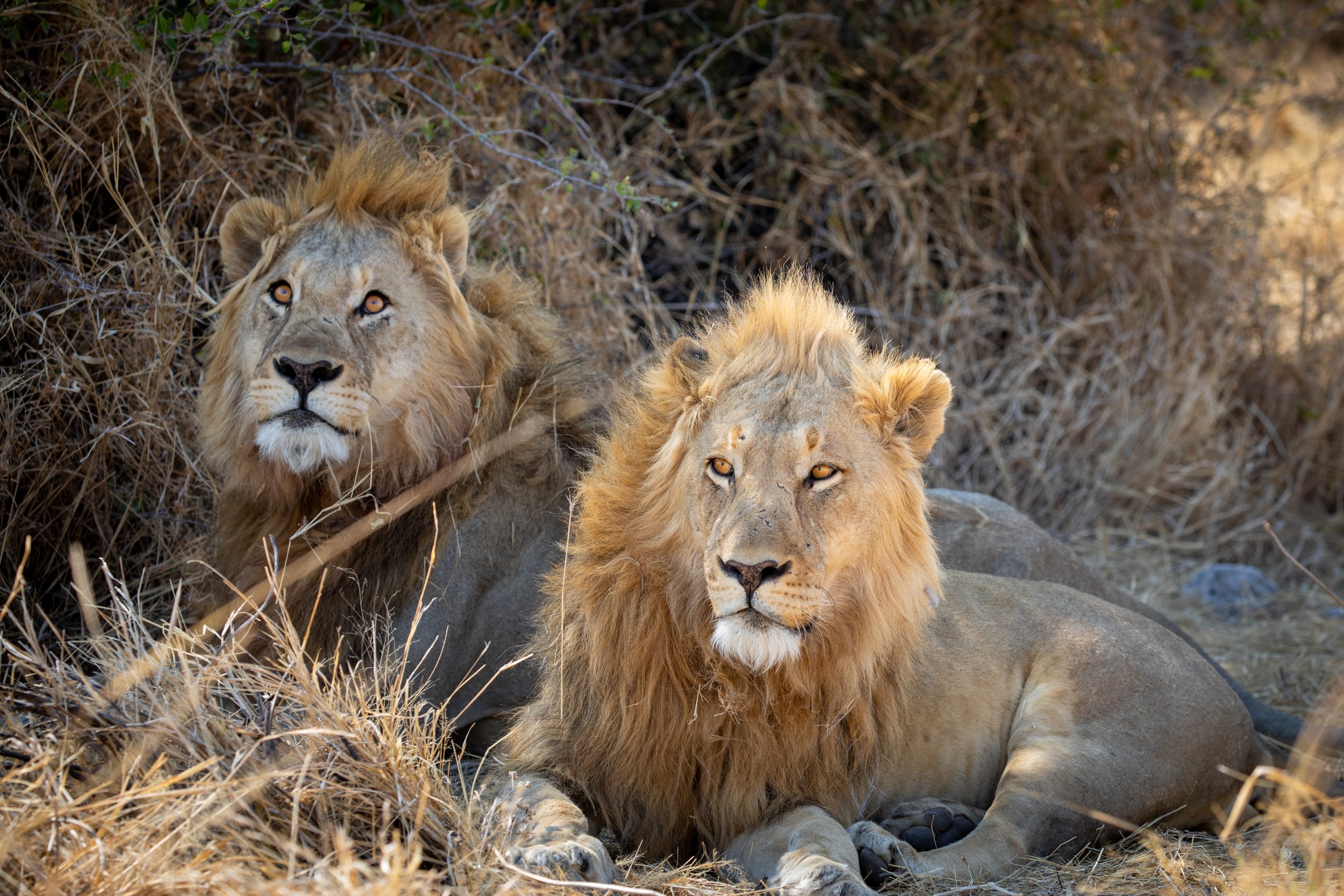
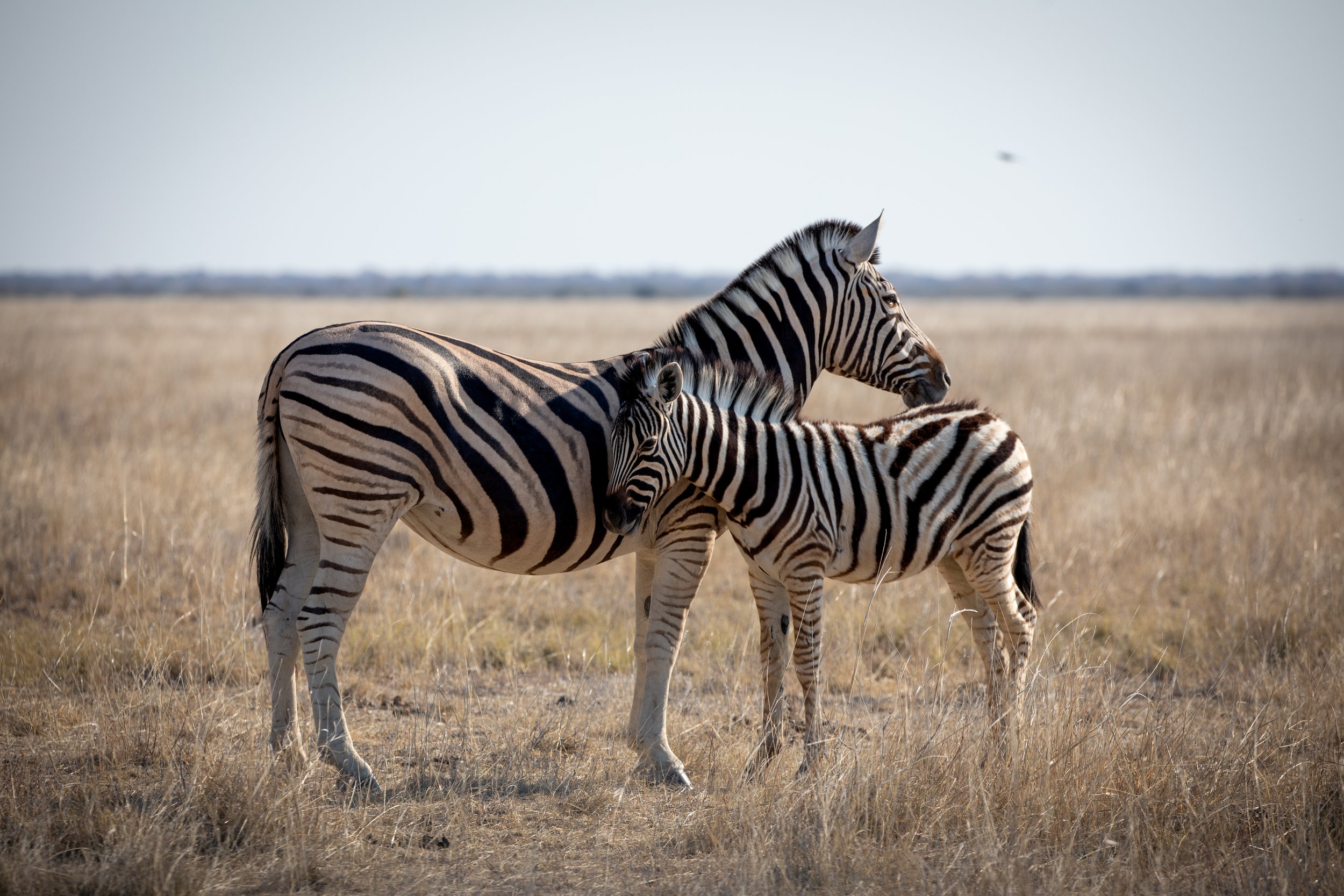
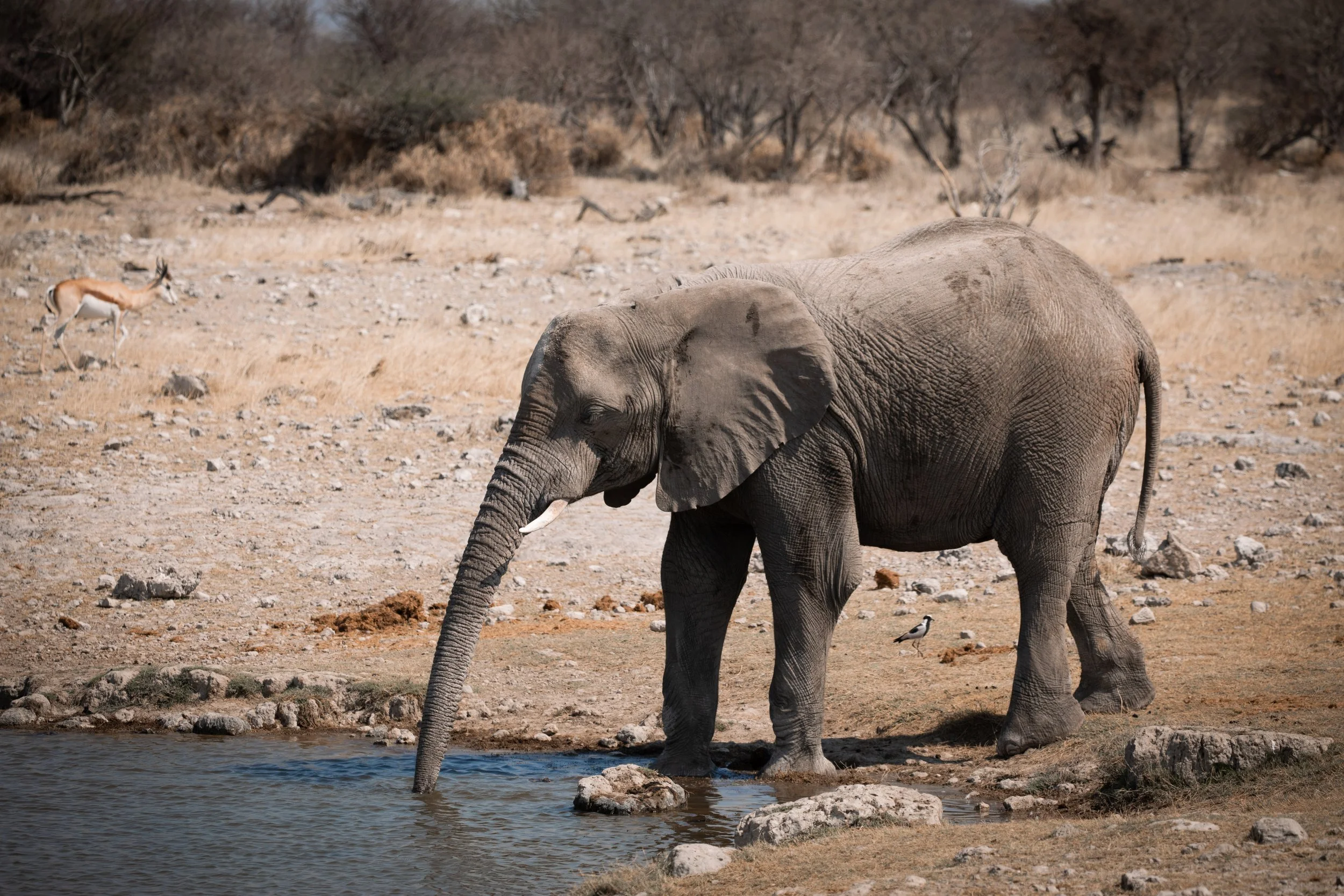
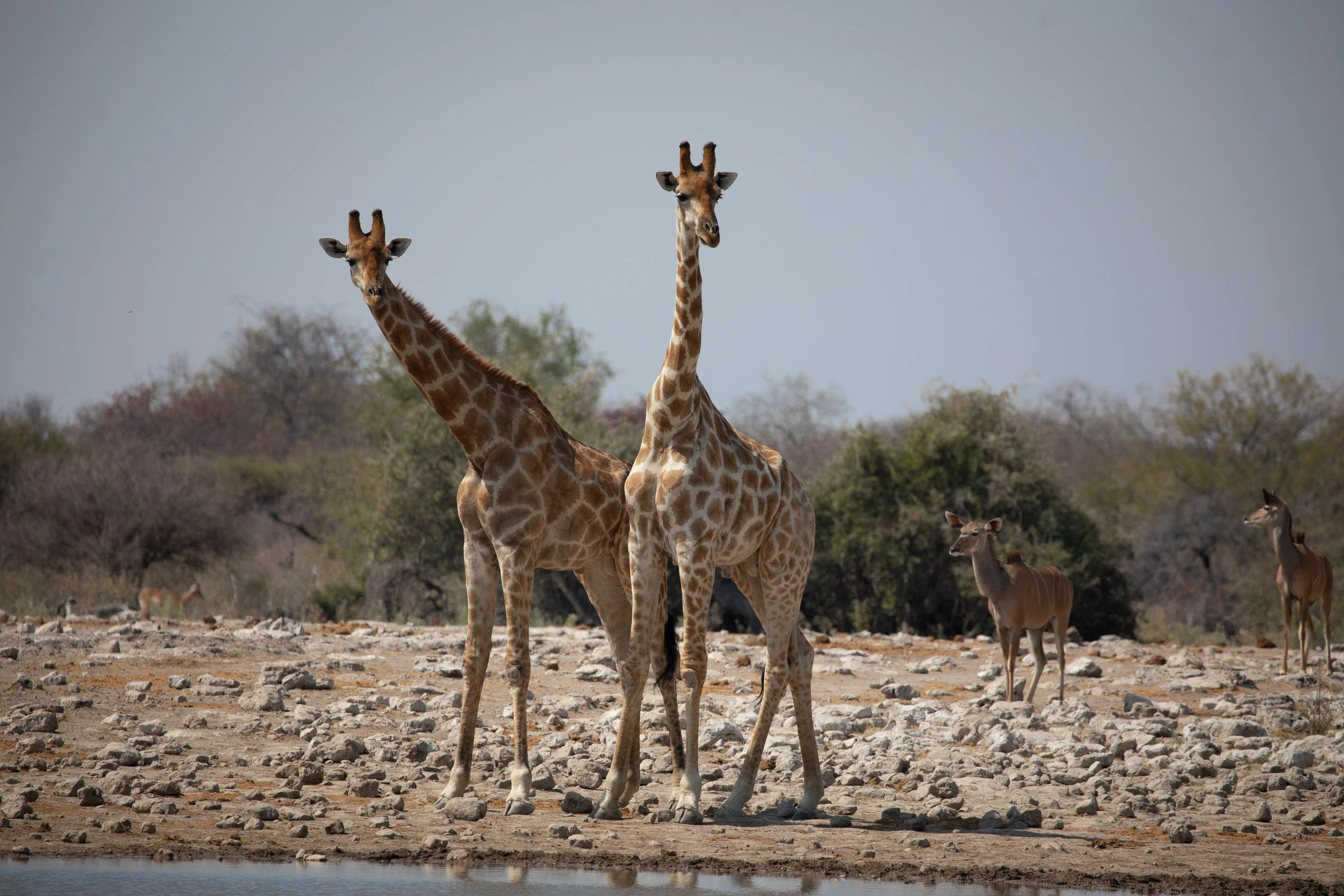
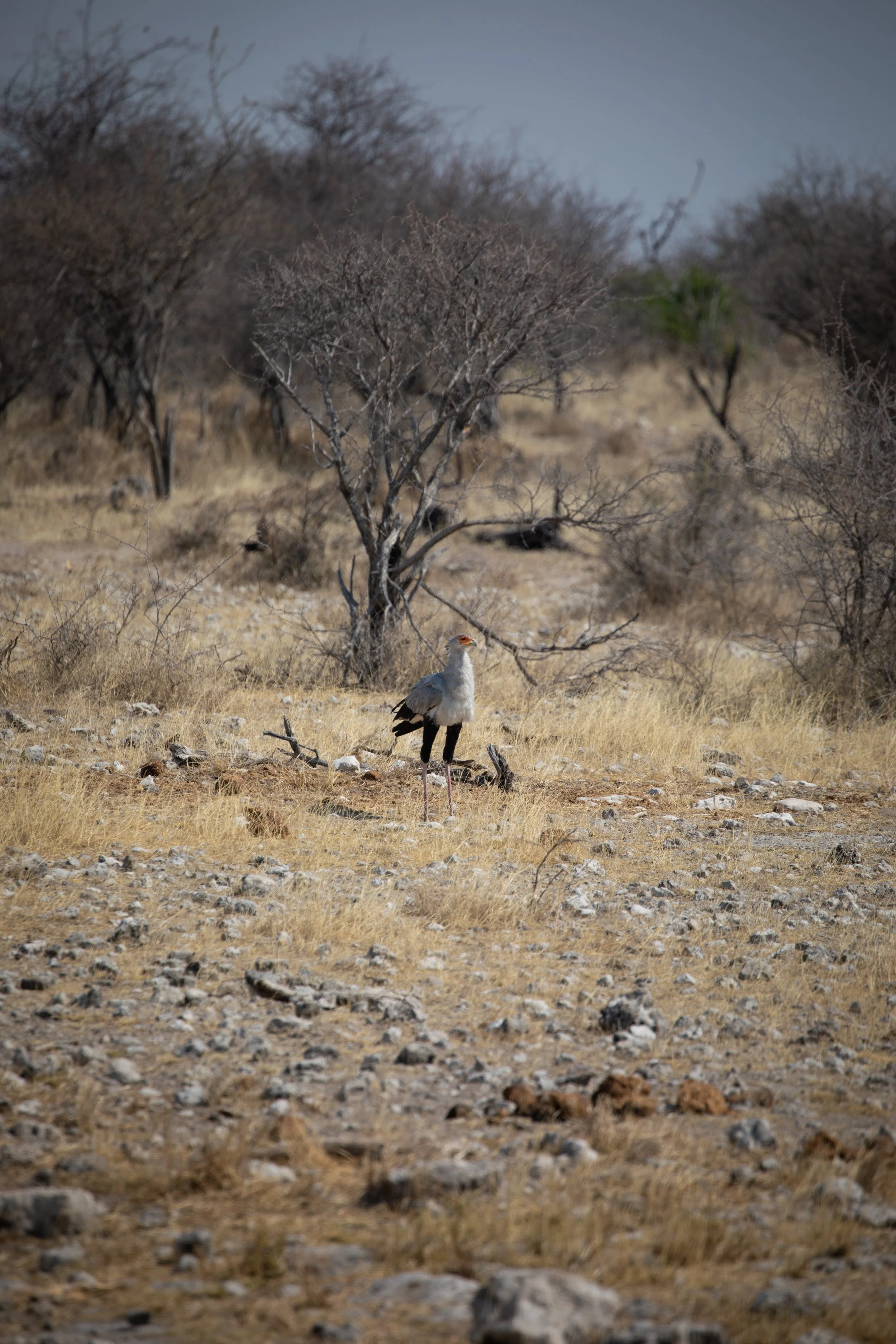
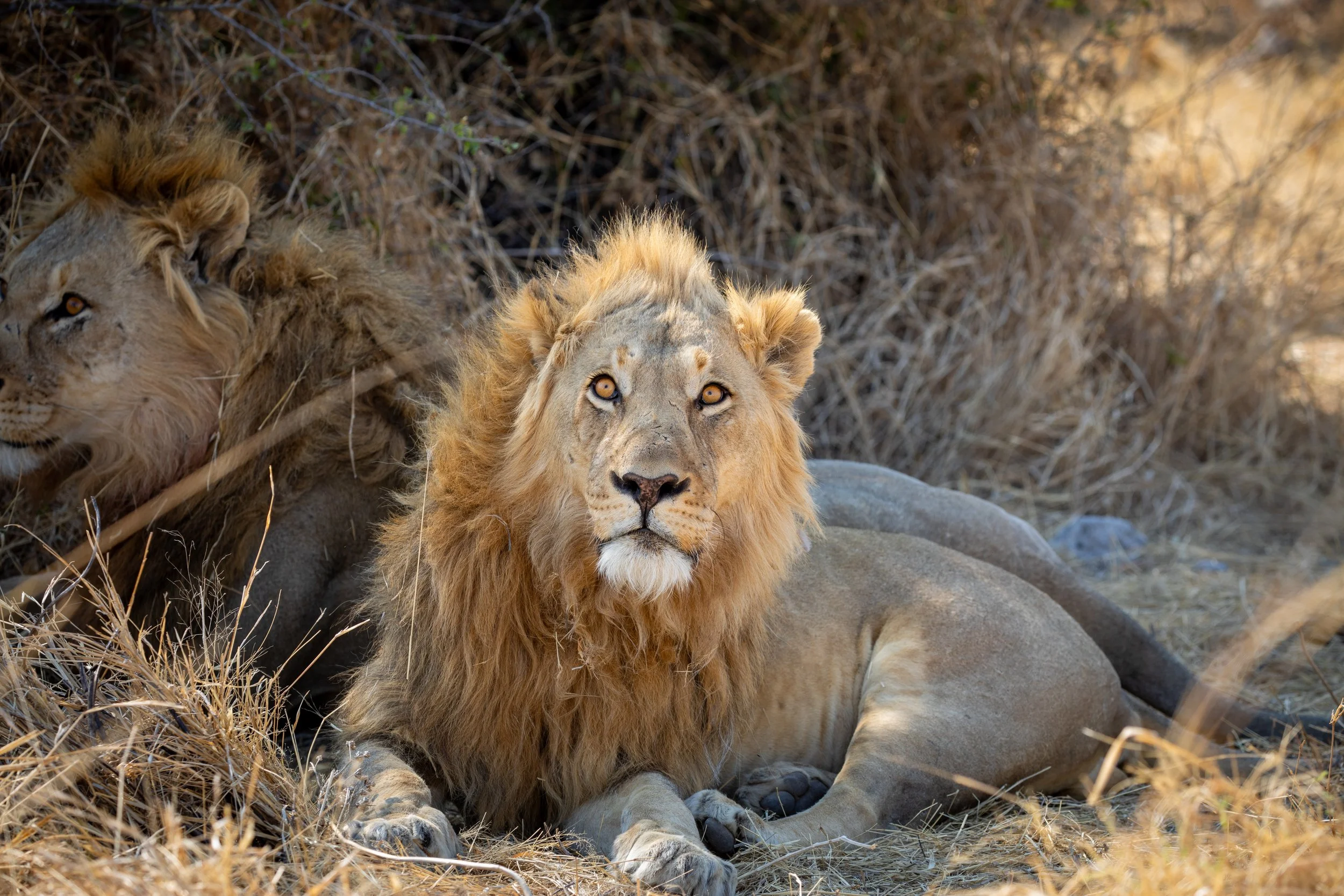
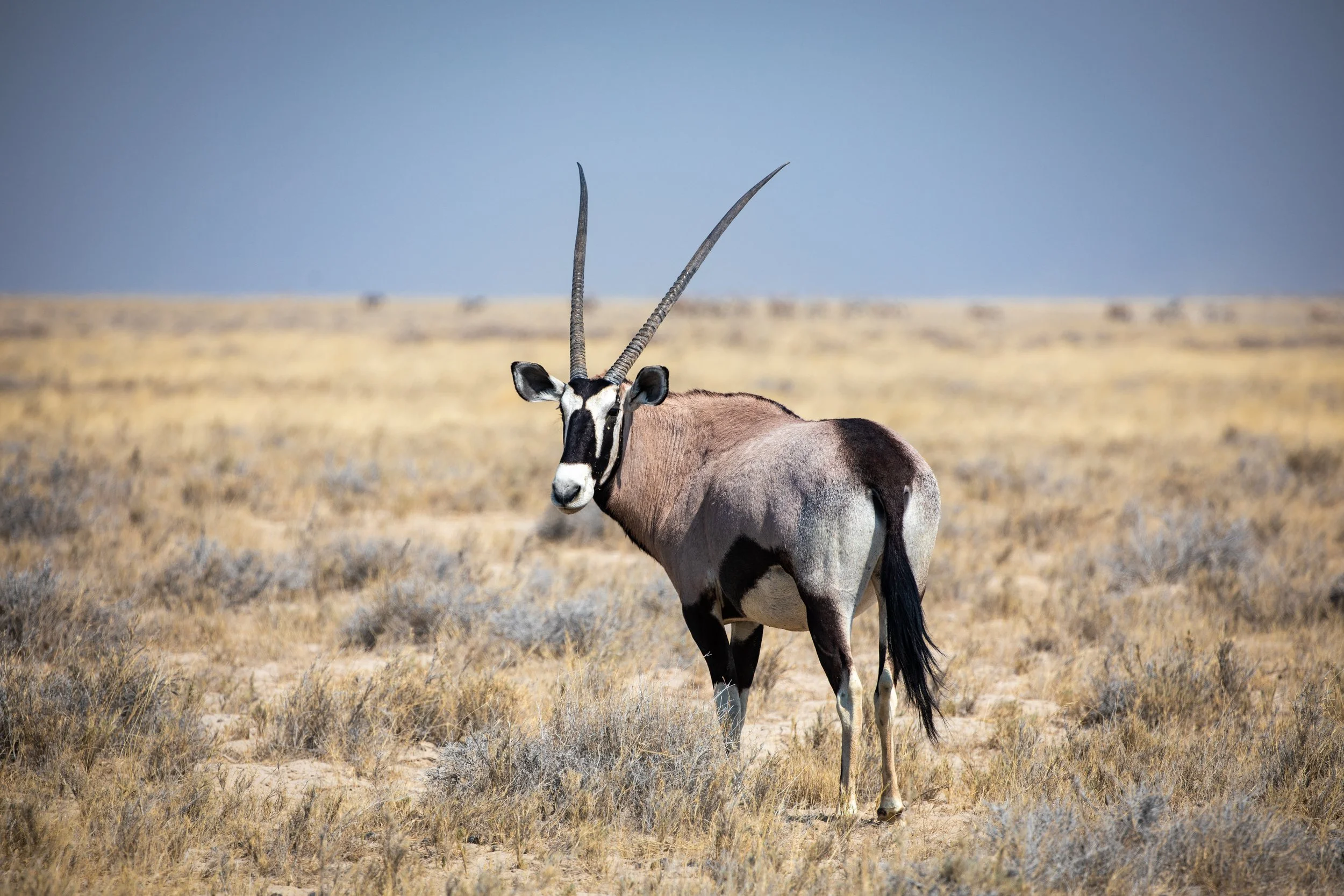
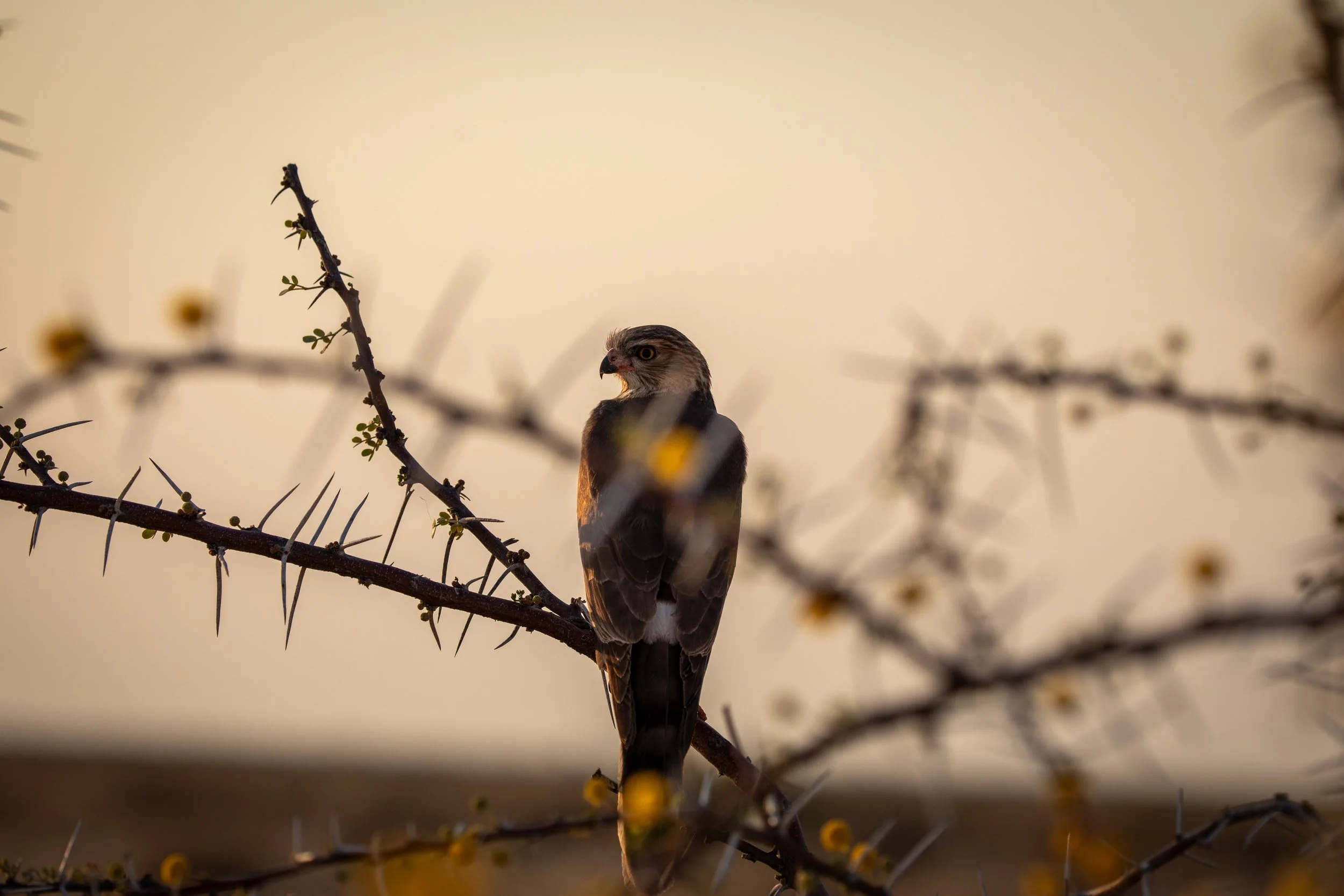
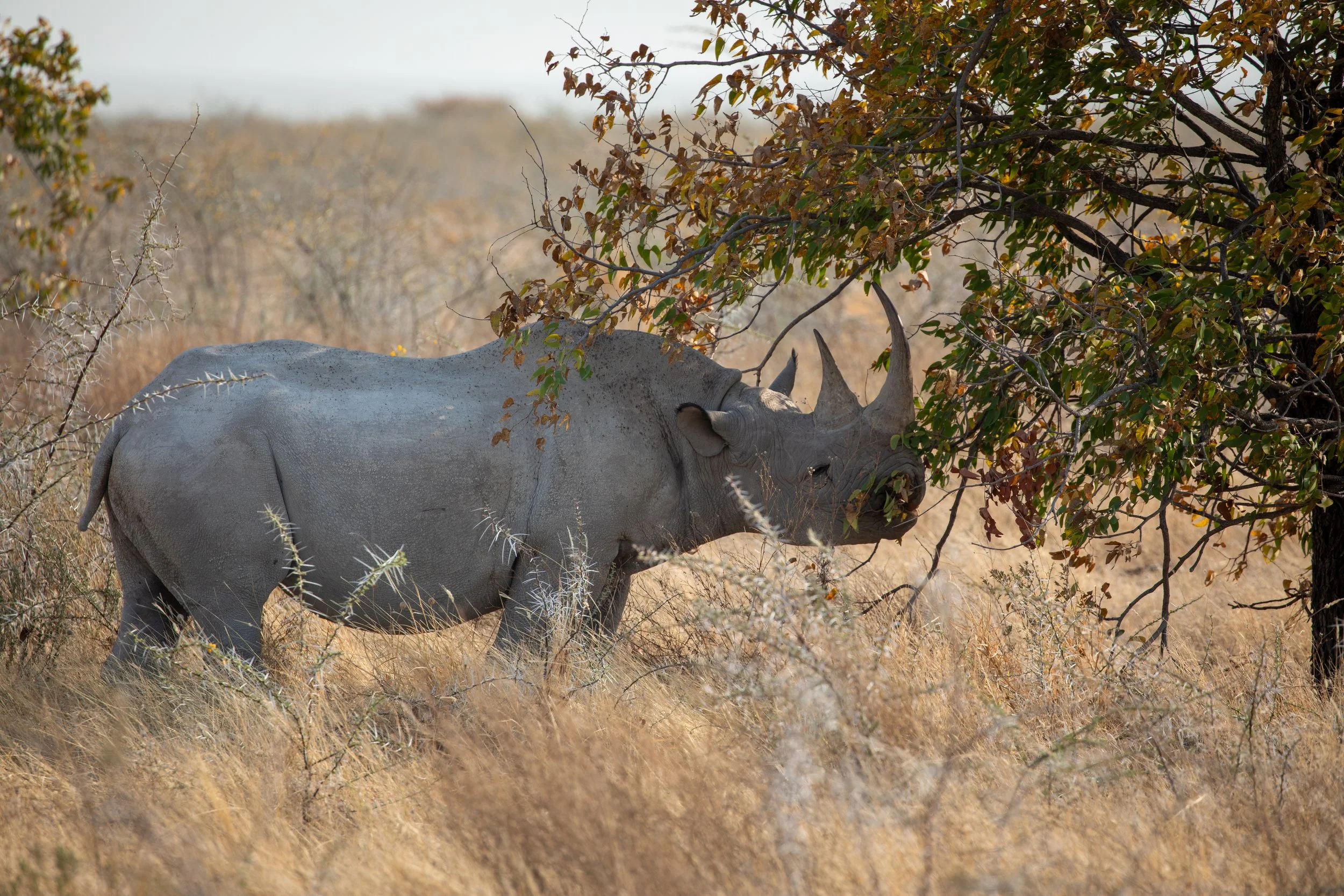
Etosha National Park is one of Africa’s best places to see a wide variety of wildlife in large numbers, making it a defining destination for any Namibia safari. During our visit, we saw elephants, lions, giraffes, zebras, wildebeest, springbok, oryx, kudu, warthogs and several other antelope species. The park is also home to black and white rhinos, cheetahs, leopards, hyenas, jackals, ostriches and an impressive range of birdlife.
One of the best things we bought before the trip was aguide to Etosha’s fauna, which included photographs and information about the different species found throughout the park. It was incredibly useful for identifying unfamiliar animals and learning more about what we were seeing.
Why Is Etosha So Good for Wildlife Viewing?
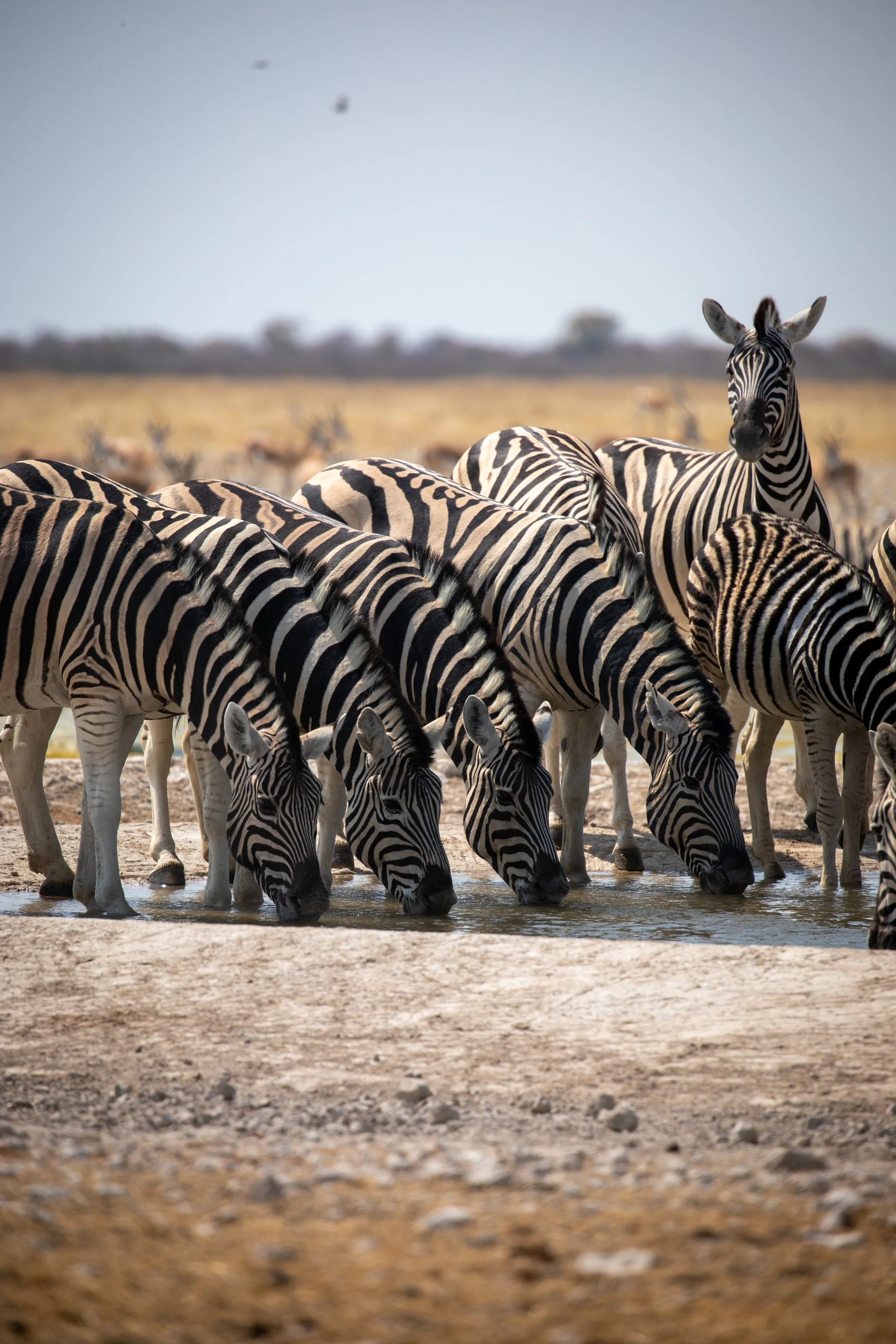
Etosha’s open landscapes and network of waterholes make wildlife relatively easy to observe, particularly during the dry season. As natural water sources become scarce, animals gather around the remaining waterholes, sometimes creating remarkable scenes with elephants, zebras, giraffes and large herds of antelope in the same area.
The terrain also provides good visibility, with fewer dense forests or thick areas of vegetation blocking your view. Predators and smaller animals can still be difficult to find, but the combination of open surroundings, abundant wildlife and concentrated water sources makes Etosha an especially rewarding place to see animals in the wild.
Sightings are never guaranteed, and every visit will be different. However, the sheer volume of animals is one of the main reasons Etosha stands out from many other African national parks and makes the park itself such a memorable Namibia safari.
Safari in Etosha National Park
Once you arrive in Etosha National Park, the real excitement begins: finding the wildlife. You can explore the park independently or join a guided game drive, and both options offer a completely different way to experience a Namibia safari. Guided drives provide expert knowledge and efficient wildlife spotting, while self-driving gives you the freedom to decide where to go, when to stop and how long to stay at each sighting.
Guided Game Drive Safari in Etosha
Guided game drives in Etosha National Park are usually available as morning, afternoon or night drives, with shorter excursions generally lasting around three hours. Some operators also offer longer drives or full-day safaris, allowing you to spend more time travelling between different areas of the park.
A typical guided drive involves travelling through Etosha’s established road network in an open-sided safari vehicle, usually at a slow pace while the guide scans the surrounding landscape for wildlife. The vehicle may stop at waterholes, viewpoints or roadside sightings, giving passengers time to observe and photograph the animals before continuing through the park.
The cost generally includes the safari vehicle, guide, fuel and water. Depending on where you book, the drive may also include early access to the park, a night-time safari or transfers from nearby accommodation. Shared vehicles usually carry several other travellers, while private drives offer more control over the route, stopping time and viewing positions.
The main benefit of travelling with a guide is the knowledge they bring to the drive. Guides are familiar with Etosha’s roads, waterholes and changing conditions, and often communicate with other guides about recent sightings. They can also help identify animals, explain their behaviour and point out wildlife that may be difficult to notice independently. A guided drive cannot guarantee more sightings, but it can make your time in the park more efficient and informative.

Self-Drive Safari in Etosha
Etosha is one of the few major African parks where you can realistically find large numbers of wildlife without joining an organised safari. The network of waterholes and open terrain makes independent wildlife viewing surprisingly accessible, especially during the dry season.
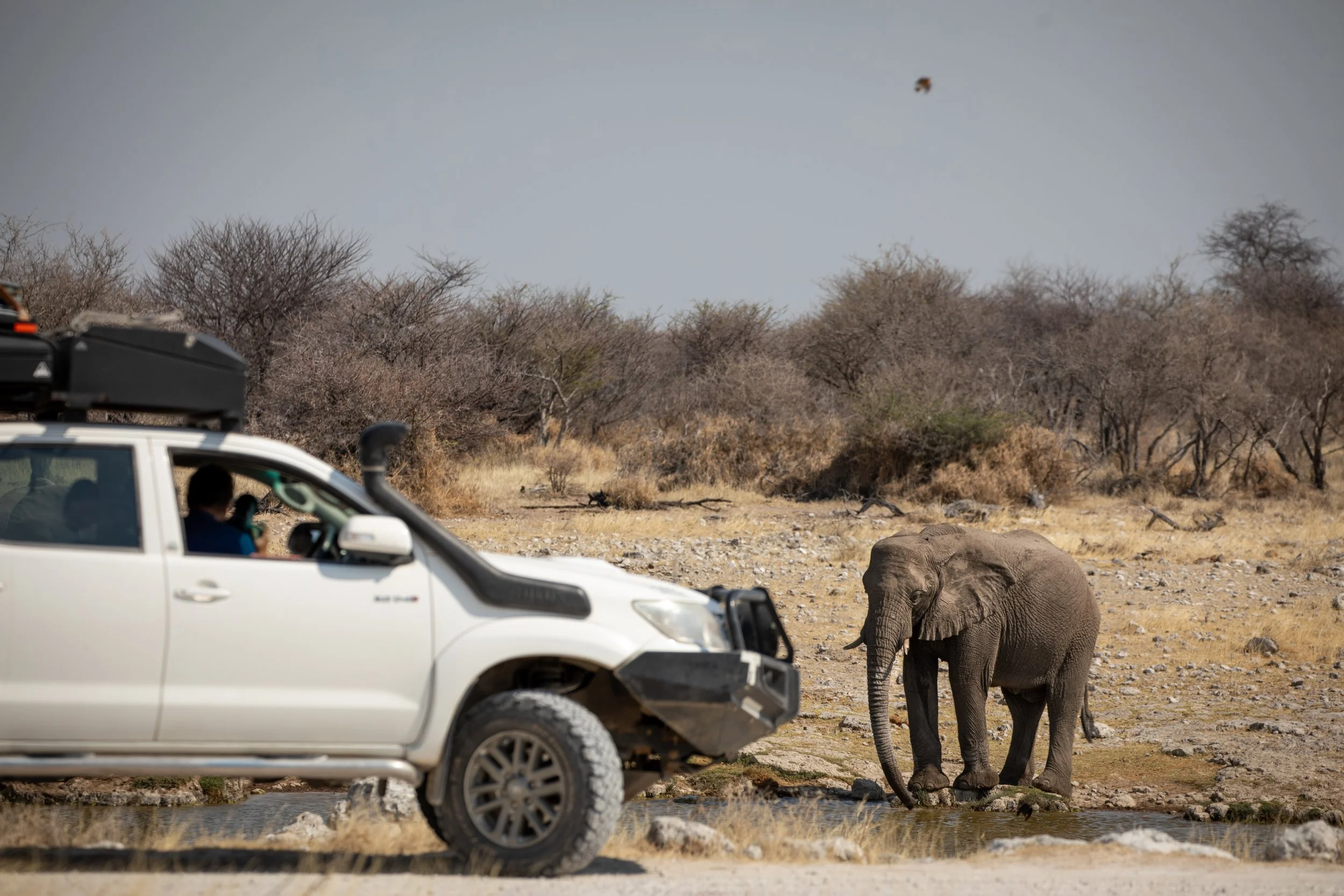
Self-driving gives you complete control over your time. You can decide which roads to follow, remain at a waterhole for as long as you want and return to a promising location later in the day. During our visit, we managed to find most of the animals we hoped to see ourselves, including elephants, lions and large herds of plains game.
The main advantage was being able to spend as long as we wanted with an animal, which I found especially important from a photography perspective. We could slow down, wait patiently and explore quieter areas rather than following a fixed schedule. The trade-off is that you must divide your attention between driving, navigating and searching for wildlife.
Guided Game Drive vs Self-Drive in Etosha
There is no guaranteed winner when it comes to finding wildlife in Etosha. Guided drives offer greater efficiency, expert knowledge and access to night drives, while self-driving provides more time, flexibility and control over each sighting.
For us, combining both options worked best. Guided drives added knowledge and helped us understand unfamiliar areas, while self-driving allowed us to explore the park at our own pace and spend longer with the animals we found. For a more detailed comparison, see Our Guide to Self-driving Versus Guide Game Drives in Etosha.
Best Waterholes in Etosha
Etosha’s waterholes are the heart of the park’s wildlife-viewing experience. During the dry season, they become essential gathering points for animals, creating some of the best opportunities to see elephants, lions, giraffes, zebras, rhinos and large herds of antelope in a relatively small area.
The waterholes vary considerably in character. Some are large, open water sources surrounded by grassland, while others are tucked into thicker vegetation or positioned beside the vast Etosha Pan. Visiting several locations is worthwhile, as wildlife movements change throughout the day and each waterhole attracts different species depending on the season and recent rainfall.
The waterholes listed below are based on our own experience during our visit, but sightings can change constantly depending on animal movements, rainfall and seasonal conditions. It is also worth checking the latest road conditions before setting out, as roadworks were taking place along part of the route between Okaukuejo and Halali during our visit, preventing access to some waterholes in that section. If you are planning a Namibia safari, check current conditions before relying on any particular waterhole being accessible. Availability and conditions may have changed since then.
Okaukuejo Waterhole
Okaukuejo Waterhole is one of the most famous wildlife-viewing locations in Etosha. Positioned directly beside the camp and illuminated at night, it provides an opportunity to watch animals without needing to drive anywhere. Elephants and rhinos are particularly associated with the waterhole, although lions and other wildlife may also appear.
The surrounding landscape is relatively open, providing clear views as animals approach from the surrounding plains. Its floodlights make it especially popular after dark, when visitors staying at Okaukuejo can quietly watch nocturnal wildlife gathering at the water.
Note that you are unable to drive right up to this waterhole as the viewpoint is from inside the camp so you must park and walk over.
Terrain: Large, open waterhole beside the camp
Best known for: Elephants, rhinos and night-time wildlife viewing
Closest camp: Okaukuejo
Okondeka Waterhole
Okondeka is widely regarded as one of the better places in Etosha to look for lions. Located in open country near the western side of the Etosha Pan, the waterhole and surrounding plains can attract predators as well as large groups of grazing animals.
The open terrain makes it easier to scan the landscape for lions resting near the water. Early morning can be a particularly rewarding time to visit, when temperatures are cooler and predators may still be active. We managed to see a group of hyenas hunting wilderbeast at this location.
Terrain: Open plains and a natural waterhole near the Etosha Pan
Best known for: Lions, particularly during the morning, as well as zebra and antelope
Closest camp: Okaukuejo
Moringa Waterhole
Moringa Waterhole is located directly within Halali Camp and is considered one of the best places in Etosha to spot leopards. Like Okaukuejo, it is floodlit at night, allowing visitors staying at Halali to observe wildlife after the gates have closed to independent visitors. Although leopards are elusive and never guaranteed, the waterhole’s reputation makes it particularly worth checking after dark.
The waterhole is surrounded by rocky, semi-arid terrain, creating a different atmosphere from the open plains around Okaukuejo. As with Okaukuejo, you cannot drive directly up to Moringa; it is viewed from the designated area within the camp. Elephants, rhinos and other wildlife may also visit, particularly during the dry season.
Terrain: Floodlit waterhole surrounded by rocky, dry landscape
Best known for: Leopard sightings, elephants, rhinos and night-time sightings
Closest camp: Halali
Goas Waterhole
Goas Waterhole is one of the most popular stops between Halali and Namutoni. Although the water itself is relatively open, the surrounding tree line makes the area feel fairly enclosed compared with some of Etosha’s more exposed waterholes. This can make animals slightly harder to spot, but it also builds the excitement, as huge elephants can surprisingly appear from the trees almost out of nowhere.
Terrain: Open waterhole surrounded by dense vegetation
Best known for: Elephants
Closest camp: Halali
Olifantsbad Waterhole
Olifantsbad was consistently the waterhole where we saw the greatest number and variety of animals gathering in the same area. During our visit, giraffes, zebras, wildebeest, elephants, a black rhino, ostriches and oryx were all present at the same time, creating one of our most memorable wildlife-viewing moments in Etosha.
The surrounding landscape is relatively open, with grassland and scattered vegetation allowing you to watch animals as they approach from different directions. Although elephants are particularly associated with the waterhole, the real appeal is the possibility of seeing many different species sharing the same space.
Terrain: Open waterhole with surrounding grassland and scattered vegetation
Best known for: Elephants and other large mammals
Closest camp: Okaukuejo
Salvadora Waterhole
Salvadora is one of the most scenic waterholes in Etosha, positioned beside the vast white expanse of the Etosha Pan. The combination of the bright salt landscape, open horizon and animals gathering near the water makes it one of the park’s most distinctive wildlife-viewing locations.
The area is particularly well known for cheetah sightings, although we unfortunately did not see any ourselves. The lack of dense vegetation provides excellent visibility, and the open surroundings make it easier to scan for cheetahs moving across the plains. When wildlife does arrive, the setting makes even ordinary sightings feel particularly dramatic.
Terrain: Open waterhole beside the Etosha Pan
Best known for: Scenic views, zebra, giraffe, wildebeest and antelope
Closest camp: Halali
Naumses Waterhole
Naumses is a quieter waterhole that can be rewarding for travellers exploring the central section of Etosha. It is less defined by one particular species and more by the possibility of encountering a mixture of wildlife in a relatively peaceful setting.
The surrounding bush and open areas create a good balance between visibility and shelter, so it is worth approaching slowly and scanning beyond the water itself. Like many Etosha waterholes, its productivity can vary depending on rainfall and recent animal movements.
Terrain: Waterhole surrounded by open bush and semi-arid vegetation
Best known for: General wildlife viewing and quieter stops
Closest camp: Halali
How Long Should You Spend in Etosha National Park
Spending three to five full days in Etosha National Park is ideal for most travellers. We stayed for three nights, giving ourselves three full days in the park, which was enough to visit several waterholes, see a wide variety of wildlife and explore the main areas around the camps.
That said, we genuinely enjoyed our time in Etosha and felt that a couple of extra days would have been even better. More time would have allowed us to explore at a slower pace, revisit productive waterholes and spend longer waiting for wildlife without feeling conscious of the next day’s travel.
Three full days is a reasonable minimum if Etosha is one stop on a wider Namibia itinerary. However, if seeing wildlife is the main reason for your visit, five days would give you more flexibility and increase the chances of being in the right place when something special appears.
Staying at more than one camp can also make a longer visit more practical. Dividing your time between Okaukuejo, Halali and Namutoni allows you to explore different sections of the park while using each camp as a base, rather than spending every day driving long distances back to the same accommodation.
Suggested Etosha National Park Travel Itinerary
This five-day Etosha itinerary focuses on the areas surrounding the Etosha Pan, where the concentration of waterholes creates some of the best opportunities for wildlife viewing. It also allows time to appreciate the park’s dramatic salt-pan landscapes while travelling between Okaukuejo, Halali and Namutoni.
Although it is possible to continue all the way to the western end of Etosha, this is probably only necessary if you have around a week to spend in the park. With five days, concentrating on the central and eastern sections provides a better balance between driving, waterhole visits, guided activities and time spent waiting for wildlife.
This itinerary assumes you are self-driving and staying inside the park. It can be adjusted depending on road conditions, accommodation availability and whether you choose to include guided morning or night drives.
Day 1 - Arrive at Okaukuejo and Explore the Western Pan
Enter Etosha through Andersson Gate
Drive towards Okondeka Waterhole
Explore the western side of the Etosha Pan
Continue towards the area around Olifantsrus Campsite, depending on road access
Stop at other waterholes and wildlife-viewing locations along the way
Return to Okaukuejo
Visit Okaukuejo Waterhole in the evening
Overnight at Okaukuejo
Your first day is focused on the western side of the pan and gives you an immediate introduction to Etosha’s open landscapes and wildlife-rich waterholes. Okondeka is particularly worth prioritising if you are hoping to see lions, while the surrounding roads provide opportunities to encounter animals along the way.
Day 2 - Okaukuejo to Halali
Leave Okaukuejo and begin travelling towards Halali
Stop at Gemsbokvlakte Waterhole
Visit Olifantsbad Waterhole
Continue via Aus Waterhole
Stop at Sueda Waterhole
Visit Salvadora Waterhole beside the Etosha Pan
Check in at Halali
Visit Moringa Waterhole
Overnight at Halali
This is one of the most wildlife-filled days of the itinerary, as the journey between Okaukuejo and Halali passes several important waterholes. Salvadora is also one of the most scenic stops, with wide views across the bright, almost otherworldly surface of the Etosha Pan.
Day 3 - Explore Halali and Join a Night Drive
Join a morning guided game drive from Halali
Relax around camp during the late morning
Return to Moringa Waterhole or spend time at the pool
Explore Naumses Waterhole
Visit Goas Waterhole
Join a guided night game drive
Overnight at Halali
A morning game drive is a useful way to explore the area with a guide and learn more about the surrounding waterholes. The rest of the day can be kept deliberately relaxed before heading out again in the afternoon.
The night drive provides a completely different way to experience Etosha and is only available to visitors staying inside the park. If the night drive is fully booked or you decide not to join one, you could instead use the afternoon to return to Sueda and Salvadora before having an early night at Halali.
Day 4 - Halali to Namutoni
Revisit Naumses and Goas early in the morning
Continue towards the eastern section of Etosha
Stop at Kalkheuwel Waterhole
Visit Chudop Fountain
Continue via Koinachas Waterhole
Stop at Groot Okevi Fountain
Visit Klein Okevi Fountain
Check in at Namutoni
Visit Namutoni Waterhole
Overnight at Namutoni
This longer transfer day allows you to continue exploring while moving between camps. The eastern section has a different landscape and a number of waterholes and fountains that are well worth including, particularly if you are hoping to see a variety of plains animals.
Day 5 - Explore Eastern Etosha and Depart
Explore the area around Namutoni
Visit Aroe Waterhole
Continue towards Twee Palms Waterhole
Stop at Klein Namutoni
Return towards Namutoni if time allows
Exit Etosha through Von Lindequist Gate
The final day gives you time to explore the eastern side of Etosha before leaving through Von Lindequist Gate. Depending on your onward plans, you could either spend the morning visiting nearby waterholes or begin your exit earlier and continue towards your next destination in Namibia.
How to Budget for Etosha
Etosha National Park can be relatively affordable compared with a traditional African safari, particularly if you already have a rental car and explore independently. Your main expenses will usually be accommodation, vehicle hire, fuel, park entry fees, food and any guided game drives you decide to include.
The total cost depends heavily on how you choose to travel. Staying inside the park is generally more expensive than staying outside, but it places you closer to the waterholes, provides access to early-morning and night drives, and reduces time spent travelling to the park each day. Self-driving also helps keep costs manageable, especially if you are already hiring a vehicle for a wider Namibia road trip.
Typical Costs in Etosha
Etosha entry fees: At the time of our visit, approximately 280 NAD per adult per day, plus around 60 NAD per vehicle per day. Fees are charged separately from accommodation and activities.
Camping inside the park: Approximately 460–560 NAD per person per night at Okaukuejo, Halali and Namutoni, with Olifantsrus costing around 510 NAD per person.
Basic rooms inside the park: Approximately 1,400–2,380 NAD per person sharing per night, depending on the camp and season.
Waterhole chalets at Okaukuejo: Approximately 2,380–3,480 NAD per person sharing per night.
Shared guided game drives: Approximately 650 NAD per person for a half-day drive arranged through the camps, based on the prices during our visit. Night drives were slightly more expensive.
Private guided game drives: Approximately 1,400 NAD per person, depending on the operator, duration and inclusions.
Full-day game drives: Prices vary between operators and are usually higher than a standard half-day drive.
Fuel: Fuel is an important part of the budget, as distances inside and around Etosha are long. Allow extra for repeated drives between waterholes and travel between camps.
Food and drinks: Meals are available at the main camps and lodges, although food in Namibia generally felt noticeably more expensive than in South Africa.
Vehicle hire: This will be one of the largest costs if you are travelling independently, although it is usually part of a wider Namibia road-trip budget rather than an Etosha-only expense.
NWR rates are generally charged per person sharing, per night. Okaukuejo, Halali and Namutoni usually include bed and breakfast, while Dolomite and Onkoshi generally include dinner, bed and breakfast. Park entry fees, guided game drives, drinks and other activities are charged separately. Rates vary by season, so check the latest NWR rack rates before booking.
Budget Tips for Etosha
Use a rental car you already need: If you are completing a wider Namibia road trip, self-driving through Etosha mainly adds fuel, park fees and accommodation rather than the cost of separate daily safaris.
Consider camping: Campsites are considerably cheaper than rooms or chalets, although you will need to bring or hire suitable camping equipment.
Book selectively guided drives: Rather than joining a guided drive every day, consider booking one early-morning or night drive to experience something different.
Share private tour costs: A private vehicle may become more affordable if the cost is divided between several travellers.
Stay inside strategically: Although NWR accommodation is more expensive, staying inside can save time and provide access to the park’s waterholes outside public visiting hours.
Book well in advance: Accommodation inside Etosha can sell out months ahead, particularly during the dry season, leaving fewer affordable options.
Allow for extra fuel and food: The distances are considerable, and food available inside or near the park may cost more than expected.
For us, the best balance was to combine self-driving with a small number of guided drives. Self-driving kept the overall cost more manageable and gave us complete freedom during the day, while the guided drives added expert knowledge and access to experiences that could not be arranged independently.
Practical Information for Visiting Etosha
Etosha National Park is relatively straightforward to explore, but its remote location means a little preparation goes a long way. These practical tips cover the main things worth knowing before visiting, including fuel, food, cash, mobile reception, road conditions and staying safe around wildlife.
Fuel and Driving Distances in Etosha
Enter Etosha with more fuel than you think you will need. Fuel stations are available at some main camps, including Okaukuejo, Halali and Namutoni, but they were unavailable during our visit. Distances between camps and waterholes can also take longer than expected. Although the maximum speed is generally 60 km/h, you will often travel closer to 40 km/h while scanning for wildlife.
Road Conditions and Self-Driving
Some roads in Etosha require considerably more care than the main access tracks. During our visit, smaller roads leading to waterholes included large washouts and uneven sections that could be dangerous if approached too quickly. The roads are also very dusty, and passing vehicles can temporarily reduce visibility.
This makes self-driving challenging, as you must watch for wildlife while also monitoring the road. Drive slowly, allow extra time and check for current roadworks, closures and weather-related conditions before setting out.
Food, Water and Supplies
Bring enough water, food and snacks for each day. The main camps have small shops, but these are limited and usually sell snacks and basic supplies rather than full meals. They are also way more expensive then any of the shops outside of the park. Dinner at the camps is generally served as a buffet, although opening times and availability can vary. Stock up in Windhoek, Outjo, Tsumeb or another major town before entering the park.
Cash, Cards and Tipping
Carry Namibian dollars in cash, including money for tipping your safari guide or driver. Cards may be accepted at the larger camps, but payment facilities can be unreliable. Cash is also useful for park fees, fuel, small purchases and unexpected expenses, so do not rely on finding an ATM inside the park.
Mobile Reception and Internet
Mobile reception is unreliable outside the main camps. Download offline Google Maps before entering Etosha, as live navigation and mobile data cannot be relied upon between waterholes. I also found it highly beneficial to pin all of the locations of the waterholes on the map. It is also worth saving your accommodation details and important contact numbers to your phone, along with bringing a power bank.
Wildlife and Vehicle Safety
Never leave your vehicle outside designated safe areas. Elephants, lions and other wildlife can move quickly, even when they appear calm. Keep a safe distance, avoid blocking waterholes and never try to attract animals closer for photographs. Because assistance may be far away, drive cautiously and keep valuables, water and basic emergency supplies in the vehicle.
What to Pack for Etosha
Packing for Etosha is mainly about preparing for long drives, changing temperatures and limited supplies inside the park. You should bring enough water, sun protection, comfortable clothing and useful equipment for spending extended periods in a vehicle while watching for wildlife.
Clothing and Comfort
You will spend most of your time sitting in a vehicle, so comfort is one of the most important things to consider when packing for Etosha. Pack lightweight, breathable clothing for warm days, along with a fleece or warm jacket for cold mornings and evenings. Long sleeves and trousers can help protect you from the sun and mosquitoes, while comfortable closed shoes are useful around camp.
If you are joining a game drive in an open-sided vehicle, some form of dust protection is highly recommended. A buff, scarf or light face covering can help, while sunglasses are useful for protecting your eyes when the roads become dusty. A wide-brimmed hat is also helpful, although make sure it is secure on windy drives.
Wildlife Viewing and Photography
Binoculars are essential for visiting Etosha, and I would recommend bringing one pair per person if possible. This means everyone can follow the same sighting and see what the guide or another passenger is pointing towards, rather than having to share a single pair between the vehicle.
If photography is important to you, I would strongly recommend bringing or hiring a zoom lens of at least 400 mm. Many animals gather on the opposite side of waterholes or remain some distance from the road, so the extra reach can make a major difference. I hired a suitable lens for our trip, and it was one of the best decisions I made.
The other item we found particularly useful was an Etosha wildlife guidebook with photographs, information and tick boxes for marking off the species we found. It made identifying unfamiliar animals easier and became a fun part of keeping track of our sightings throughout the trip.
Water, Food and Sun Protection
Bring a reusable water bottle and enough drinking water for each day, as shops inside the park are limited. Snacks and easy-to-eat food are useful during long drives when you may not want to return to camp for lunch.
Sunscreen, lip balm, sunglasses and a hat are essential, as you can spend several hours exposed to the sun even while sitting inside a vehicle.
Electronics and Navigation
Download offline Google Maps before entering Etosha, as mobile reception outside the camps is unreliable. A power bank, charging cables, spare camera batteries and a car charger are also useful during long days in the park.
A head torch or small flashlight is particularly helpful around campsites and when returning to your accommodation after dark.
Health and Emergency Items
Bring any medication, toiletries and personal health items you may need, as replacement options inside Etosha are limited. Insect repellent, basic first-aid supplies and hand sanitiser are also worth packing.
If you are self-driving, keep emergency water, snacks and a basic vehicle-recovery kit in the car. A cooler bag can also be useful for keeping drinks and food cold during the day.
Camping Equipment
If you are camping inside Etosha, check exactly what your rental vehicle includes before leaving. Some fully equipped 4WDs provide tents, bedding, cooking equipment and gas stoves, while others only include the vehicle itself. You may also need camping chairs, a torch, warm sleeping layers and extra food supplies.
Related Posts:
Planning a safari in Namibia’s Etosha National Park? This complete travel guide covers everything you need to know before visiting, including the best time to go, how many days to spend in the park, the best camps and waterholes, wildlife viewing, self-driving, guided game drives, photography opportunities, park access, costs and whether Etosha is worth adding to your Namibia itinerary.