
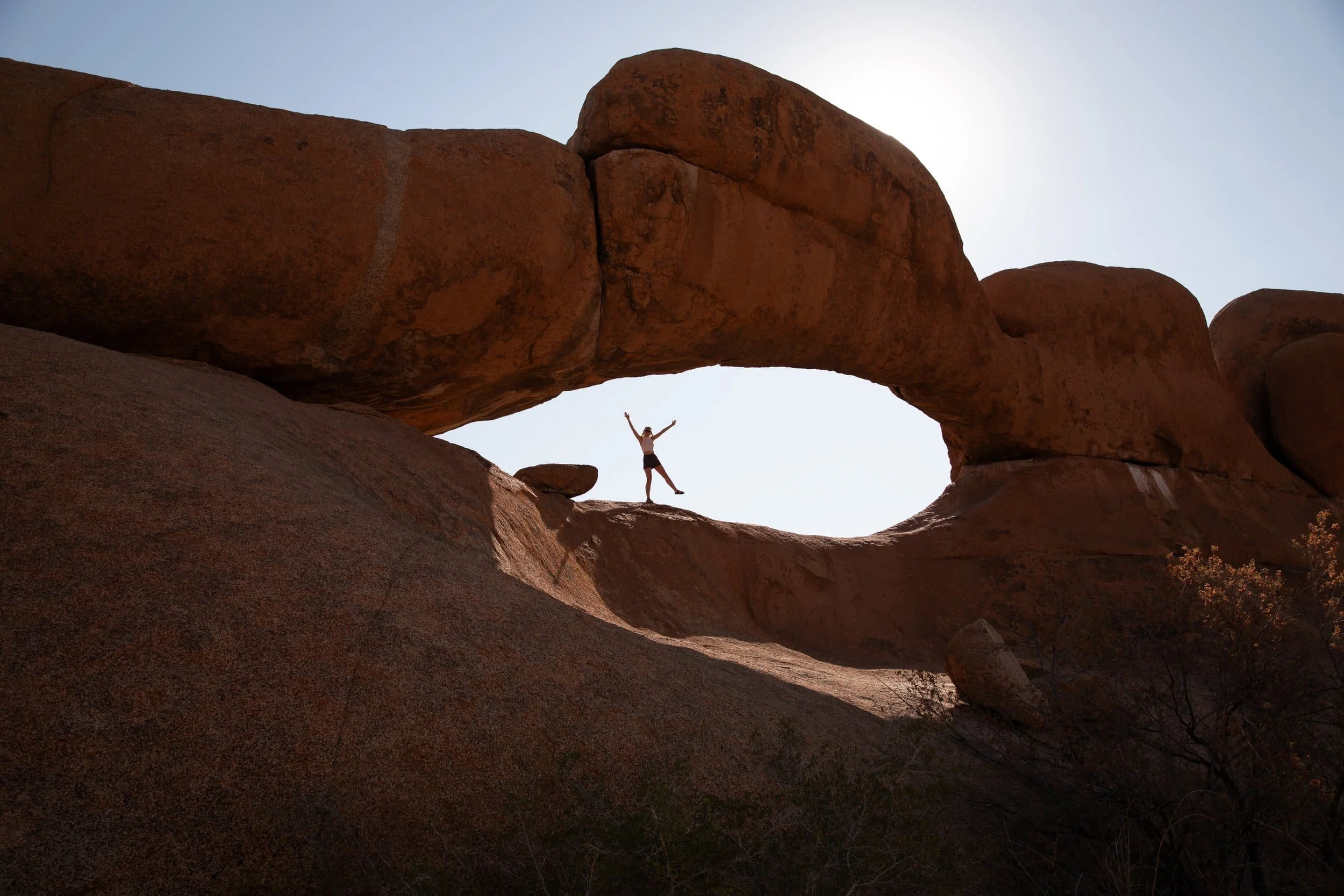
If you’re travelling from Swakopmund towards Etosha, you might be wondering whether it’s worth heading inland to Spitzkoppe or continuing north along the coast.
Spitzkoppe wasn’t originally at the top of our Namibia itinerary, but camping beneath its enormous granite peaks turned it into one of the most memorable stops of our trip.
We spent the evening exploring the rocks, watching the sunset from camp and looking up to find the Milky Way overhead. Spitzkoppe has plenty to do, from visiting the Rock Arch to hiking and climbing, but one of the best things about it is that you don’t need to keep busy. Simply being surrounded by the landscape feels like part of the experience.
In saying all of that it wasn’t perfect the road in was rough and dusty, and managing showers with our rooftop tent took some planning. But those were small frustrations in a place I loved spending time in. In this honest review, I’ll share what made Spitzkoppe worth visiting for us, what to expect, who I think will enjoy it and whether I’d choose it over a stop along the Skeleton Coast.
Top Places to Stay Near Spitzkoppe
Spitzkoppe Cabin Camp – Cabins with real beds and private fire pits. Check rates and availability
Spitzkoppen Lodge – Private chalets with ensuite bathrooms and viewing decks. Check rates and availability
Bahnhof Hotel Usakos – Comfortable hotel with pool, restaurant and bar. Check rates and availability
Key Takeaways
My Verdict: Spitzkoppe is absolutely worth visiting, especially if you enjoy dramatic landscapes and outdoor stays.
Best For: Campers, photographers, stargazers, hikers and climbers who like exploring at their own pace.
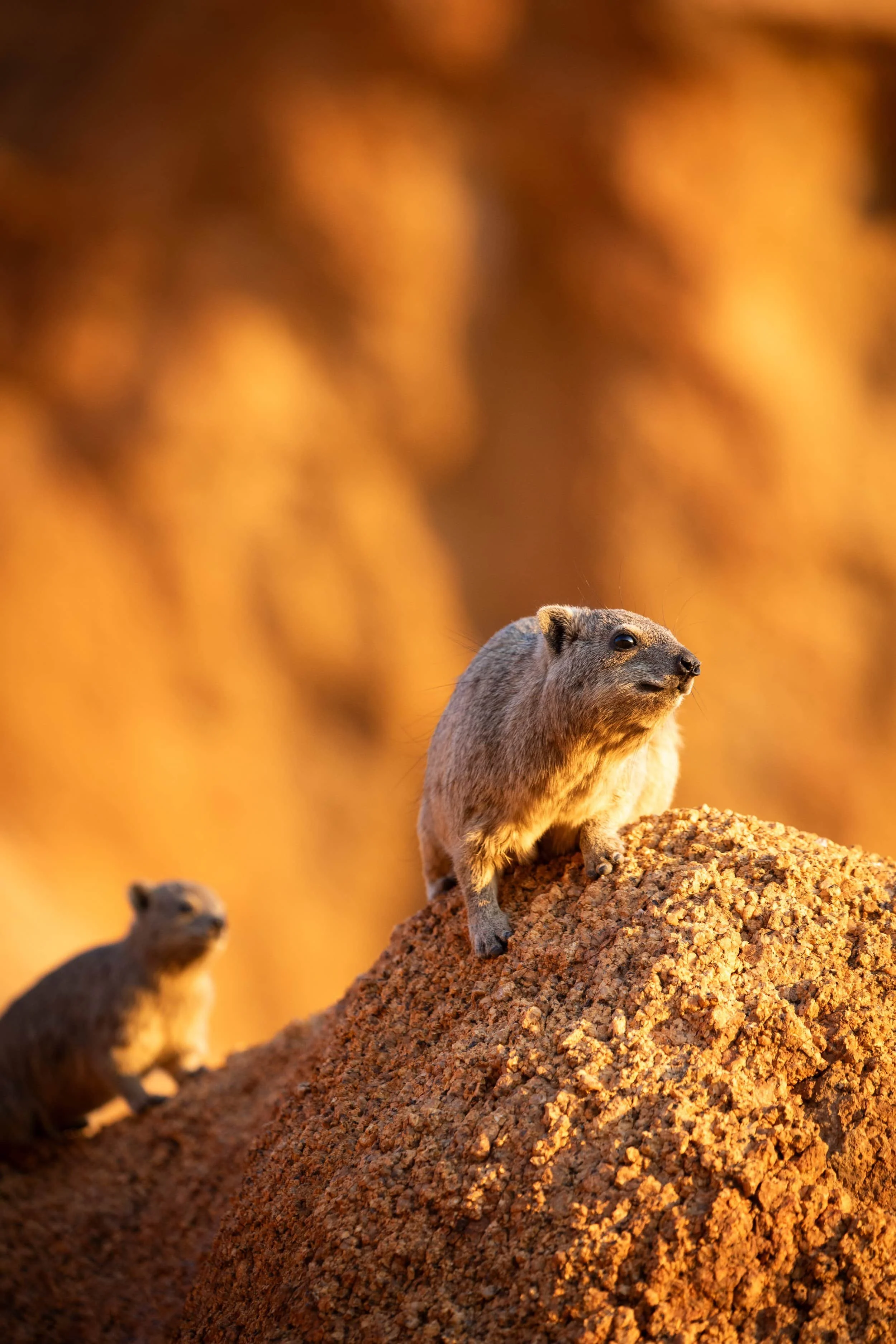
Biggest Highlight: Spending the night among the granite peaks, with sunset, the Milky Way and dassies around our campsite.
Main Challenge: The rough, dusty road in and the basic campsite setup. With a rooftop tent, getting to the shared showers also took some planning.
What to Expect: A quiet, nature-focused stop with plenty to explore, but no busy tourist centre full of cafes, restaurants and shops.
Why Stop Here: Spitzkoppe gives you a slower, more immersive experience of Namibia’s desert landscape.
Would I Do It Again: Absolutely. Spitzkoppe was one of my favourite stops in Namibia, and I’d stay overnight again.
Is Spitzkoppe Worth Visiting? My Honest Take and Quick Answer
Yes, I absolutely think Spitzkoppe is worth visiting.
It was one of the most memorable stops on our Namibia road trip, and it’s hard to think of anything I didn’t enjoy about the experience. The granite formations are spectacular, but what made the visit special was having time to explore, camp among the rocks and simply enjoy being there.
Spitzkoppe has a wonderfully relaxed feel. There’s plenty to do if you want to explore the Rock Arch, hike or climb, but you don’t need a full schedule to enjoy it. We loved how easy it was to slow down, take in the scenery and spend an evening outdoors. Watching the sunset and later seeing the Milky Way above the peaks made our overnight stay feel especially memorable.
The visit wasn’t completely effortless. The road in was rough and dusty, and managing showers around our rooftop tent took some planning because the facilities were away from our campsite. There’s also no electricity at individual sites, so it’s worth charging your devices and power banks beforehand. These were practical inconveniences for us, rather than reasons I’d advise anyone to skip Spitzkoppe.
I’d especially recommend it to people who enjoy dramatic landscapes, camping and spending time in nature. You can choose a cabin or lodge if you’d rather not camp, but Spitzkoppe is still utlimately a quiet, outdoors-focused place, without the cafes, restaurants and souvenir shops of a typical tourist hotspot.
That simplicity is part of what I loved about it. If you’re travelling through Namibia and have time to stay overnight, I’d make room for Spitzkoppe.
Want to Know More About Visiting Spitzkoppe?
Find out what to see, what it’s like to camp beneath the granite peaks and what to know before you go in my complete Spitzkoppe guide .
What I Expected vs What I Actually Got in Spitzkoppe
Before arriving, I expected Spitzkoppe to be a scenic stop where we could see the granite peaks, visit the Rock Arch and take some photos. I knew the landscape would be impressive, but I thought of it mainly as somewhere to explore for a few hours on the way through Namibia. Mainly filling a gap in our road trip itinerary between Swakopmund and Etosha.
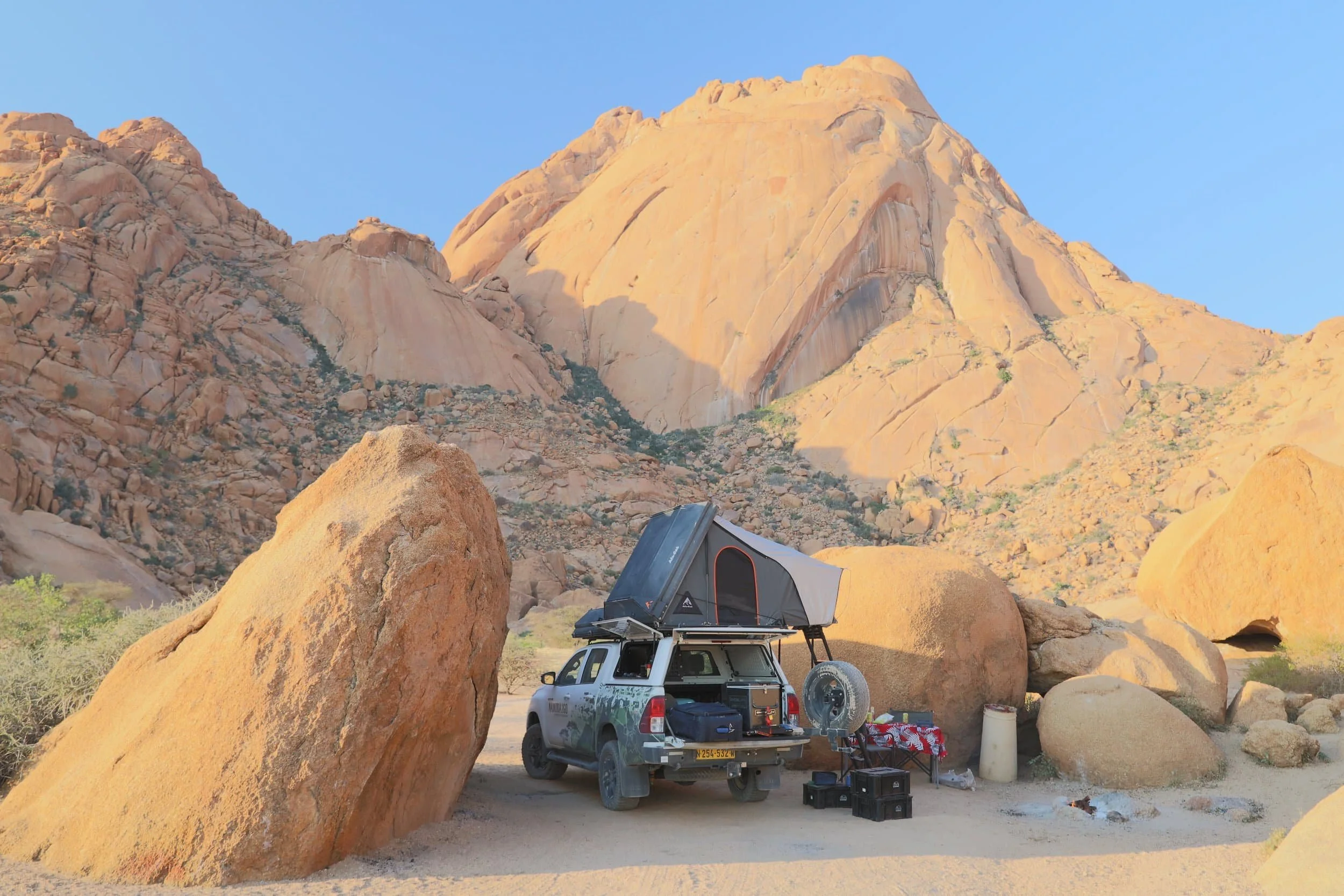
What I hadn’t really anticipated was how much the campsite would shape the experience. We drove around looking for an available site that appealed to us, and eventually found one near the western end, with a view of Grosse Spitzkoppe. Instead of visiting the rocks and then driving away, we were able to spend the evening right among them. I really didn’t expect that we would be able to pick our own site, eveyerhwere else that we went these were designated before you arrived, but it was actually something I really enjoyed about it.
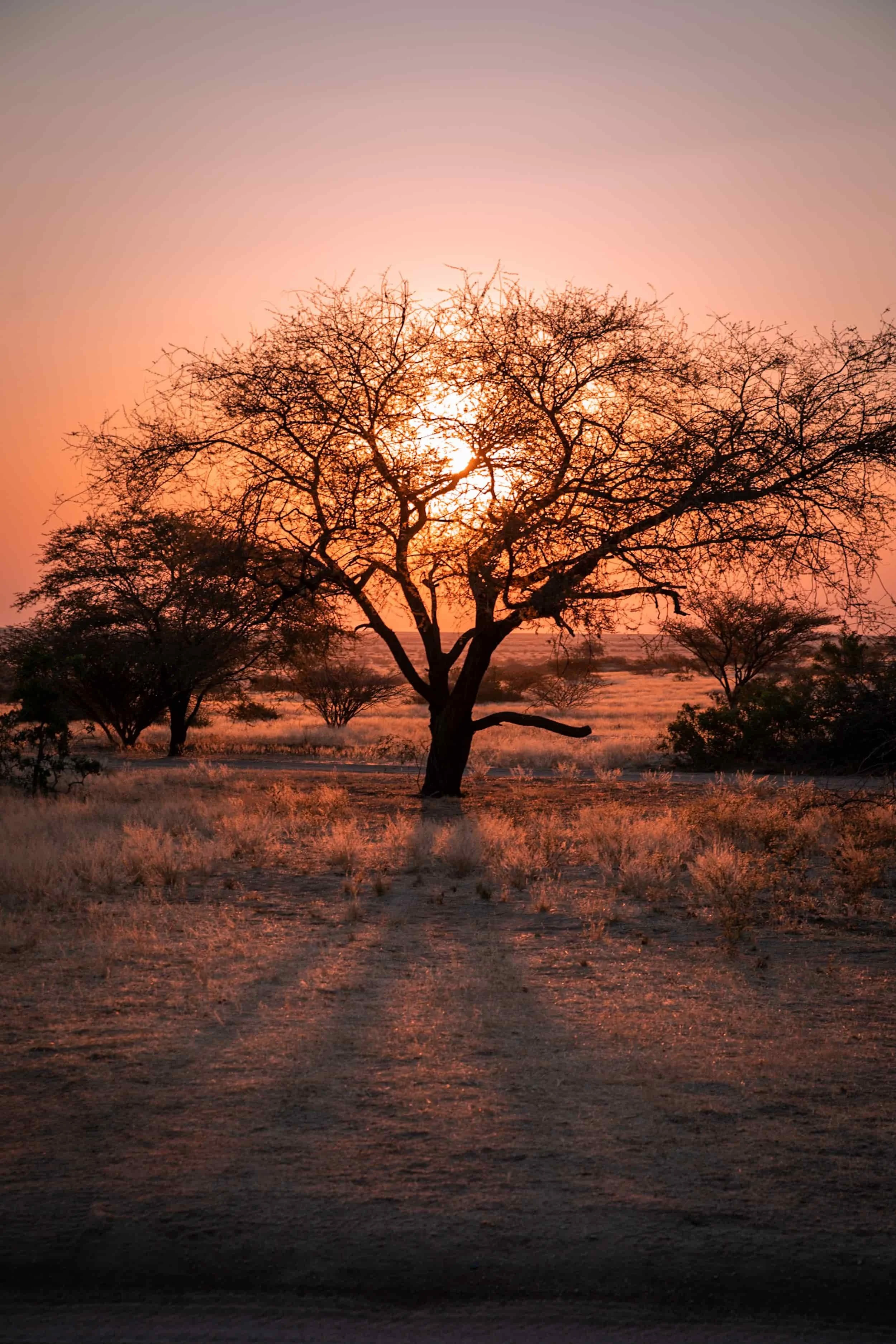
The small moments at camp ended up being just as memorable as the main sights. A family of dassies was running around our campsite while we cooked dinner, and the light on the peaks kept changing as the sun went down. Once it was dark, we sat outside and watched the stars appear. It felt like we had found our own quiet corner of the landscape.
Overall I didn’t really expect how much Spitzkoppe would stand out as a defining place on our trip. Most of my focus was around Etosha National Park and the amazing dunes of Sossusvlei, so Spitzkoppe really snuck up on me. So much so that I can comfortably say that staying there is one of the best thing you will do during your time in Namibia.
I also hadn’t expected it to be such a mecca for rock climbing. It seems obvious in hindsight that a place with such an impressive array of granite peaks would be somewhere people would want to climb up but that realisation hadn’t fully set in until we got there and saw all of the guided hiking and climbing tour options they had available. This is where a bit of regret comes in for me because we had only booked to stay in Spitzkoppe for a single night which really didn’t give us enough time to do some of these experiences which require you to allocate nearly a full day to do. So that is a lesson for you, if you want to do the hikes or climbs book two nights.
I will be honest though I hadn’t given much thought to how basic the facilities would be.
There’s no water or electricity at each campsite, which was a point of difference when comparing it to the other campsites that we stayed at across Namibia. Where most had a little ensuite shelter or they had communal bathrooms within a 2 minute walk away. Spitzkoppe instead had shared facilities right near the reception, which were about a 5 minute drive away from the western end where we were camped. It wasn’t a major problem for us, but it changed how we planned the evening. I’d recommend arriving with your water, food and other essentials sorted so you can settle in without needing to drive back and forth.
Etosha National Park Highlights


The Vibe: What Spitzkoppe Really Feels Like
Spitzkoppe has a surprisingly relaxing feel to it.
The granite peaks rise out of the desert all around you, and once you’ve arrived, there’s no pressure to rush from one attraction to the next. You can explore the formations, take photos or go for a hike, but it’s just as enjoyable to sit at camp and take in the landscape.
That’s what makes it feel like there’s plenty to do, while simply being there also feels like an activity in its own right. We spent time choosing our campsite and wandering around the rocks. Even when we weren’t doing anything in particular, the setting itself gave us plenty to look at.
The campsite really helps create that peaceful atmosphere.
The sites are spread across the reserve, so it doesn’t feel like a busy, tightly packed campground. The closest spot to where we were camped was over 100 metres away and around the otherside of a huge granite boulder so we couldn’t even see or hear anyone. We could sit outside and enjoy our own space, with the granite formations always in view. It felt connected to nature in a way that made it easy to slow down. I think sitting around a campfire at night always helps to bring that vibe out.
I think it also helped that the campsite in general was pretty quiet while we were there. That was even with us going in September which is typically the peak season for visiting Namibia, due to it being the best time to try and spot animals at Etosha. This meant that when we went to see the main attractions like the rock arch formation we had it entirely to ourselves, which surprised me.
What I Love About Spitzkoppe
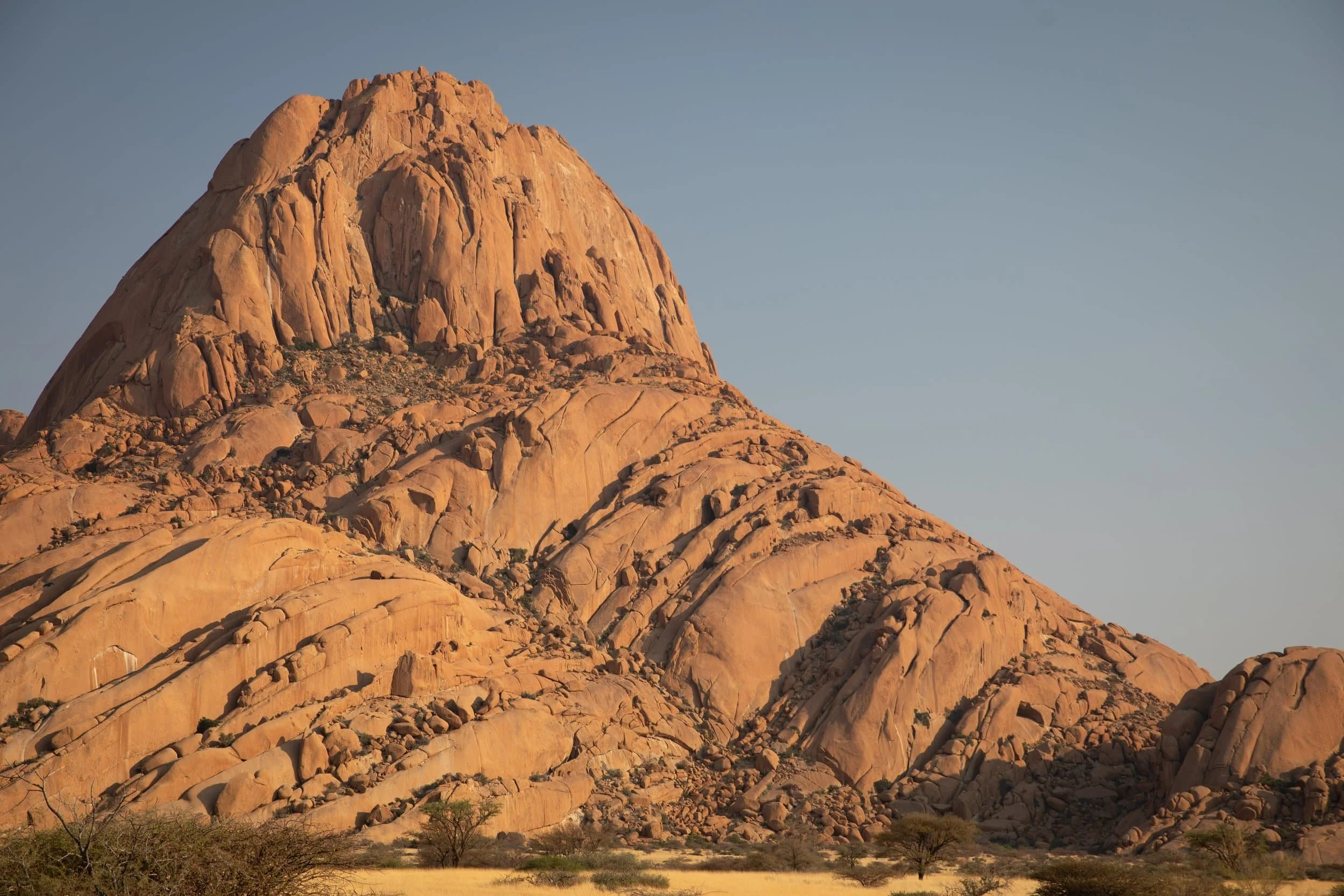
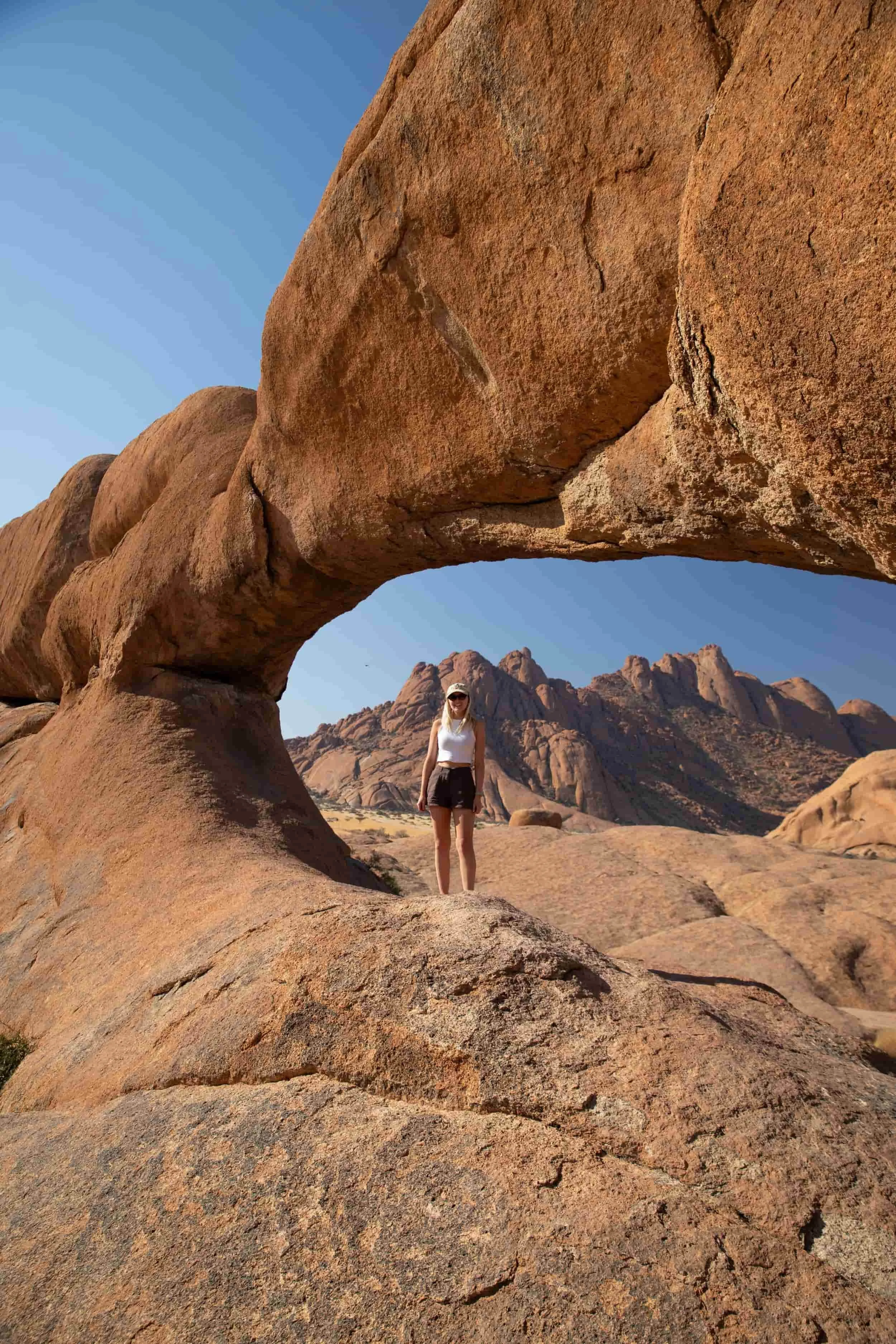
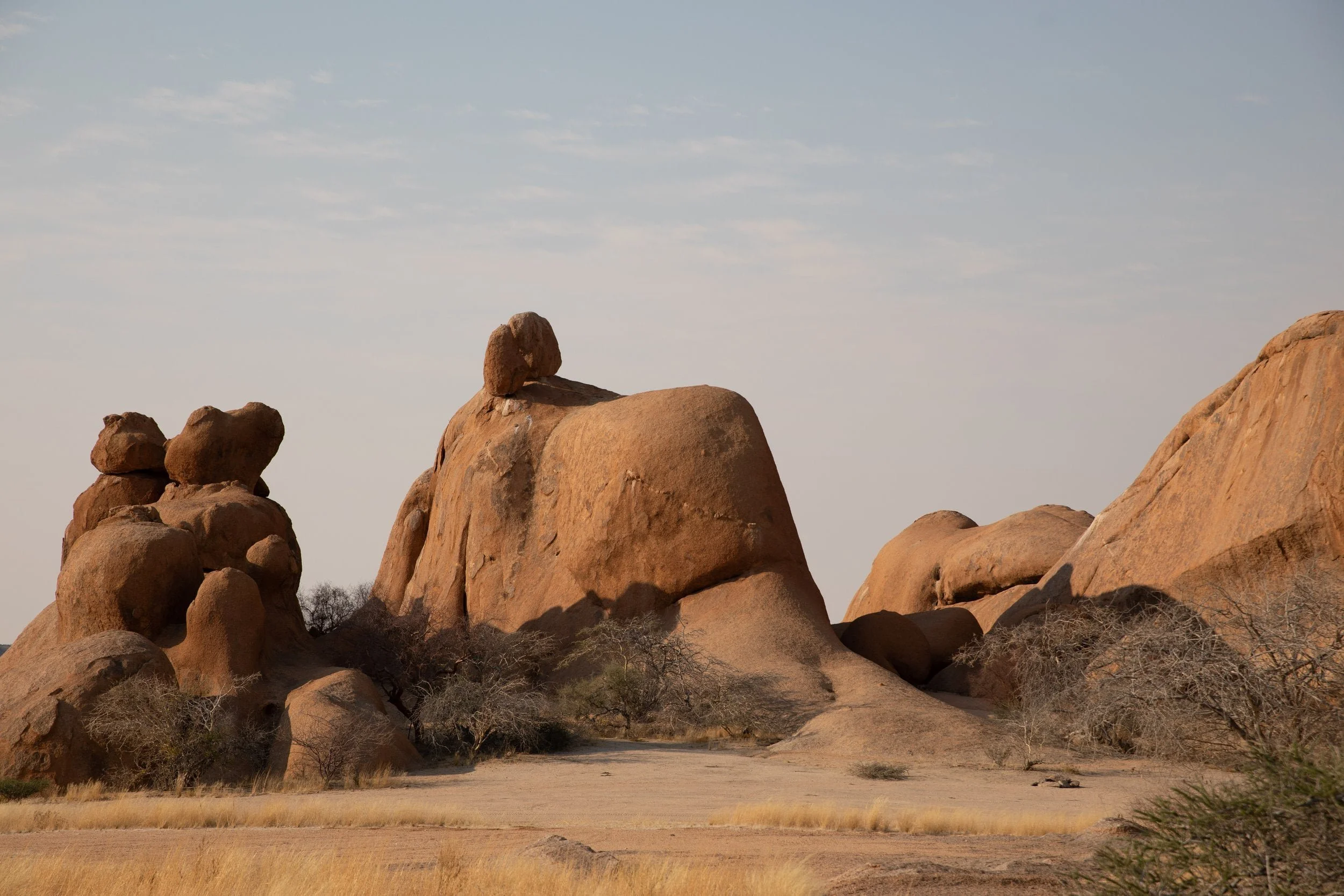
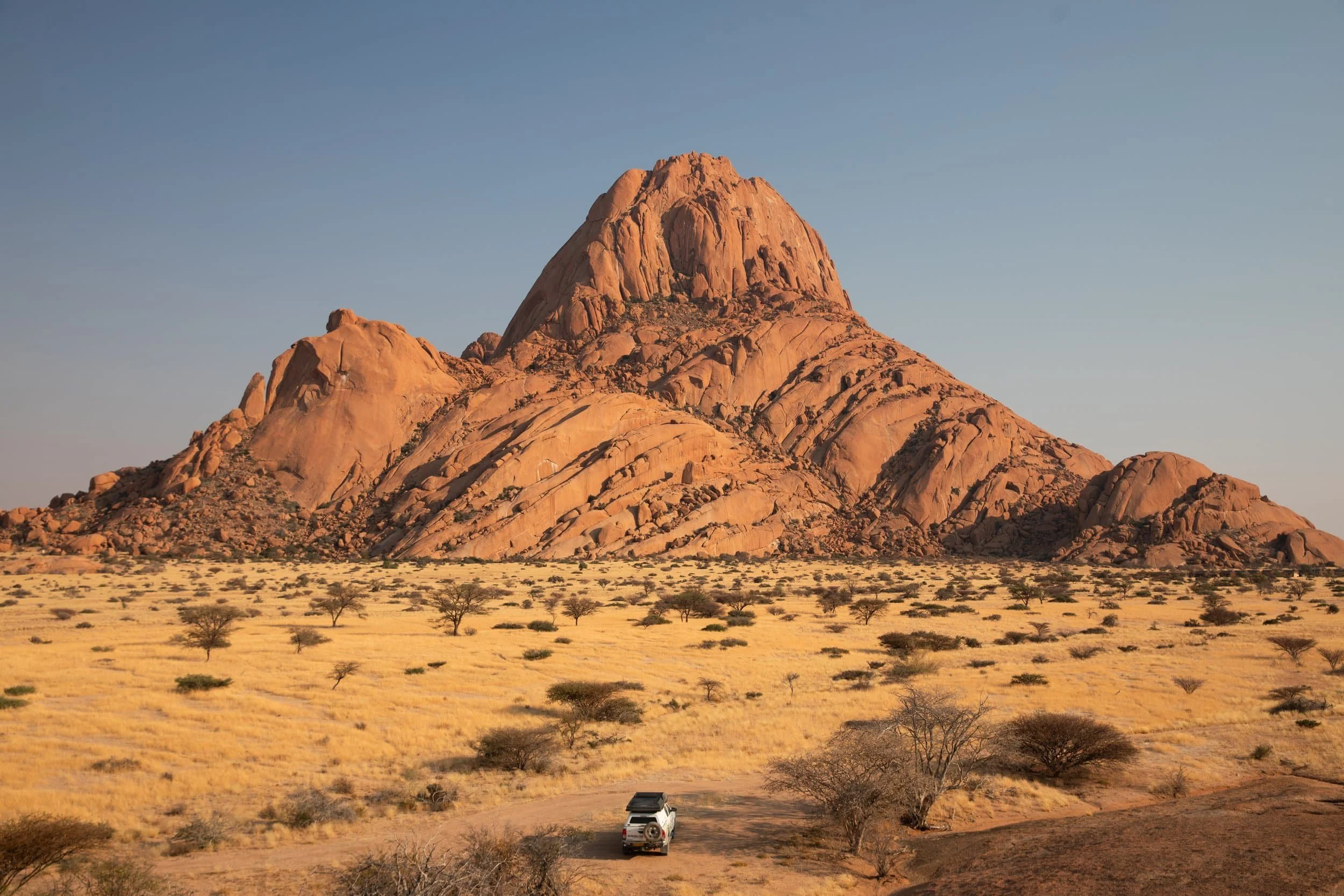
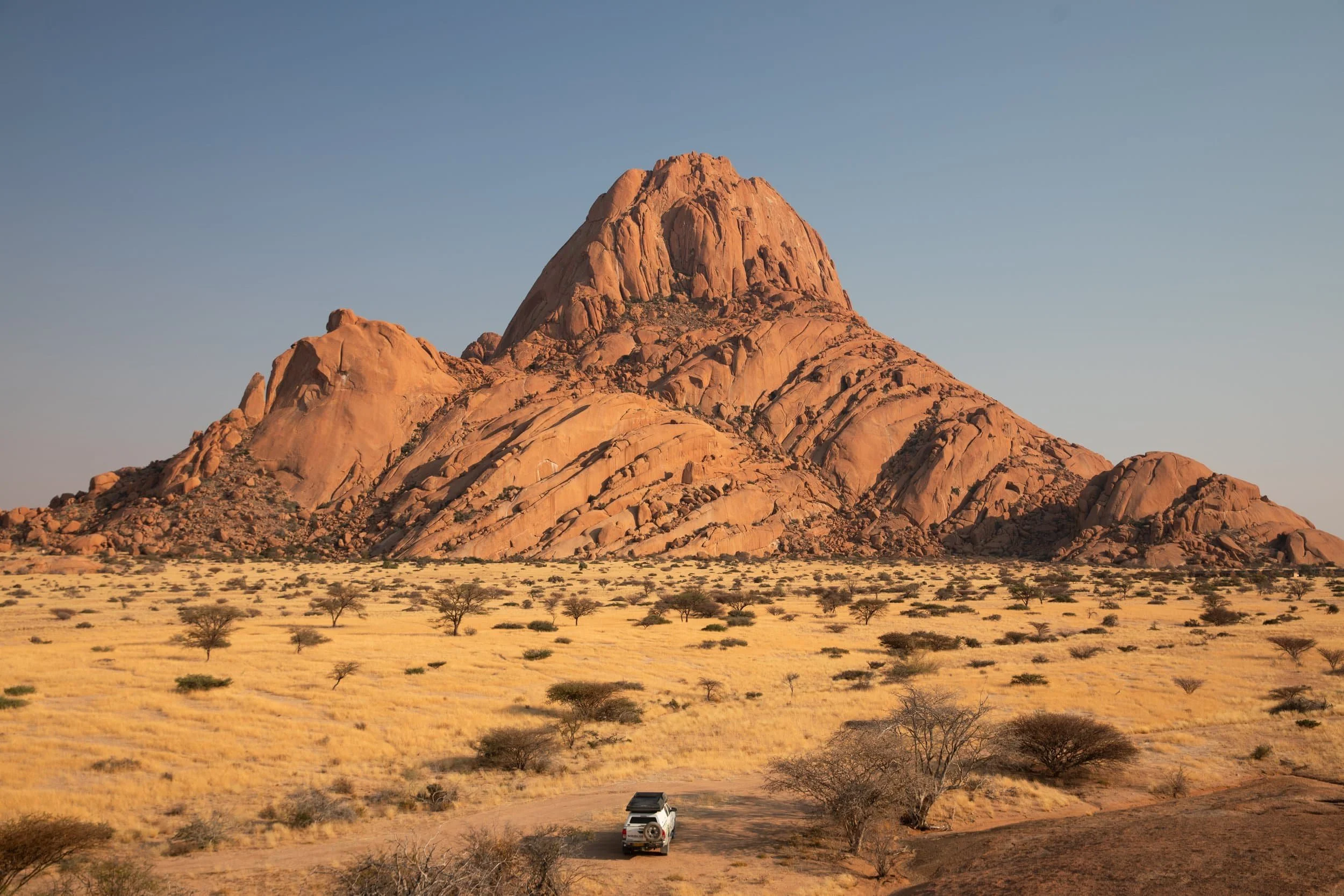
It’s an obvious one but I absolutely love the granite formations at Spitzkoppe. Grosse Spitzkoppe was the thing that struct me first as we were driving in, the scale of it was incredible.
You go from driving along a relatively flat barren landscape to all of sudden seeing this enormous granite peak taking up the skyline, dominating the landscape from every direction. The size of the rock really is hard to appreciate in photos alone, and was way bigger then I had expected.
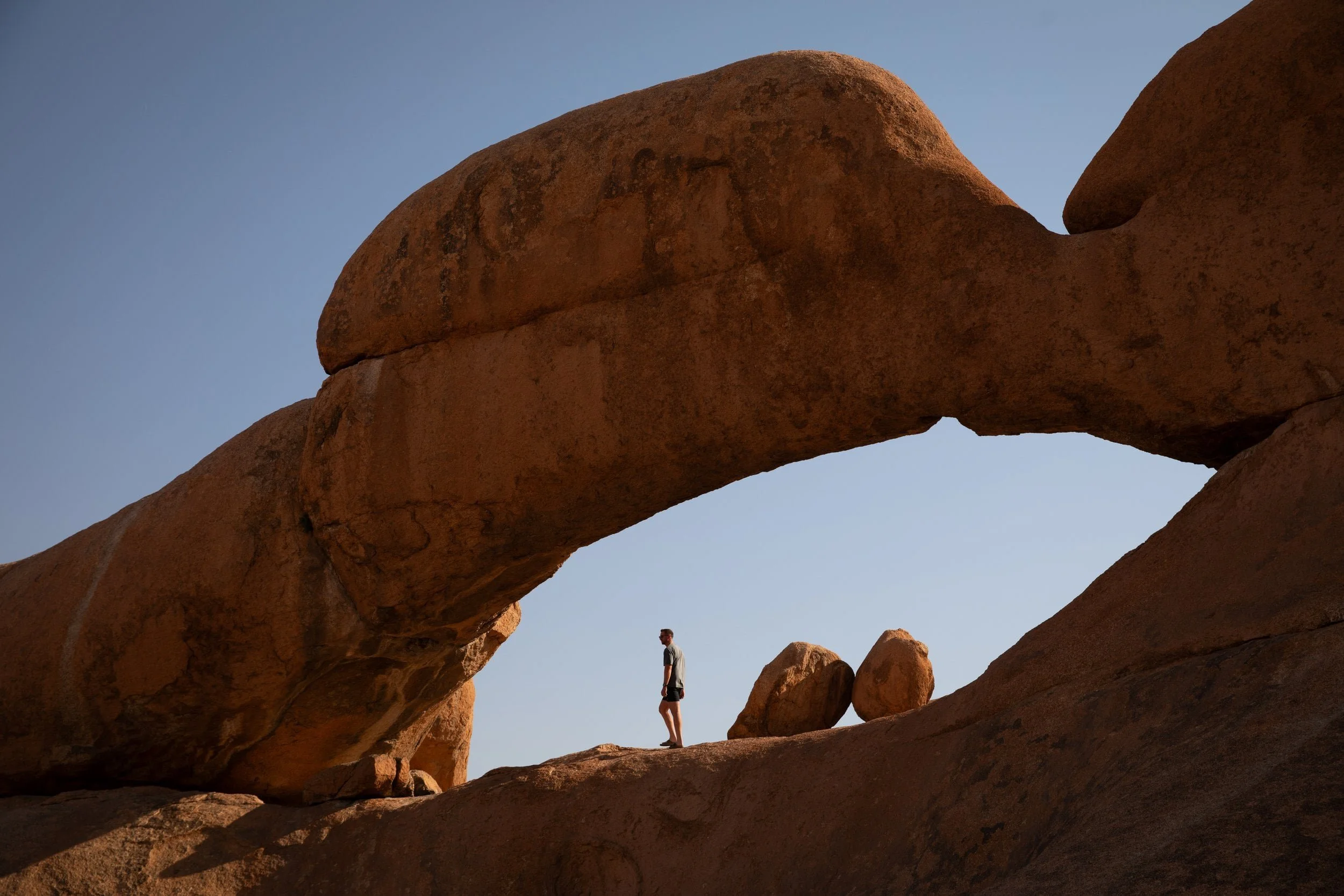
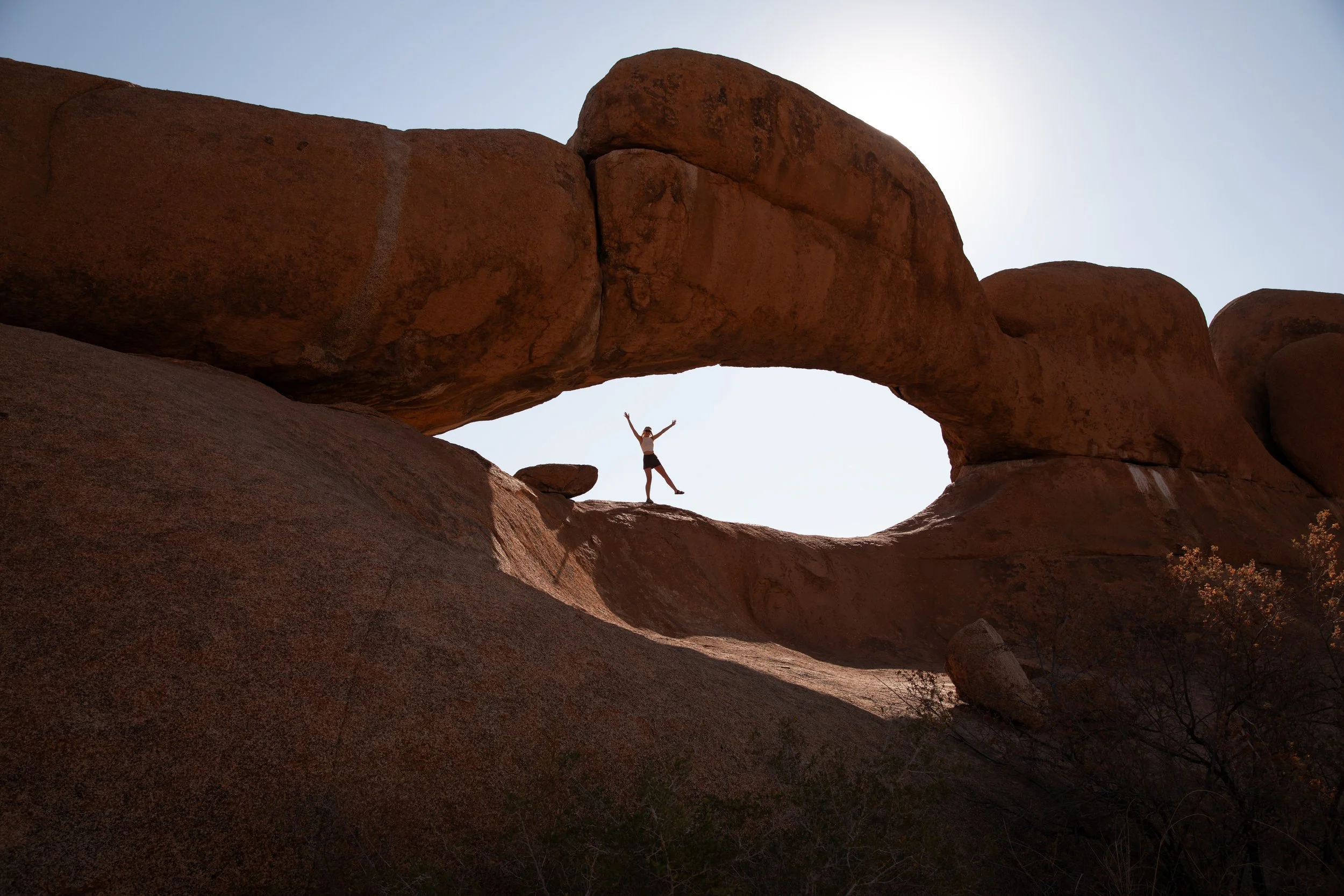
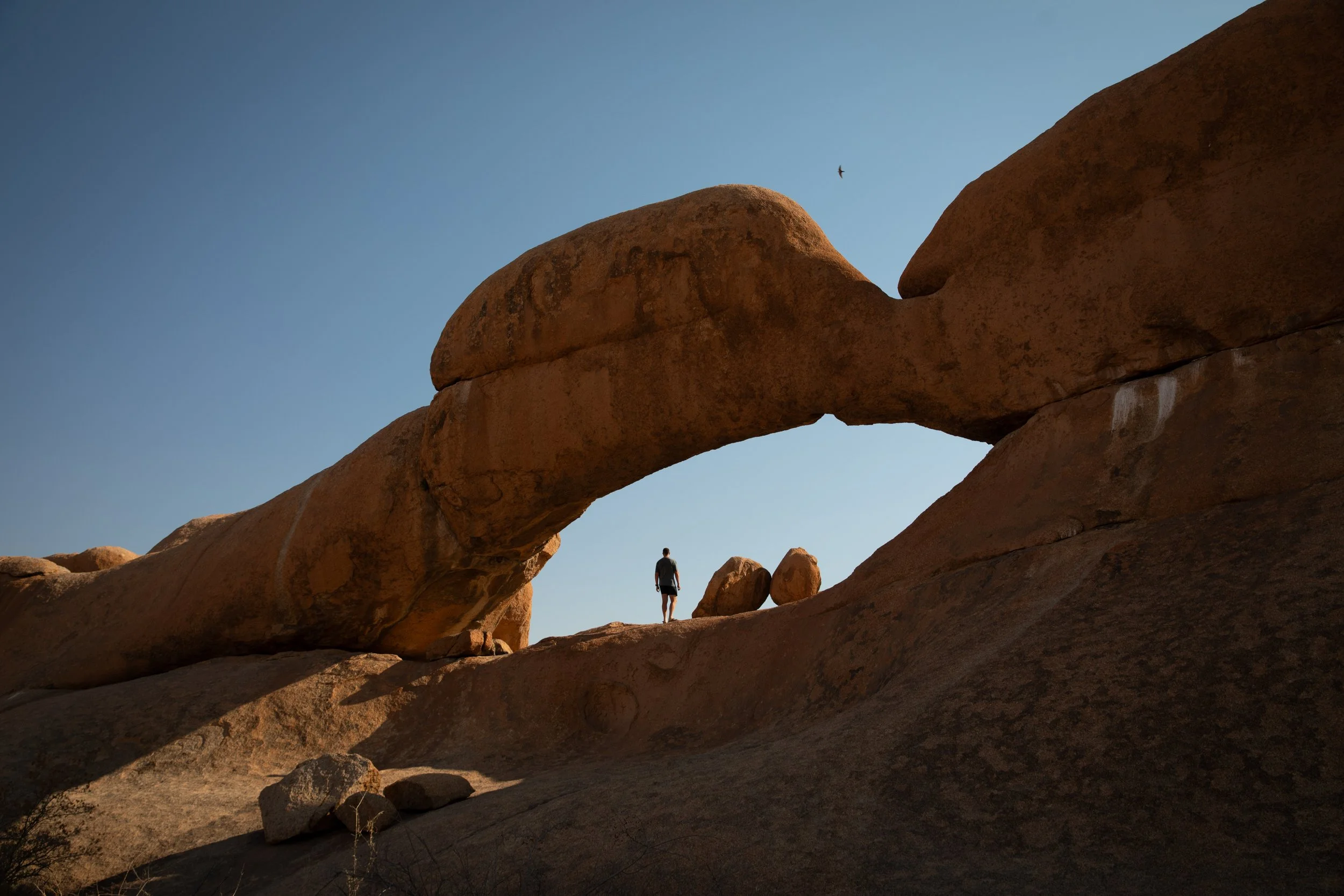
The Rock Arch at Spitzkoppe was one of my favourite places to explore. We virtually had it to ourselves, which made it easy to stop and take in the setting instead of feeling like we were waiting our turn for a photo. It was steep and slippery in places, so we took our time, but being right there among the formations made it more memorable than simply admiring them from the road.
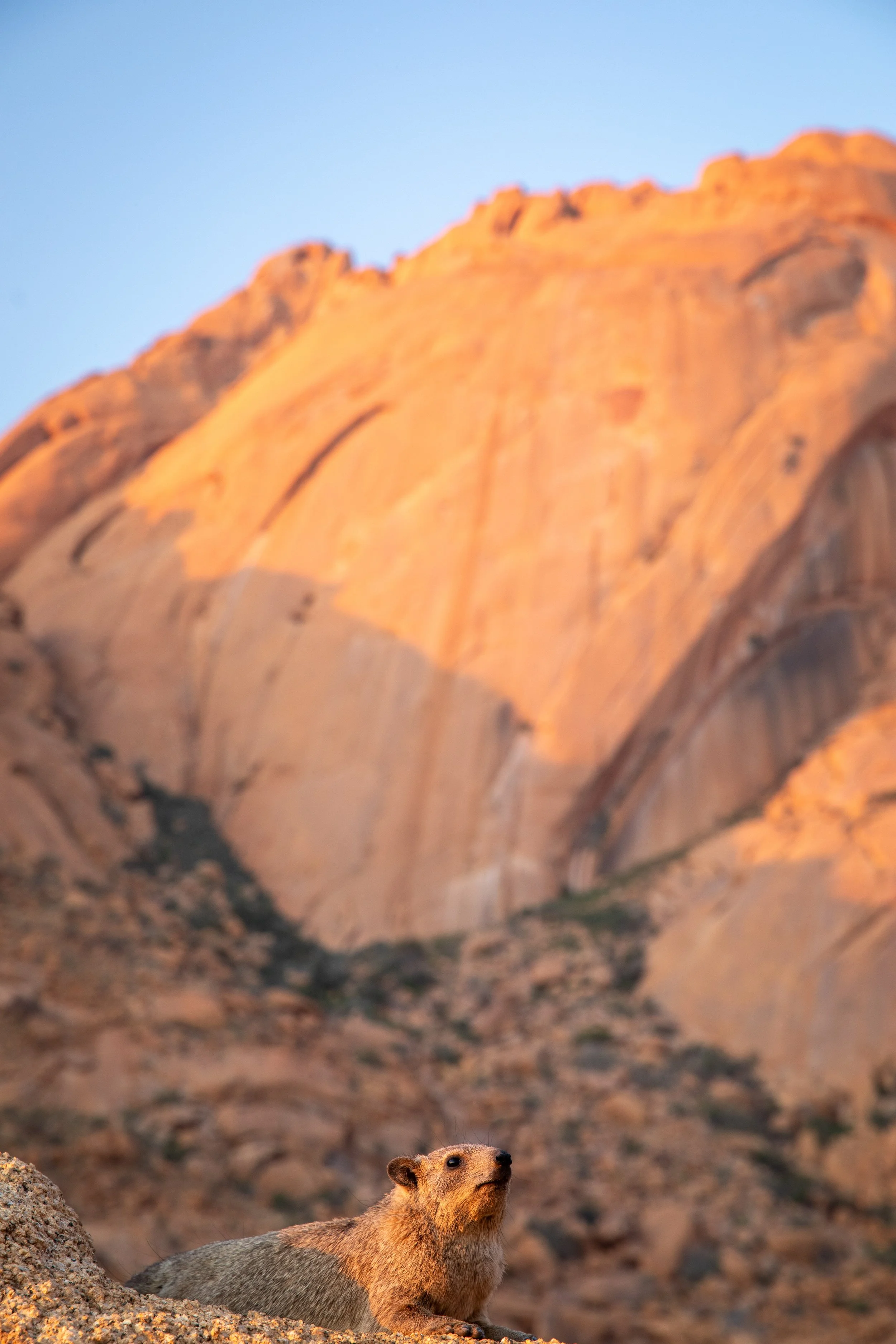
I also loved how much life we found around the rocks. There were dassies absolutely everywhere running around our campsite, which was an unexpected little highlight. They’re small, but seeing them dart between the boulders made the landscape feel less empty and gave us something fun to watch while we went about our evening.
The stars! Simply incredible, most people would think the highlight of visiting Spitzkoppe is the rock formations or the sunset, but wow the starts here are incredible. Because Spitzkoppe is so far away from any major settlement there was virtually no light pollution to disrupt our view and the milky way was in full show. Definitely worth stay up for and an experience you will only get if you commit to spending the night there. Well worth it in my opinion.
More than anything, I loved that Spitzkoppe didn’t feel like a place we had to rush through. It had this really chill vibe about it and we could take our time exploring, stop when something caught our eye and enjoy the surroundings without following a strict schedule. That unhurried feeling, combined with the unusual landscape and the dassies nearby, made Spitzkoppe one of the stops I remember most fondly.
Looking at Hiring a 4×4 in Namibia?
Compare rental options, costs and what to know before driving Namibia’s gravel roads in my Namibia 4×4 rental guide .
What I Don’t Love About Spitzkoppe
Honestly, I find it hard to pick things I didn’t love about Spitzkoppe because I really enjoyed the whole experience.
The main drawbacks were practical rather than anything that took away from the visit, such as the rough road conditions on the way in and a few campsite logistics that were specific to travelling with a rooftop tent.
The drive into Spitzkoppe was one of the rougher sections of our trip. The road had heavy corrugations, and there was a lot of dust in the air, so it wasn’t the most comfortable stretch to drive. Conditions can vary, but I’d allow extra time, take it slowly and expect the gravel section to feel rougher than a smooth, sealed road.
The shared showers and other facilities at Spitzkoppe Rest Camp also created a bit of a logistical challenge for us. Because we had a rooftop tent, we needed to pack everything up before driving to reception to shower, then drive back and set up again. We saw some people walking to the facilities, but if you’re staying on the western side, it could be a long walk, and you may get dusty again on the way back. This was mainly an inconvenience because of our setup we had. If you had a separate tent that you can leave at camp, it would be much easier and you wouldn’t have the same issue.
There’s also no electricity at the individual campsites, so we couldn’t charge our phones or camera equipment there. It wasn’t a major issue once we knew what to expect, but I’d charge your devices and power banks beforehand and bring what you’ll need for the stay.
These are small things to plan around, and they didn’t outweigh how much we enjoyed camping at Spitzkoppe.
Who Spitzkoppe Is For
I would say the number one person that Spitzkoppe is best suited for is someone who loves camping and wants to stay somewhere that makes them feel fully connected to their surroundings.
I honestly don’t know if I have ever been to a place that emphasises that feeling more then Spitzkoppe. You arrive through the gates and then are essentially given free reign to go and find a campsite on your own. This gives you the ultimate freedom to find a spot that suits you and what you want out of your experience at Spitzkoppe. We were lucky enough to find a place at the western end right near the enormous rock formations and it genuinely felt special to be there. One of the biggest perks is that the sites are all really well spread out around the area so are never really closer then 100 metres from your neighbours which we loved and it made it feel like we genuinely had the place all to ourselves to watch the sunset light up the granite rock. It was easily one of the best experiences we had in Namibia.
Spitzkoppe is also a great destination for hikers and rock climbers, with options ranging from guided scrambles to technical climbs.
Guided hikes such as the Pontok route take you beyond the main viewpoints, while climbers can book single-pitch or longer multi-pitch routes on the granite faces. There is also the option to undertake the main summit climb which is a much bigger undertaking, involving a long day of hiking, scrambling and roped climbing, and definitely should be left to those with experience.
We didn’t leave enough time for a longer hike during our visit, having only a single night there, so I’d allow an extra day if hiking or climbing is a priority. If you mainly want to see the Rock Arch and enjoy the scenery, you can still have a great visit without taking on a major hike or climb.
Photographers, stargazers and general nature lovers are also perfectly suited to Spitzkoppe.
I am not a professional photographer by any means, but wow Spitzkoppe is such an impressive place to get the most out of your camera. The way the light changes across the granite rock formations is incredible and makes it exciting to venture out at all times of the day. The appeal also is how much freedom you have to roam around autonomously, allowing you get whatever angles work best for you.
Just when I thought sunset was the highlight of our stay, the stars began to appear. We’d finished making dinner and were sitting around the campfire when I looked up and saw the Milky Way stretching across the sky above us. With the granite peaks silhouetted against the darkness and so little around to distract from the view, it felt like an unforgettable end to the evening. I’d make sure to spend some time outside after dark if you stay overnight at Spitzkoppe, the night sky was every bit as memorable as the sunset.
Want to Explore Spitzkoppe?
Find out what to see, what it’s like to camp beneath the granite peaks and what to know before you go in my complete Spitzkoppe guide .
Featured Posts:

Who Spitzkoppe Isn’t For
From a camping perspective, Spitzkoppe may also be less suited to travellers who want extensive facilities right at their campsite.
The campsites at Spitzkoppe Rest Camp are basic, with no water or electricity at each site, and the shared facilities are near reception. You’ll need to bring essentials such as water, food and charging equipment and plan a little around the facilities. So I guess ultimately it’s not going to be the best suited for those that aren’t fully prepared to rough it.
That said, you don’t have to camp in a tent to stay near the formations. Spitzkoppe has cabin accommodation, and there’s also a lodge nearby for travellers who’d prefer more comfort. These options let you enjoy the setting without having to bring your own camping setup, though they won’t turn Spitzkoppe into a resort-style destination with lots of restaurants and entertainment.
Spitzkoppe is certainly not for those that enjoy filling their days by visiting cafes, restaurants and shops or spending time relaxing by the beach.
This isn’t a typical tourist town with a busy centre, souvenir stores or lots of places to go out in the evening, you will not find any of that here. The real focus is on the landscape and being outdoors. For me personally that’s probably the biggest part of it’s overall appeal, but I can understand that it could feel too quiet if you prefer having a wide choice of activities and conveniences nearby.
Finally, Spitzkoppe may not be the right stop if your main goal is seeing lots of wildlife. We had a huge family of dassies around our campsite, which was a lovely surprise, but this isn’t a wildlife destination like Etosha. You are really going for the granite landscape, the peaceful outdoor atmosphere and the chance to spend time among the rocks, not for frequent animal sightings or a packed tourist itinerary.
Spitzkoppe or the Skeleton Coast: Which Should You Visit?
Like many travellers, we were weighing up whether to head inland to Spitzkoppe or continue north from Swakopmund along the coast before making our way towards Etosha.
We faced the same decision on our trip. The two routes offer very different scenery, so it comes down to whether you’d rather spend time among Spitzkoppe’s granite peaks or explore more of Namibia’s coastline.
Spitzkoppe is a great choice if you want a relaxed, outdoors-focused stop. You can explore the Rock Arch and surrounding formations, then stay overnight to enjoy the sunset and stars. For us, camping among the rocks was the highlight. Spitzkoppe felt like somewhere to slow down and enjoy the landscape, rather than just make a quick stop on the way to the next destination.
The Skeleton Coast is a better fit if you’re more interested in Namibia’s remote coastal scenery. One way we found to include a taste of the coast was to visit the Zeila shipwreck, about 60 km north of Swakopmund, without committing to a longer coastal detour. It’s a convenient option to consider if you’d like to see a shipwreck before heading inland.
If you have enough time, you could include both Spitzkoppe and a coastal stop like Zeila. If you need to choose, think about which experience you’d most like to add to your trip. We loved Spitzkoppe, and I’d make time for it if camping and dramatic landscapes appeal to you.
Top Places to Stay Near Spitzkoppe
Spitzkoppe Cabin Camp – Cabins with real beds and private fire pits. Check rates and availability
Spitzkoppen Lodge – Private chalets with ensuite bathrooms and viewing decks. Check rates and availability
Bahnhof Hotel Usakos – Comfortable hotel with pool, restaurant and bar. Check rates and availability
Namibia Featured Posts

My Final Verdict: Is Spitzkoppe Worth Visiting?
Yes, Spitzkoppe was absolutely worth visiting, and it became one of the most memorable stops on our Namibia road trip.
The granite peaks gave us something completely different from the dunes at Sossusvlei and wildlife at Etosha. What I loved most was how relaxed the visit felt. We could explore the formations, choose a campsite and spend the evening surrounded by nature without needing to fill every hour with activities.
If you’re travelling between Swakopmund and Etosha, Spitzkoppe is worth considering as an inland stop, especially if you’d like to camp among the rocks. The Skeleton Coast offers a different experience, but you don’t necessarily have to choose between the two: we also visited the Zeila shipwreck, about 60 km north of Swakopmund, for a taste of the coast before heading inland.
I will admit the rough, dusty road and the shower logistics with our rooftop tent weren’t ideal, and the campsites don’t have electricity. Knowing that ahead of time and charging our devices and power banks before arriving, would make the stay easier. You can also choose a cabin or lodge if you’d rather have more comfort.
I’d especially recommend Spitzkoppe if you enjoy dramatic landscapes, camping and a peaceful outdoor stay.
I would suggest to anyone that you stay overnight, the sunset and Milky Way were a huge part of what made the experience special. It may not suit travellers looking for busy tourist facilities or frequent wildlife sightings, but if its quieter, nature-focused atmosphere appeals to you, I’d make room for it.
Related Posts:
Use this detailed map of Etosha National Park to locate the park’s main camps, gates, waterholes, roads and wildlife-viewing areas. Discover Okaukuejo, Halali, Namutoni and other key attractions across one of Namibia’s most remarkable safari destinations. Whether you’re planning a self-drive adventure or guided game drives, this map will help you understand Etosha’s geography and plan your route.